

Common Poorwill vs Golden-crowned Sparrow
Phalaenoptilus nuttallii versus Zonotrichia atricapilla
Play a quiz with Common Poorwill and Golden-crowned Sparrow
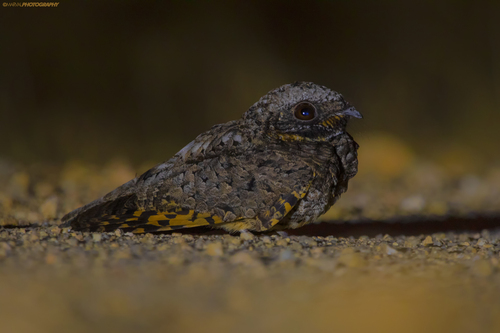 Common Poorwill
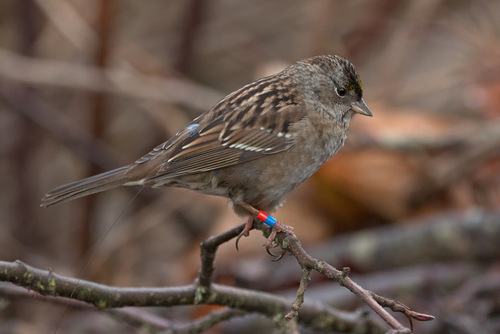 Golden-crowned Sparrow
In short
The most reliable way to separate Common Poorwill from Golden-crowned Sparrow is by overall structure and plumage: Poorwill is a small, round-winged nightjar with a short tail and cryptic gray-black patterning, while Golden-crowned Sparrow is a large, long-tailed sparrow with a distinctive yellow crown (in adults) and bold wing bars. Juvenile and non-breeding sparrows can lack the bright crown but still show sparrow-like structure and streaked upperparts, never the soft, mottled, and nearly tailless look of a Poorwill. In flight, Poorwill's rounded wings and short tail are diagnostic, while Golden-crowned Sparrow always shows a square-tipped tail and longer, more pointed wings. Habitat and behavior also differ sharply: Poorwill is strictly nocturnal and often found on the ground in arid, open areas, while Golden-crowned Sparrow is diurnal and forages in flocks in shrubby or brushy habitats.
Identification tips
- Structure is key: Poorwill is compact with a very short tail and rounded wings; Golden-crowned Sparrow is slim with a long, square-tipped tail and a peaked crown. This is reliable in all ages and seasons.
- Wing and tail in flight: Poorwill's wings are rounded and barely extend past the short tail at rest; Golden-crowned Sparrow's wings are longer and pointed, and the tail is always square-tipped and proportionately longer.
- Plumage pattern: Poorwill is cryptically mottled gray and black above, with no streaking or wing bars. Golden-crowned Sparrow has a streaked brown back, two white wing bars, and a plain gray nape. Even immatures show these sparrow traits.
- Tail markings: Poorwill has white tips on the outer tail feathers (especially in males), visible at close range or in flight. Golden-crowned Sparrow's tail is plain brown with no white.
- Crown pattern: Adult Golden-crowned Sparrow in breeding plumage has a bold yellow crown stripe bordered by black. Non-breeding and immature birds may have duller or patchy yellow, but never the all-gray crown of Poorwill.
- Bill shape and color: Poorwill has a tiny, short bill suited for catching insects; Golden-crowned Sparrow has a typical sparrow bill, conical and dark (upper mandible darker than lower).
- Leg color: Poorwill's legs are rarely seen and are short; Golden-crowned Sparrow has pale brown legs, often visible as it hops or perches.
- Underparts: Poorwill is pale gray below, blending with the upperparts; Golden-crowned Sparrow is gray below but with buffy flanks and a clear division from the streaked back.
- Habitat and context: If seen in open, rocky, or desert ground at dusk or night, it's likely a Poorwill. If in a shrubby area, especially in a flock by day, it's a sparrow.
- Behavior: Poorwill sits motionless on the ground, rarely flushes unless approached closely, and is active at night. Golden-crowned Sparrow is active by day, forages in flocks, and is often seen moving.
- Voice: Poorwill's repeated 'poor-will' call is unique among North American birds and never given by sparrows. Golden-crowned Sparrow sings a sweet, whistled song and gives sparrow-like chips, but never at night.
- Jizz at rest: Poorwill appears almost tailless and squat when perched; Golden-crowned Sparrow is upright, long-tailed, and alert.
- Seasonal confusion: Non-breeding and immature Golden-crowned Sparrows lack the bright yellow crown but always show sparrow structure and wing bars. Poorwill never shows any crown stripe or wing bars.
- Flocking: Poorwill is always solitary or in pairs; Golden-crowned Sparrow is often in flocks, especially in winter.
- Feeding behavior: Poorwill catches insects by sallying from the ground; Golden-crowned Sparrow scratches for seeds and insects on or near the ground, rarely sallying.
Size
Common Poorwill is slightly larger and much bulkier than Golden-crowned Sparrow by mass (48 g vs. 19–35 g), but their lengths overlap (Poorwill 18 cm, Sparrow 15–18 cm). Poorwill appears compact and chunky with a very short tail and rounded wings, while Golden-crowned Sparrow is slim, with a long, square-tipped tail and a more upright stance. In the field, Poorwill's short tail and round body are more distinctive than the modest size difference.
Plumage
- Juvenile/immature birds: Golden-crowned Sparrow immatures and non-breeding adults lack the bright yellow crown but still show a streaked brown back, two white wing bars, and a plain gray nape. Poorwill immatures resemble adults, with cryptic gray and black mottling above, no wing bars, and white tips on the outer tail feathers (more prominent in males).
- Adults: Golden-crowned Sparrow in breeding plumage has a broad yellow central crown stripe with black borders, gray underparts, and brown wings with white wing bars. Poorwill adults are gray and black above, with no streaking or wing bars, and have a pale gray overall appearance. The white tail tips are visible at close range or in flight.
- In flight: Poorwill shows rounded wings and a very short tail with white tips; Golden-crowned Sparrow shows longer, pointed wings and a square-tipped tail, with no white in the tail.
Behaviour
Common Poorwill is strictly nocturnal, often seen at dusk or dawn, and spends much of its time motionless on the ground, relying on camouflage. It feeds by sallying from the ground to catch insects. Golden-crowned Sparrow is diurnal, forages in flocks, and is usually seen hopping or scratching on the ground or low in shrubs. Poorwill rarely joins flocks or perches in the open, while Golden-crowned Sparrow is often conspicuous in groups.
Habitat
Poorwill prefers dry, open habitats with sparse vegetation, such as grasslands, shrublands, and rocky desert slopes. It is rarely found in dense brush or forest. Golden-crowned Sparrow is found in the western part of North America, favoring brushy edges, shrubby hillsides, and thickets, especially in winter. The two species rarely overlap in preferred microhabitat: Poorwill is tied to open, arid ground, while Golden-crowned Sparrow seeks cover and is more likely in wetter, shrubbier areas.
Voice
Common Poorwill gives a distinctive, monotonous 'poor-will' call at dusk and through the night, sometimes with a third syllable ('poor-will-low') and a sharp 'chuck' note in flight. Golden-crowned Sparrow has a sweet, whistled song and typical sparrow chips, but is silent at night. If you hear a repeated 'poor-will' at dusk or night, it's never a sparrow.