

Common Pochard vs Tufted Duck
Aythya ferina versus Aythya fuligula
Play a quiz with Common Pochard and Tufted Duck
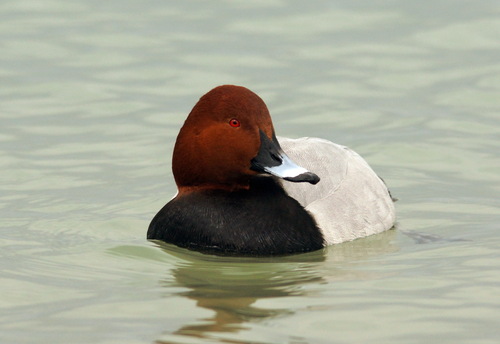 Common Pochard
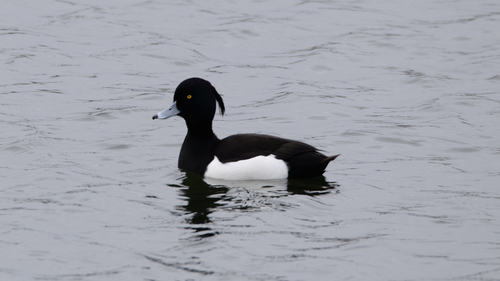 Tufted Duck
In short
The most reliable field mark between Common Pochard and Tufted Duck is the male's head: Common Pochard males have a rich chestnut head with a sloping forehead, while Tufted Duck males show a glossy black head with a distinct rear tuft. In flight or at rest, Tufted Ducks (of both sexes) are easily picked out by the prominent head tuft, absent in Common Pochard. Female and immature birds are trickier, but Pochard females are paler and lack the tuft, while Tufted females are darker brown and may show a small tuft and sometimes a white patch at the bill base. Bill pattern, iris color, and body shape also help, especially at close range. Both species are diving ducks and often occur together, so careful attention to head shape and plumage is key.
Identification tips
- Head tuft (all ages, sexes): Tufted Duck always shows a distinct, thin, drooping tuft at the rear of the head, most obvious in adult males but also present (shorter) in females and immatures. Common Pochard never has a tuft.
- Male head color (breeding season): Male Common Pochard has a rich chestnut head and neck, contrasting with a pale grey body. Male Tufted Duck has a glossy black head with purple sheen and a prominent tuft.
- Bill pattern (adults): Common Pochard's bill is dark grey with a broad blue-grey band across the middle. Tufted Duck's bill is blue-grey but lacks the broad band; instead, it is more uniform with a dark tip.
- Flank color (males): Tufted Duck males have bright white flanks, sharply contrasting with the black back and breast. Common Pochard males have pale grey flanks, less sharply defined from the rest of the body.
- Female/immature head and body: Female Common Pochard is pale brown overall, with a gentle contrast between head and body, and no tuft. Female Tufted Duck is darker brown, often with a small tuft and sometimes a white patch at the bill base (never as extensive as scaup).
- Iris color (adults): Male Common Pochard has a yellow-orange to red iris (especially bright in breeding season); male Tufted Duck has golden yellow eyes. Female Pochard has brown to yellowish-brown iris; female Tufted Duck has yellow eyes. Juvenile Pochard starts with yellow-olive iris.
- Head shape (all ages): Common Pochard has a sloping forehead and long bill, giving a wedge-shaped profile. Tufted Duck has a rounder head, especially accentuated by the tuft.
- Body shape and size: Common Pochard is larger, stockier, and longer-bodied with a short tail. Tufted Duck is smaller, more compact, and rounder in appearance.
- Legs and feet: Both species have grey legs and feet; not useful for separation.
- Flight flock structure: Tufted Ducks often form tighter, more agile flocks in flight, but this is subtle and not always reliable.
- Voice: Only Tufted Duck females give a harsh "karr" in flight; Pochard is usually silent. Calls are rarely diagnostic unless heard well.
- Habitat: Both occur together on lakes and reservoirs; habitat is not a reliable separator.
- Seasonal variation: Male Pochard's iris is brightest in breeding season; Tufted Duck's head tuft is always present but most obvious in breeding males.
- Pitfalls: Female Tufted Duck with a white bill base patch can resemble scaup, but never matches the extent of white in scaup. Female Pochard is paler and lacks any tuft or strong bill pattern.
- Juvenile iris: Young Pochard have a yellow-olive iris, turning adult color by first winter; Tufted Duck juveniles resemble females but with duller plumage and less developed tuft.
Size
Common Pochard is distinctly larger and more robust than Tufted Duck. Pochard measures 42–49 cm in length with a 72–82 cm wingspan, and is stocky and short-tailed. Tufted Duck is smaller and more compact, with a shorter, rounder body and less bulk overall. In mixed flocks, Pochard will stand out as the heavier, longer bird, especially when seen side by side. However, size alone is not always reliable at a distance or with lone birds.
Plumage
No age-specific upperwing or flight pattern marks are described for either species in the sources, so focus is on head, body, and bill.
-
Adult males: Common Pochard males have a chestnut head and neck, black breast and tail, and pale grey body with fine vermiculations. The bill is dark grey with a broad blue-grey band. Tufted Duck males are strikingly black and white: black head (with purple gloss), breast, back, and tail, with bright white flanks, and a blue-grey bill. The head tuft is always present in adult males.
-
Females: Pochard females are pale brown overall, with a less contrasting plumage and no tuft. Their iris is brown to yellowish-brown. Tufted Duck females are darker brown, sometimes with a small tuft and a variable white patch at the bill base (never as extensive as scaup).
-
Juveniles/Immatures: Pochard juveniles have a yellow-olive iris that turns adult color in the first winter. Tufted Duck juveniles resemble females but lack the adult male's strong contrast and tuft.
-
Iris color: Male Pochard has a yellow-orange to red iris (brightest in breeding season); Tufted Duck males have golden yellow eyes. Female Pochard has brownish iris; female Tufted Duck has yellow eyes.
-
Legs and feet: Both species have grey legs and feet, not diagnostic.
Behaviour
Both species are diving ducks, often seen feeding by diving for aquatic plants and invertebrates. Common Pochard is somewhat bulkier and may appear slower and more ponderous in its movements, while Tufted Duck is more compact and active, often diving with a quick, energetic motion. In flight, Tufted Ducks can look tighter-flocking and more agile, but this is subtle and not always reliable for separation.
Habitat
Both species overlap widely in range and habitat, frequenting lakes, reservoirs, and slow rivers across northern Eurasia. Both breed in northern regions and winter further south. Tufted Duck is generally more numerous and widespread, especially on smaller water bodies and urban lakes, while Common Pochard prefers larger, more open waters but is often found alongside Tufted Duck. Habitat alone rarely separates them.
Voice
Vocalizations are rarely diagnostic in the field, as both species are mostly silent outside the breeding season. Tufted Duck females give a harsh, growling "karr" in flight, and males whistle "wit-oo" during courtship. Common Pochard is not described as vocal in these sources. Calls are not usually helpful for separation unless heard well in the breeding season.