

Common Nighthawk vs Eastern Whip-poor-will
Chordeiles minor versus Antrostomus vociferus
Play a quiz with Common Nighthawk and Eastern Whip-poor-will
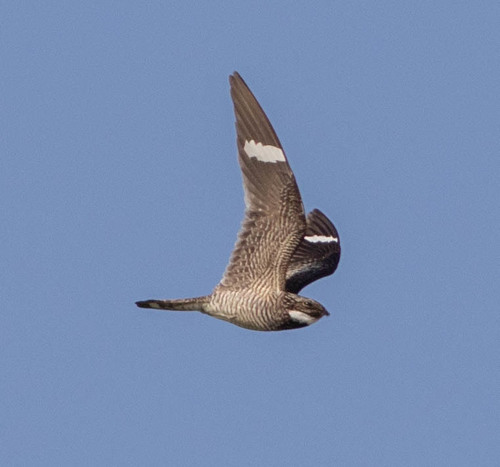 Common Nighthawk
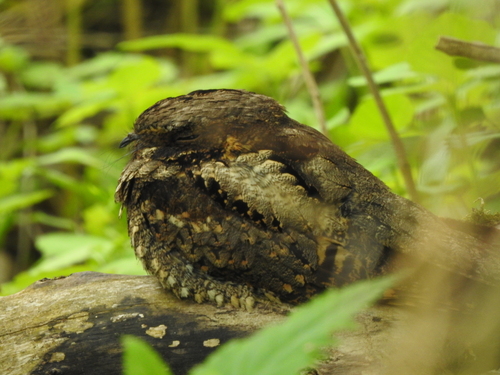 Eastern Whip-poor-will
In short
The most reliable field mark between Common Nighthawk and Eastern Whip-poor-will is the presence of bold white wing patches visible in flight on adult and juvenile nighthawks, which are completely absent in whip-poor-wills. Nighthawks also have a slimmer, longer-winged silhouette and a more erratic, buoyant flight style, while whip-poor-wills appear chunkier and fly with deeper, more moth-like wingbeats. Juvenile nighthawks show smaller white wing patches, but these are still visible and diagnostic. Perched, nighthawks often sit horizontally on open branches or roofs, whereas whip-poor-wills prefer dense cover and are rarely seen in the open. Vocalizations are distinct, but in silent birds, focus on wing pattern and structure for separation.
Identification tips
- White wing patch in flight: Only Common Nighthawk shows a bold white bar across the primaries in flight (adults and juveniles, though smaller in juveniles); whip-poor-will never shows this mark. This is the single most reliable field mark.
- Flight style: Nighthawk has long, pointed wings and a buoyant, erratic, bat-like flight, often high overhead. Whip-poor-will flies with deeper, slower, more moth-like wingbeats, usually low and in cover.
- Body shape: Nighthawk is slimmer, with a longer tail and wings, and a flatter head profile. Whip-poor-will is chunkier, with a shorter, broader tail and wings, and a rounder head.
- Perching posture: Nighthawk perches horizontally on open branches, posts, or roofs, often in the open. Whip-poor-will prefers dense cover and perches on the ground or low branches, rarely in the open.
- Tail pattern: Whip-poor-will males have white tips to the outer tail feathers (light brown in females); nighthawk lacks this feature.
- Throat patch: Whip-poor-will males have a white throat patch (light brown in females); nighthawk does not have a contrasting throat patch.
- Underpart barring: Nighthawk shows strong barring on the sides and belly; whip-poor-will is more uniformly mottled below.
- Head and bill: Both have large eyes and short bills, but nighthawk's bill is even smaller relative to its mouth, and its head appears flatter.
- Juvenile marks: Juvenile nighthawks are paler but still show the white wing patch; whip-poor-will juveniles lack any wing patch and are uniformly mottled.
- Habitat context: Open fields, urban rooftops, or clearings favor nighthawk; dense woods and forest interiors favor whip-poor-will.
- Group behavior: Nighthawks may be seen in small groups, especially during migration; whip-poor-wills are solitary.
- Vocalizations: A repeated 'whip-poor-will' phrase is diagnostic for whip-poor-will; a sharp 'peent' or wing boom is nighthawk.
- Activity timing: Both are crepuscular/nocturnal, but nighthawk is more likely to be seen flying at dusk/dawn in open areas, while whip-poor-will is rarely seen except by spotlight at night.
- Size impression: Nighthawk appears longer-winged and heavier in flight; whip-poor-will is more compact and lighter.
- Pitfalls: In poor light, both can appear as dark, cryptic shapes; always look for the white wing patch in flight and note the flight style and habitat.
Size
Common Nighthawk is heavier (body mass ~79 g [wikidata]) and has a longer wingspan (51–61 cm) compared to Eastern Whip-poor-will (wingspan 45–50 cm, mass 42–69 g [wikipedia]). Both species are similar in length (22–25 cm nighthawk, 22–27 cm whip-poor-will), but nighthawk appears longer-winged and more slender overall. Whip-poor-will is lighter and more compact, with a shorter, broader wing and tail.
Plumage
The single most diagnostic plumage feature is the white wing patch on Common Nighthawk, present in both adults and juveniles (though smaller in juveniles). This patch is visible in flight as a bold white bar across the primaries; whip-poor-will lacks any such wing mark at all ages. Nighthawks also show noticeable barring on the sides and belly, and a notched tail that extends just beyond the wingtips at rest. Whip-poor-will has mottled gray, black, and brown upperparts and gray/black underparts, with males showing a white throat patch and white tail tips (females have light brown in these areas). Both species are cryptically patterned, but nighthawk's plumage is generally darker and more contrasting, while whip-poor-will is more uniformly mottled and camouflaged. Juvenile nighthawks are paler overall but still show the white wing patch, albeit smaller.
Behaviour
Common Nighthawk is most often seen in open sky, flying high with erratic, buoyant, bat-like flight, often at dusk or dawn. It perches horizontally on open branches, posts, roofs, or the ground. Whip-poor-will is much more secretive, rarely seen in the open, and prefers to stay motionless on the forest floor or low branches in dense cover. Its flight is more moth-like, with deeper, slower wingbeats and less aerial agility. Nighthawks are more likely to be seen in groups during migration or roosting, while whip-poor-wills are solitary and nocturnal.
Habitat
Common Nighthawk favors open habitats such as fields, clearings, urban areas, and rooftops, where it can forage in open airspace. Eastern Whip-poor-will is strongly associated with deciduous or mixed woodlands, especially areas with dense understory and minimal disturbance. If seen in a forest interior or dense woodland, whip-poor-will is more likely; nighthawk is rarely found away from open or semi-open areas.
Voice
Vocalizations are highly distinctive: Common Nighthawk gives a sharp, nasal 'peent' call, often heard overhead at dusk, and males produce a booming sound with their wings in display dives. Eastern Whip-poor-will is named for its repetitive, onomatopoeic 'whip-poor-will' song, delivered persistently at night. If you hear a repeated, clear 'whip-poor-will' phrase, it is diagnostic for whip-poor-will; if you hear a single 'peent' or wing boom, it is nighthawk.