
Common Gull vs Herring Gull
Larus canus versus Larus argentatus
Play a quiz with Common Gull and Herring Gull
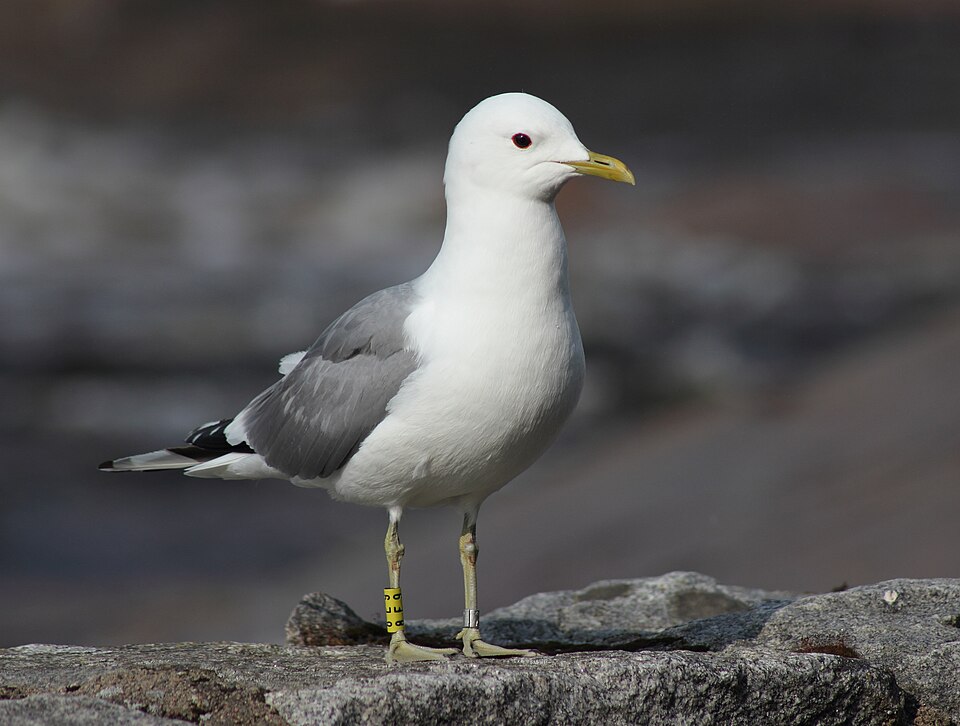 Common Gull
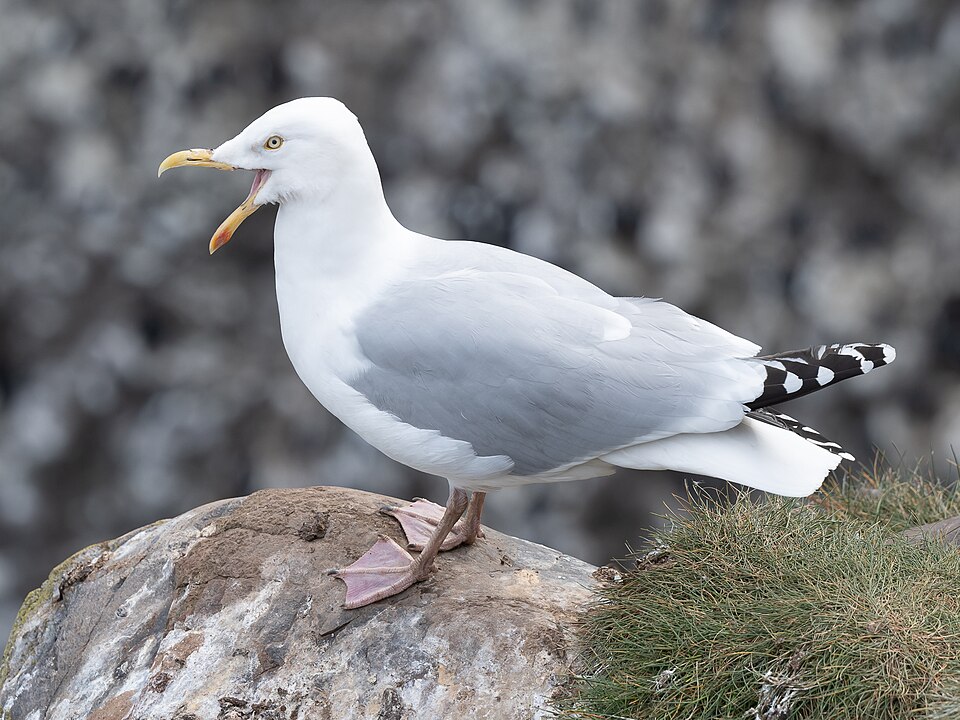 Herring Gull
In short
The most reliable way to separate Common Gull from Herring Gull in the field is by size and structure: Common Gull is noticeably smaller and more delicate, with a shorter, slimmer bill and a more buoyant, agile flight. For immature birds, look closely at the upperwing and tail patterns—Common Gull juveniles show a neater, more patterned wing and paler head, while Herring Gull immatures are bulkier, duskier, and more heavily streaked. Adults are also best separated by bill color and leg color: Common Gull adults have a plain yellowish-green bill (no red spot) and yellow legs in breeding season, while Herring Gulls have a heavier yellow bill with a red spot and pink legs. Both species can show head streaking in winter, but the overall size and structure differences are usually obvious at close range.
Identification tips
- Size and Structure: Herring Gull is much larger and bulkier than Common Gull. In direct comparison, Common Gull looks dainty, with a shorter, slimmer bill and smaller head. This is most obvious when both species are together.
- Bill Shape and Color (Adult): Common Gull has a plain, slender yellowish-green bill with no red spot; Herring Gull has a heavier, deeper yellow bill with a distinct red spot on the lower mandible. This is a key mark in breeding adults.
- Leg Color: Adult Common Gull legs are yellow in breeding season (duller in winter), while Herring Gull legs are pink at all ages (rarely yellowish in Baltic birds). Leg color is especially useful in spring and summer.
- Wing Pattern (Adult): Both have black wingtips with white 'mirrors,' but Herring Gull's mirrors are larger and more obvious. Common Gull's mirrors are smaller and restricted to the outermost primaries.
- Head Streaking (Winter): Both species show head streaking in winter, but Common Gull's is finer and more restricted, while Herring Gull's is heavier and extends onto the neck.
- Juvenile/Immature Upperwing: Common Gull juveniles have a neat, scaly pattern on the upperwing and a paler head; Herring Gull juveniles are duskier, more heavily streaked, and less crisply patterned. Look for a tidier, more contrasting wing in Common Gull.
- Tail Pattern (Immature): Not detailed in these notes, but generally, Common Gull immatures show a more defined tail band and paler base, while Herring Gull immatures are more uniformly brown.
- Eye Color: Herring Gull adults have pale eyes with a yellow orbital ring; Common Gull's eye color is less distinctive in the field but generally darker.
- Flight Jizz: Common Gull is more buoyant and agile in flight, with quicker, lighter wingbeats. Herring Gull is heavier, with slower, deeper wingbeats and a more lumbering flight.
- Bill Markings (Winter): Common Gull may show a faint dark band near the bill tip in winter, but never a red spot. Herring Gull always has a red spot on the bill as an adult.
- Habitat Context: In urban areas and landfills, Herring Gull is often dominant and more numerous; Common Gull prefers open fields, lakes, and marshes, especially outside the breeding season.
- Seasonal Abundance: In some regions, Common Gull is more numerous in winter, while Herring Gull is present year-round, especially near the coast.
- Voice: Common Gull's call is higher-pitched and more 'laughing'; Herring Gull's is deeper and more forceful. Useful in mixed flocks or when birds are calling.
- Sex/Age Effects: Both species show similar plumage in males and females, but Herring Gull males are larger. Immature birds are best separated by wing and body pattern, not size.
- Pitfalls: Beware of leg color variation (Baltic Herring Gulls can have yellowish legs) and bill markings in winter (Common Gull can show a dark bill band). Always use a combination of marks for confident ID.
Size
Common Gull is a medium-sized gull, with a body mass around 386.5 g [wikidata], length 40–46 cm, and wingspan 100–115 cm [wikipedia]. Herring Gull is much larger, with males up to 66 cm long and wingspan 125–155 cm, and females only slightly smaller [wikipedia]. Even at a distance, Herring Gull appears bulkier, with a deeper chest, thicker neck, and larger head and bill. In mixed flocks, Common Gull looks daintier and more compact, often standing shorter and with a more tapered bill.
Plumage
- Juvenile/First-winter: Common Gull juveniles have scaly black-brown upperparts, a neat and patterned wing, and a paler, whiter head and belly with fine streaks. Their legs are pink, turning greyish in the second year. Herring Gull juveniles are mostly brown with heavy streaking, a dark bill, and dark eyes, with a generally duskier and less patterned appearance. By first winter, Herring Gull shows a whiter head and underparts but remains bulkier and less crisp than Common Gull.
- Second/Third-winter: Common Gull second-years show grey feathers on the saddle and legs turning greyish, while Herring Gull second-winter birds have a whiter head and underparts, less streaking, and the back is grey. Third-winter Herring Gulls are close to adult but may retain brown wing feathers and dark bill markings; Common Gull matures slightly faster (3 years vs. 4).
- Adult: Common Gull adults have a medium-grey mantle, white underparts, yellow legs (in breeding), and a plain yellowish-green bill with no red spot. Herring Gull adults have a paler grey back, white underparts, pink legs (rarely yellowish in Baltic birds), and a heavy yellow bill with a red spot. Both have black wingtips with white 'mirrors,' but Herring Gull's are larger and more obvious.
Behaviour
Both species are omnivorous and opportunistic, often seen scavenging at dumps or feeding along coasts and in fields. Herring Gull is more assertive and dominant, often displacing smaller gulls (including Common Gull) from food sources. In flight, Common Gull appears lighter, more buoyant, and agile, while Herring Gull is heavier, with slower, deeper wingbeats and a more ponderous flight style. Common Gull sometimes breeds in small trees or marshes, while Herring Gull is more likely to nest on open ground or rooftops.
Habitat
Both species overlap widely in Europe, especially in coastal areas, estuaries, and urban settings. Common Gull breeds across the northern Palearctic and winters further south, while Herring Gull is resident or migratory across northern and western Europe. Herring Gull is more likely to be found inland at landfills and in large urban areas, while Common Gull favors open fields, lakes, and marshes, especially outside the breeding season. In mixed flocks, Common Gull tends to be more numerous in northern and eastern Europe, while Herring Gull dominates in the west and coastal cities.
Voice
Common Gull gives a high-pitched, laughing call, which is lighter and less harsh than the deep, raucous 'laughing' or 'yelp' of Herring Gull. Herring Gull's voice is louder, deeper, and more forceful, often carrying over long distances. Calls can be useful at close range or in mixed flocks, but are less reliable than visual marks for separation.