

Coal Tit vs Great Tit
Periparus ater versus Parus major
Play a quiz with Coal Tit and Great Tit
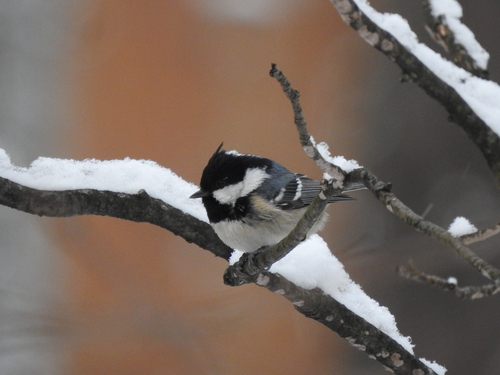 Coal Tit
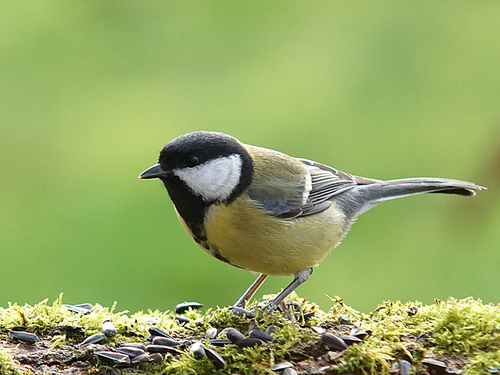 Great Tit
In short
The most consistent way to separate Coal Tit from Great Tit is the Coal Tit’s distinctive white nape spot, which is absent in Great Tit. Juvenile Coal Tits are duller but still show this nape mark, while Great Tit juveniles never have it. Great Tits are noticeably larger and bulkier, with a bold black mid-line stripe down their bright yellow underparts, contrasting with the Coal Tit’s paler, buff-to-rufous flanks and less vivid underparts. Both can show white wing bars, but Coal Tit’s are crisper and double, while Great Tit’s are usually single and less obvious. In flight or at a distance, size and structure can help, but the nape spot and underpart color are the most reliable clues.
Identification tips
- White nape spot (Coal Tit only): Look for a crisp white spot on the nape, visible from behind or in profile. No Great Tit ever shows this.
- Underpart color: Great Tit has bright yellow underparts with a bold black mid-line stripe; Coal Tit is paler, with whitish to buff/rufous flanks and no black belly stripe.
- Size and structure: Great Tit is much larger and bulkier, with a bigger head and bill. Coal Tit is noticeably smaller and daintier, especially in mixed flocks.
- Wingbars: Coal Tit shows two clear white wingbars (from white-tipped coverts), especially obvious in flight or when perched. Great Tit usually has only one, often faint, wingbar.
- Head pattern: Both have black heads and white cheeks, but Coal Tit’s head is glossier and more compact, and the white nape spot is unique.
- Cheek color (juveniles): Juvenile Coal Tits have yellowish cheeks and nape; juvenile Great Tits have duller, olive-brown napes and less crisp white cheeks.
- Belly stripe: Only Great Tit has a broad black stripe running down the belly; Coal Tit never shows this.
- Tail pattern: Great Tit’s tail is blue-grey with white outer tips; Coal Tit’s is plainer and shorter.
- Bill size: Great Tit’s bill is noticeably stouter and longer; Coal Tit’s is fine and short.
- Behavior: Coal Tit is more active, often high in conifers, and more likely to hang upside down. Great Tit is bolder, forages lower, and dominates feeders.
- Habitat: Coal Tit prefers conifers; Great Tit uses a wider range of habitats, including gardens and parks.
- Vocalizations: Coal Tit’s calls are high, thin, and rapid. Great Tit’s are louder, slower, and more varied.
- Sex differences: Female Great Tits are duller with a narrower belly stripe; Coal Tit sexes are more similar.
- Flight jizz: Coal Tit is quick and fluttery; Great Tit is heavier and more direct.
- Pitfalls: In poor light, Coal Tit’s nape spot may be hard to see; in some subspecies, underpart color varies, so rely on multiple marks. Juvenile Coal Tits can appear dull but still show the nape spot.
Size
Great Tit is substantially larger and heavier than Coal Tit (Great Tit: ~18.5g [wikidata]; Coal Tit: smaller, no exact mass given but visibly slighter in the field). Great Tit’s body is longer (12.5–14 cm vs. Coal Tit’s 10–11.5 cm), with a bulkier, more robust build and a larger head and bill. Coal Tit appears daintier, with a smaller, finer bill and a more delicate overall structure. In mixed flocks, the size difference is usually obvious even at a glance.
Plumage
- Juveniles: Juvenile Coal Tits lack the adult’s glossy black head but still show a pale nape spot (though tinged yellow), and their cheeks are also yellowish. Juvenile Great Tits are duller than adults, with olive-brown napes and necks, greyer tails, and less defined white in the wings and tail; they never show a white nape spot. Both species’ juveniles are overall less crisp than adults, but the Coal Tit’s nape spot is still a key mark.
- Adults: Coal Tit has a black crown, throat, and neck with a large white nape spot and off-white (sometimes grey/yellow-tinged) cheeks. Its underparts are whitish, shading to buff or rufous on the flanks, and it shows two clear white wingbars. Great Tit adults have a blue-black crown and head, white cheeks, a broad black bib and mid-line belly stripe, and bright lemon-yellow underparts. The nape is dull white to yellowish, but never a crisp white spot. Great Tit’s wingbar is less distinct, and the tail is blue-grey with white outer tips.
- Sexes: Female Great Tits are duller than males, with a narrower, sometimes broken, black belly stripe. Coal Tit shows less sexual dimorphism, but females may be slightly duller.
- Flight views: Coal Tit’s double white wingbars are more prominent in flight; Great Tit’s single wingbar is less striking. The white nape spot of Coal Tit is often visible from behind, even in flight.
Behaviour
Coal Tits are more agile and often feed high in conifers, flitting rapidly and sometimes hanging upside down. They are more likely to join mixed-species flocks and are generally less bold around humans. Great Tits are bolder, more likely to come to feeders, and often forage lower in trees or even on the ground. Their movements are slower and more deliberate, and they often dominate Coal Tits at feeding sites. In flight, Great Tit appears heavier and less fluttery than the quick, light Coal Tit.
Habitat
Coal Tit prefers coniferous or mixed woodland, especially areas with spruce, fir, or pine, but can also be found in parks and gardens with suitable trees. Great Tit is more of a generalist, found in almost any woodland type, as well as gardens, parks, and even urban areas. If you’re in dense conifer forest, Coal Tit is more likely; in broadleaf woods or urban parks, Great Tit is usually more common.
Voice
Coal Tit gives high, thin, rapid 'dee' or 'see-see' calls, often incessant in flocks. Its song is a fast, high-pitched 'if-he, if-he, if-he,' much quicker and higher than Great Tit’s, sometimes ending with a sharp 'ichi.' Great Tit’s song is slower, lower-pitched, and more varied, often a repeated 'teacher-teacher' or similar phrases. Calls are also louder and more ringing in Great Tit. If you hear a rapid, high-pitched, almost squeaky song, think Coal Tit; a slower, bolder, more varied song points to Great Tit.