

Motmot

Cinereous-breasted Spinetail vs Pale-breasted Spinetail

Synallaxis hypospodia versus Synallaxis albescens

Play a quiz with Cinereous-breasted Spinetail and Pale-breasted Spinetail
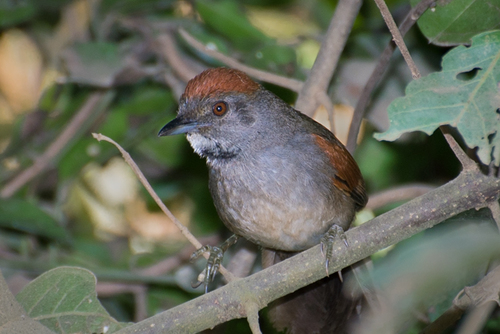
Cinereous-breasted Spinetail (Synallaxis hypospodia) Cinereous-breasted Spinetail
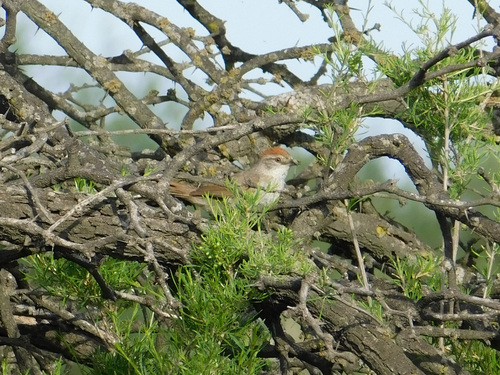
Pale-breasted Spinetail (Synallaxis albescens) Pale-breasted Spinetail

Media

Loading…

In short

The most reliable field mark between Cinereous-breasted Spinetail and Pale-breasted Spinetail is the color and tone of the breast and face: Cinereous-breasted shows a distinctly ash-gray (cinereous) breast and a faint gray supercilium, while Pale-breasted is paler overall with a pale buffy-gray breast and a more prominent pale line through the eye. Juveniles of both can be confusing, but Cinereous-breasted juveniles are more ochraceous below and lack a strong throat patch. Tail and wing coloration also help: Cinereous-breasted has a darker, more rufous crown and wing coverts, and a darker brown tail with rounded tips, while Pale-breasted’s tail is olive-brown with rufescent tinge and pointed tips. Both species are similar in size and structure, but Pale-breasted is slightly smaller and shorter-billed. Habitat overlap is possible in parts of Brazil and Bolivia, but Pale-breasted is much more widespread and variable. Use a combination of breast color, face pattern, and tail shape to separate them in the field.

Identification tips

  1. Breast color: Cinereous-breasted shows a distinctly ash-gray (cinereous) breast, while Pale-breasted is paler and buffier on the breast. This is often the quickest way to separate adults in good light.
  2. Face pattern: Cinereous-breasted has a faint gray supercilium on a gray-brown face; Pale-breasted has a paler brownish gray face with a more prominent pale line through the eye, making the face look more contrasting.
  3. Crown and nape: Cinereous-breasted has a dark gray-brown forecrown and chestnut-rufous crown and nape; Pale-breasted’s crown is dark rufous (sometimes mottled), but the forehead is olive grayish brown and less contrasting.
  4. Back and rump: Cinereous-breasted’s back, rump, and uppertail coverts are dark brown; Pale-breasted’s are olive-brown, sometimes with a rufescent tinge.
  5. Wing coverts: Cinereous-breasted has chestnut-rufous wing coverts; Pale-breasted’s are rufous, but often less rich and more tawny-brownish in the flight feathers.
  6. Tail color and shape: Cinereous-breasted’s tail is darker brown than the back, with rounded tips and a graduated shape; Pale-breasted’s tail is olive-brown with a rufescent tinge, more pointed at the tips, and also graduated. In the field, Cinereous-breasted’s tail may look darker and less pointed.
  7. Throat pattern: Both have whitish throats, but Cinereous-breasted’s lower throat feathers are blackish with whitish edges (less so in juveniles); Pale-breasted often shows black flecks on the lower throat, but juveniles have an almost white throat.
  8. Juvenile underparts: Juvenile Cinereous-breasted is ochraceous clay-brown below with a weak throat patch; juvenile Pale-breasted is paler, with a nearly white belly center and an almost white throat, and more rufescent upperparts.
  9. Bill structure: Pale-breasted is slightly smaller and has a shorter bill than Cinereous-breasted, but this is subtle and only apparent with direct comparison.
  10. Iris color: Cinereous-breasted has a reddish brown iris; Pale-breasted’s iris is yellowish to light brown or brown. This is rarely visible in the field.
  11. Leg color: Cinereous-breasted’s legs are olive or grayish olive to brownish yellow; Pale-breasted’s are yellowish brown to grayish olive or brownish yellow. Not a strong field mark.
  12. Voice: If heard, Cinereous-breasted’s loud, hurried chatter or sharp 'tut-Drrrrrrruh' can help, but Pale-breasted’s voice is not detailed here.
  13. Habitat context: In Brazil, Bolivia, and Paraguay, check for proximity to water and wet grassland for Cinereous-breasted; Pale-breasted is more likely in disturbed, edge, or drier open habitats, but overlap is possible.
  14. Subspecies variation: Pale-breasted is highly variable across its range; some subspecies may approach Cinereous-breasted in tone, so rely on multiple marks.
  15. Pitfalls: Both can appear similar in poor light or when seen briefly. Juveniles are especially confusing; focus on underpart tone (ochraceous vs. pale/white), throat pattern, and tail shape if possible.

Size

Cinereous-breasted Spinetail measures 15–16 cm in length and weighs 15–18 g, while Pale-breasted Spinetail ranges from 13–16 cm and 9–17 g. Both are similar in length, but Pale-breasted can be noticeably lighter and is described as slightly smaller and with a shorter bill. In the hand or with a good view, Cinereous-breasted may appear a bit bulkier, but this is subtle and not always reliable in the field.

Plumage

Juvenile Cinereous-breasted Spinetail has a gray-brown crown, ochraceous clay-brown underparts, and a less distinct throat patch, while juvenile Pale-breasted Spinetail shows a brownish gray crown, paler and more rufescent upperparts, an almost white throat, and paler underparts with a nearly white belly center. In adults, Cinereous-breasted has a faint gray supercilium, dark gray-brown forecrown, chestnut-rufous crown and wing coverts, and a dark brown, rounded tail. Its breast is distinctly ash-gray, with a whitish belly and brownish flanks. Pale-breasted adults have a pale brownish gray face, a prominent pale line through the eye, olive-brown back, rufous wing coverts, tawny-brownish flight feathers, and an olive-brown tail with rufescent tinge and pointed tips. Their breast is pale buffy gray, belly paler, and flanks browner. The throat of both species is whitish, but Pale-breasted often shows black flecks on the lower throat. Subspecies variation in Pale-breasted can affect these tones, but the general pattern holds.

Behaviour

Both species forage low in scrubby or grassy habitats, typically gleaning insects from foliage and branches about 1–2 meters above ground. Both are usually seen in pairs and are skulking, making brief appearances in open areas. There is no strong behavioral difference noted between the two in the field.

Habitat

Cinereous-breasted Spinetail is found in disjunct populations in Bolivia, Brazil, Paraguay, and Peru, favoring open, seasonally wet grasslands, scrub, campina, and savannah, often near water, up to 700 m elevation. Pale-breasted Spinetail is much more widespread, occurring from Costa Rica and Panama through most of South America (except Chile and Ecuador), in a wide range of open and semi-open habitats, including disturbed areas, grasslands, and scrub. In areas of overlap (Brazil, Bolivia), habitat can be similar, but Pale-breasted is more likely in disturbed or edge habitats, while Cinereous-breasted may be more tied to wetter grasslands and proximity to water.

Voice

Cinereous-breasted Spinetail gives a hurried, loud chatter on a single pitch, accelerating at the end (e.g., 'chéw, chew-chee-chee-chee-ee-ee-ee-ee-ee-eu'), or a high, sharp 'tut-Drrrrrrruh' with a staccato, slightly descending end. Pale-breasted Spinetail’s vocalizations are not detailed here, but are generally described elsewhere as a rapid, dry series of notes or trills. Vocal differences can be useful, but are not fully diagnostic without direct comparison.

Submit a better description

Use the same sections as the comparison. Your text is published immediately.

The most reliable field mark between Cinereous-breasted Spinetail and Pale-breasted Spinetail is the color and tone of the breast and face: Cinereous-breasted shows a distinctly ash-gray (cinereous) breast and a faint gray supercilium, while Pale-breasted is paler overall with a pale buffy-gray breast and a more prominent pale line through the eye. Juveniles of both can be confusing, but Cinereous-breasted juveniles are more ochraceous below and lack a strong throat patch. Tail and wing coloration also help: Cinereous-breasted has a darker, more rufous crown and wing coverts, and a darker brown tail with rounded tips, while Pale-breasted’s tail is olive-brown with rufescent tinge and pointed tips. Both species are similar in size and structure, but Pale-breasted is slightly smaller and shorter-billed. Habitat overlap is possible in parts of Brazil and Bolivia, but Pale-breasted is much more widespread and variable. Use a combination of breast color, face pattern, and tail shape to separate them in the field.

  1. Breast color: Cinereous-breasted shows a distinctly ash-gray (cinereous) breast, while Pale-breasted is paler and buffier on the breast. This is often the quickest way to separate adults in good light.
  2. Face pattern: Cinereous-breasted has a faint gray supercilium on a gray-brown face; Pale-breasted has a paler brownish gray face with a more prominent pale line through the eye, making the face look more contrasting.
  3. Crown and nape: Cinereous-breasted has a dark gray-brown forecrown and chestnut-rufous crown and nape; Pale-breasted’s crown is dark rufous (sometimes mottled), but the forehead is olive grayish brown and less contrasting.
  4. Back and rump: Cinereous-breasted’s back, rump, and uppertail coverts are dark brown; Pale-breasted’s are olive-brown, sometimes with a rufescent tinge.
  5. Wing coverts: Cinereous-breasted has chestnut-rufous wing coverts; Pale-breasted’s are rufous, but often less rich and more tawny-brownish in the flight feathers.
  6. Tail color and shape: Cinereous-breasted’s tail is darker brown than the back, with rounded tips and a graduated shape; Pale-breasted’s tail is olive-brown with a rufescent tinge, more pointed at the tips, and also graduated. In the field, Cinereous-breasted’s tail may look darker and less pointed.
  7. Throat pattern: Both have whitish throats, but Cinereous-breasted’s lower throat feathers are blackish with whitish edges (less so in juveniles); Pale-breasted often shows black flecks on the lower throat, but juveniles have an almost white throat.
  8. Juvenile underparts: Juvenile Cinereous-breasted is ochraceous clay-brown below with a weak throat patch; juvenile Pale-breasted is paler, with a nearly white belly center and an almost white throat, and more rufescent upperparts.
  9. Bill structure: Pale-breasted is slightly smaller and has a shorter bill than Cinereous-breasted, but this is subtle and only apparent with direct comparison.
  10. Iris color: Cinereous-breasted has a reddish brown iris; Pale-breasted’s iris is yellowish to light brown or brown. This is rarely visible in the field.
  11. Leg color: Cinereous-breasted’s legs are olive or grayish olive to brownish yellow; Pale-breasted’s are yellowish brown to grayish olive or brownish yellow. Not a strong field mark.
  12. Voice: If heard, Cinereous-breasted’s loud, hurried chatter or sharp 'tut-Drrrrrrruh' can help, but Pale-breasted’s voice is not detailed here.
  13. Habitat context: In Brazil, Bolivia, and Paraguay, check for proximity to water and wet grassland for Cinereous-breasted; Pale-breasted is more likely in disturbed, edge, or drier open habitats, but overlap is possible.
  14. Subspecies variation: Pale-breasted is highly variable across its range; some subspecies may approach Cinereous-breasted in tone, so rely on multiple marks.
  15. Pitfalls: Both can appear similar in poor light or when seen briefly. Juveniles are especially confusing; focus on underpart tone (ochraceous vs. pale/white), throat pattern, and tail shape if possible.

Cinereous-breasted Spinetail measures 15–16 cm in length and weighs 15–18 g, while Pale-breasted Spinetail ranges from 13–16 cm and 9–17 g. Both are similar in length, but Pale-breasted can be noticeably lighter and is described as slightly smaller and with a shorter bill. In the hand or with a good view, Cinereous-breasted may appear a bit bulkier, but this is subtle and not always reliable in the field.

Juvenile Cinereous-breasted Spinetail has a gray-brown crown, ochraceous clay-brown underparts, and a less distinct throat patch, while juvenile Pale-breasted Spinetail shows a brownish gray crown, paler and more rufescent upperparts, an almost white throat, and paler underparts with a nearly white belly center. In adults, Cinereous-breasted has a faint gray supercilium, dark gray-brown forecrown, chestnut-rufous crown and wing coverts, and a dark brown, rounded tail. Its breast is distinctly ash-gray, with a whitish belly and brownish flanks. Pale-breasted adults have a pale brownish gray face, a prominent pale line through the eye, olive-brown back, rufous wing coverts, tawny-brownish flight feathers, and an olive-brown tail with rufescent tinge and pointed tips. Their breast is pale buffy gray, belly paler, and flanks browner. The throat of both species is whitish, but Pale-breasted often shows black flecks on the lower throat. Subspecies variation in Pale-breasted can affect these tones, but the general pattern holds.

Both species forage low in scrubby or grassy habitats, typically gleaning insects from foliage and branches about 1–2 meters above ground. Both are usually seen in pairs and are skulking, making brief appearances in open areas. There is no strong behavioral difference noted between the two in the field.

Cinereous-breasted Spinetail is found in disjunct populations in Bolivia, Brazil, Paraguay, and Peru, favoring open, seasonally wet grasslands, scrub, campina, and savannah, often near water, up to 700 m elevation. Pale-breasted Spinetail is much more widespread, occurring from Costa Rica and Panama through most of South America (except Chile and Ecuador), in a wide range of open and semi-open habitats, including disturbed areas, grasslands, and scrub. In areas of overlap (Brazil, Bolivia), habitat can be similar, but Pale-breasted is more likely in disturbed or edge habitats, while Cinereous-breasted may be more tied to wetter grasslands and proximity to water.

Cinereous-breasted Spinetail gives a hurried, loud chatter on a single pitch, accelerating at the end (e.g., 'chéw, chew-chee-chee-chee-ee-ee-ee-ee-ee-eu'), or a high, sharp 'tut-Drrrrrrruh' with a staccato, slightly descending end. Pale-breasted Spinetail’s vocalizations are not detailed here, but are generally described elsewhere as a rapid, dry series of notes or trills. Vocal differences can be useful, but are not fully diagnostic without direct comparison.

Discard your changes?

You have unsaved edits. If you leave now, those changes will be lost.

Cinereous-breasted Spinetail · Pale-breasted Spinetail · My Tricky Birds