

Choco Sirystes vs Panama Flycatcher
Sirystes albogriseus versus Myiarchus panamensis
Play a quiz with Choco Sirystes and Panama Flycatcher
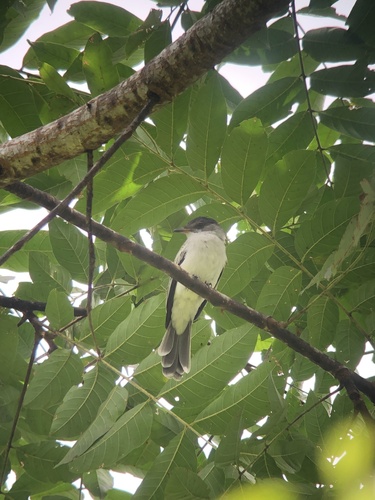 Choco Sirystes
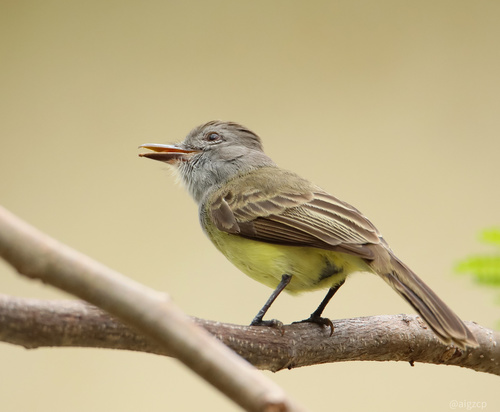 Panama Flycatcher
In short
The most reliable field mark to separate Choco Sirystes from Panama Flycatcher is the overall color pattern: Choco Sirystes is a striking gray-and-white bird with a black crown and bold white edges on the wings, while Panama Flycatcher has a more muted grayish-olive and yellow palette with no strong white contrasts. Juvenile Panama Flycatchers show rufous edges on the wing coverts and tail, a feature never present in Choco Sirystes of any age. In the field, Choco Sirystes appears cleaner and more sharply marked, especially on the face and underparts, whereas Panama Flycatcher is dingier and yellower below. Structure and size overlap, but subtle differences in wing and tail pattern, as well as underpart color, are key for confident ID.
Identification tips
- Juvenile wing and tail edges: Juvenile Panama Flycatchers show rufous (chestnut) edges to wing coverts and tail feathers; Choco Sirystes juveniles never show rufous, only a faint buffy tinge overall. Use this mark in late summer or early fall when juveniles are present.
- Crown color and pattern: Choco Sirystes has a black crown with a slight crest, sharply contrasting with the pale gray nape and back. Panama Flycatcher has a grayish olive crown with a subtle crest and a slightly darker center, giving a faint streaked look, but never truly black.
- Facial contrast: Choco Sirystes has a slate gray face that stands out against the black crown and pale nape. Panama Flycatcher's face is gray but blends more smoothly into the crown and upperparts.
- Upperparts: Choco Sirystes has pale gray nape and back with a white rump, while Panama Flycatcher is grayish olive above with no white rump.
- Wing pattern: Choco Sirystes shows bold white edges on the wing coverts and secondaries, visible as strong white lines or panels in flight or at rest. Panama Flycatcher has pale whitish yellow edges only on the tertials, not as extensive or contrasting.
- Tail pattern: Choco Sirystes has a dusky tail with grayish white tips; Panama Flycatcher has a brown tail with paler outer vanes but no white tips.
- Underparts: Choco Sirystes is grayish white on the throat and upper breast, becoming white on the belly and undertail. Panama Flycatcher is gray on the throat and breast, but the belly and undertail are distinctly yellow with a possible greenish wash on the flanks.
- Bill and legs: Both species have dark bills (sometimes paler at the base) and dark legs; not a reliable field mark.
- Size and structure: Panama Flycatcher is slightly larger, but the difference is not obvious in the field. Both have similar proportions and posture.
- Perched jizz: Choco Sirystes often appears cleaner and more sharply marked, with a crisp black-and-white look. Panama Flycatcher is dingier, with a more blended, olive-and-yellow appearance.
- Flight views: In flight, look for the bold white wing edges and white rump of Choco Sirystes versus the more uniform wings and lack of white rump in Panama Flycatcher.
- Habitat context: In dense humid Chocó forest, favor Choco Sirystes; in drier or edge habitats, Panama Flycatcher is more likely, but overlap occurs.
- Flock association: Choco Sirystes may join mixed-species flocks, especially in the canopy; Panama Flycatcher is more often solitary or in pairs.
- Seasonal context: Juvenile marks (rufous edges) are only present in Panama Flycatcher in the months after fledging; Choco Sirystes juveniles are never rufous.
- Sex and age: Both species are sexually monomorphic (males and females look alike), so sex is not a useful field mark.
Size
Both species are similar in size, but Panama Flycatcher is slightly larger on average (19–20 cm, 28–38.5 g) compared to Choco Sirystes (17.5–19 cm, 32–36 g) [wikipedia][avonet]. The difference is subtle and not always apparent in the field. Both have similar proportions, with no strong differences in bill shape or tail length noted in the sources.
Plumage
- Juveniles: Juvenile Panama Flycatchers have rufous edges on the wing coverts and tail feathers, which are absent in Choco Sirystes juveniles. Choco Sirystes juveniles resemble adults but with a faint buffy tinge overall, lacking any rufous or chestnut tones [wikipedia].
- Adults: Choco Sirystes adults have a black crown with a slight crest, slate gray face, pale gray nape and back, white rump, and bold white edges on the wing coverts and secondaries. The tail is dusky with grayish white tips. Underparts are grayish white to white. Panama Flycatcher adults have a grayish olive crown (with a slight crest and darker center), grayish olive upperparts, gray face, and wings with pale whitish yellow outer webs on the tertials. The tail is brown with paler outer vanes. Underparts are gray on the throat and breast, with yellow belly and undertail coverts (sometimes with a greenish wash on the flanks). No strong white in the wings or tail.
- Key contrast: Choco Sirystes is much more sharply marked, with a black crown, white rump, and bold white in the wings and tail, while Panama Flycatcher is overall duller, more olive above, and distinctly yellow below.
Behaviour
Both species are typical tyrant flycatchers, often perching upright and sallying for insects. Choco Sirystes is noted for joining mixed-species flocks and may be seen taking fruit as well as insects. Panama Flycatcher is not described as joining flocks as often, but both can be seen making aerial sallies from exposed perches. Behavioral differences are subtle and not reliably diagnostic in the field.
Habitat
Both species overlap in Colombia, Ecuador, and Panama, but Choco Sirystes is more restricted to humid Chocó lowland forests, while Panama Flycatcher is more widespread and can be found in a broader range of wooded habitats, including drier forests and edges [wikipedia][ebird]. If seen in dense humid forest, Choco Sirystes is more likely; in open or edge habitats, Panama Flycatcher is more expected. However, habitat alone is not sufficient for separation where ranges overlap.