

Chocofluittiran vs Panamese tiran
Sirystes albogriseus versus Myiarchus panamensis
Speel een quiz met Chocofluittiran en Panamese tiran
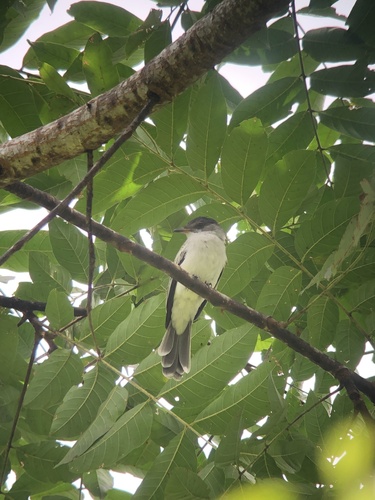 Chocofluittiran
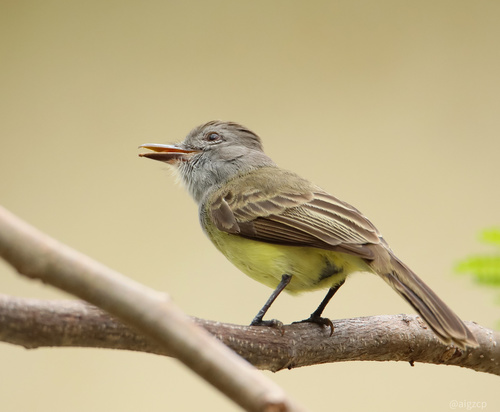 Panamese tiran
Kort gezegd
Het meest betrouwbare veldkenmerk om Chocofluittiran van Panamese tiran te scheiden, is het algemene kleurpatroon: Chocofluittiran is een opvallende grijs-witte vogel met een zwarte kroon en gedurfde witte randen op de vleugels, terwijl Panamese tiran een meer gedempte grijs-olijf en gele palet heeft zonder sterke witte contrasten. Juveniele Panamese tirans vertonen kastanjebruine randen op de vleugelbedekkingen en staart, een kenmerk dat nooit aanwezig is bij Chocofluittiran van welke leeftijd dan ook. In het veld lijkt Chocofluittiran schoner en scherper gemarkeerd, vooral op het gezicht en de onderdelen, terwijl Panamese tiran doffer en geler onder is. Structuur en grootte overlappen, maar subtiele verschillen in vleugel- en staartpatroon, evenals onderdeelkleur, zijn cruciaal voor een zekere identificatie.
Herkenningstips
- Juveniele vleugel- en staartranden: Juveniele Panamese tirans vertonen kastanjebruine randen op de vleugelbedekkingen en staartveren; Chocofluittiran juvenielen vertonen nooit kastanjebruin, alleen een vage buffy tint overal. Gebruik dit kenmerk in de late zomer of vroege herfst wanneer juvenielen aanwezig zijn.
- Kroon kleur en patroon: Chocofluittiran heeft een zwarte kroon met een lichte kuif, die scherp contrasteert met de lichte grijze nek en rug. Panamese tiran heeft een grijs-olijf kroon met een subtiele kuif en een iets donkerder centrum, wat een vage gestreepte uitstraling geeft, maar nooit echt zwart is.
- Gezichtcontrast: Chocofluittiran heeft een leisteengrijs gezicht dat opvalt tegen de zwarte kroon en lichte nek. Het gezicht van Panamese tiran is grijs maar mengt zich soepeler met de kroon en bovenste delen.
- Bovenste delen: Chocofluittiran heeft een lichte grijze nek en rug met een witte stuit, terwijl Panamese tiran grijs-olijf boven is zonder witte stuit.
- Vleugelpatroon: Chocofluittiran vertoont gedurfde witte randen op de vleugelbedekkingen en secundair, zichtbaar als sterke witte lijnen of panelen in de vlucht of in rust. Panamese tiran heeft alleen lichte witachtige gele randen op de tertials, niet zo uitgebreid of contrasterend.
- Staartpatroon: Chocofluittiran heeft een donkere staart met grijs-witte punten; Panamese tiran heeft een bruine staart met lichtere buitenste vanen maar geen witte punten.
- Onderdelen: Chocofluittiran is grijs-wit op de keel en bovenborst, wordt wit op de buik en onderstaart. Panamese tiran is grijs op de keel en borst, maar de buik en onderstaart zijn duidelijk geel met een mogelijke groenachtige waas op de flanken.
- Snavel en poten: Beide soorten hebben donkere snavels (soms lichter aan de basis) en donkere poten; geen betrouwbaar veldkenmerk.
- Grootte en structuur: Panamese tiran is iets groter, maar het verschil is niet duidelijk in het veld. Beide hebben vergelijkbare verhoudingen en houding.
- Zittende houding: Chocofluittiran lijkt vaak schoner en scherper gemarkeerd, met een heldere zwart-witte uitstraling. Panamese tiran is doffer, met een meer gemengde, olijf-gele uitstraling.
- Vluchtzicht: In de vlucht, let op de gedurfde witte vleugelranden en witte stuit van Chocofluittiran versus de meer uniforme vleugels en het ontbreken van een witte stuit bij Panamese tiran.
- Habitatcontext: In dichte vochtige Chocó-bossen, geef de voorkeur aan Chocofluittiran; in drogere of randhabitats is Panamese tiran waarschijnlijker, maar er is overlap.
- Vlucht associatie: Chocofluittiran kan zich bij gemengde soortenflocks voegen, vooral in de boomtoppen; Panamese tiran is vaker solitair of in paren.
- Seizoenscontext: Juveniele kenmerken (kastanjebruine randen) zijn alleen aanwezig in Panamese tiran in de maanden na het uitvliegen; Chocofluittiran juvenielen zijn nooit kastanjebruin.
- Geslacht en leeftijd: Beide soorten zijn seksueel monomorf (mannen en vrouwen lijken op elkaar), dus geslacht is geen nuttig veldkenmerk.
Grootte
Beide soorten zijn vergelijkbaar in grootte, maar Panamese tiran is gemiddeld iets groter (19–20 cm, 28–38,5 g) vergeleken met Chocofluittiran (17,5–19 cm, 32–36 g) [wikipedia][avonet]. Het verschil is subtiel en niet altijd zichtbaar in het veld. Beide hebben vergelijkbare verhoudingen, zonder sterke verschillen in snavelvorm of staartlengte die in de bronnen zijn opgemerkt.
Verenkleed
- Juvenielen: Juveniele Panamese tirans hebben kastanjebruine randen op de vleugelbedekkingen en staartveren, die ontbreken bij Chocofluittiran juvenielen. Chocofluittiran juvenielen lijken op volwassenen maar met een vage buffy tint overal, zonder kastanjebruine of kastanjetinten [wikipedia].
- Volwassenen: Chocofluittiran volwassenen hebben een zwarte kroon met een lichte kuif, leisteengrijs gezicht, lichte grijze nek en rug, witte stuit, en gedurfde witte randen op de vleugelbedekkingen en secundair. De staart is donker met grijs-witte punten. Onderdelen zijn grijs-wit tot wit. Panamese tiran volwassenen hebben een grijs-olijf kroon (met een lichte kuif en donkerder centrum), grijs-olijf bovenste delen, grijs gezicht, en vleugels met lichte witachtige gele buitenwebben op de tertials. De staart is bruin met lichtere buitenste vanen. Onderdelen zijn grijs op de keel en borst, met een gele buik en onderstaartbedekkingen (soms met een groenachtige waas op de flanken). Geen sterke witte in de vleugels of staart.
- Belangrijk contrast: Chocofluittiran is veel scherper gemarkeerd, met een zwarte kroon, witte stuit, en gedurfde witte in de vleugels en staart, terwijl Panamese tiran over het algemeen doffer is, meer olijf boven en duidelijk geel onder.
Gedrag
Beide soorten zijn typische tyrantvliegenvangers, vaak rechtop zittend en jagend op insecten. Chocofluittiran staat bekend om zich bij gemengde soortenflocks te voegen en kan worden gezien terwijl hij fruit en insecten eet. Panamese tiran wordt niet vaak beschreven als zich bij flocks te voegen, maar beide kunnen worden gezien terwijl ze luchtjachten maken vanaf blootgestelde zitplaatsen. Gedragsverschillen zijn subtiel en niet betrouwbaar diagnostisch in het veld.
Habitat
Beide soorten overlappen in Colombia, Ecuador en Panama, maar Chocofluittiran is meer beperkt tot vochtige Chocó laaglandbossen, terwijl Panamese tiran wijdverspreider is en in een breder scala van bosachtige habitats kan worden gevonden, inclusief drogere bossen en randen [wikipedia][ebird]. Als ze in dichte vochtige bossen worden gezien, is Chocofluittiran waarschijnlijker; in open of randhabitats is Panamese tiran meer te verwachten. Echter, alleen het habitat is niet voldoende voor scheiding waar de gebieden overlappen.