

Chinspot Batis vs Pale Batis
Batis molitor versus Batis soror
Play a quiz with Chinspot Batis and Pale Batis
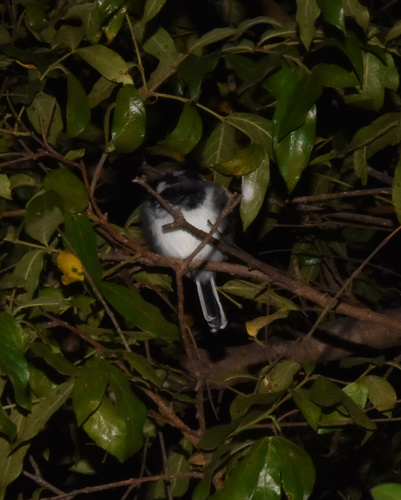 Chinspot Batis
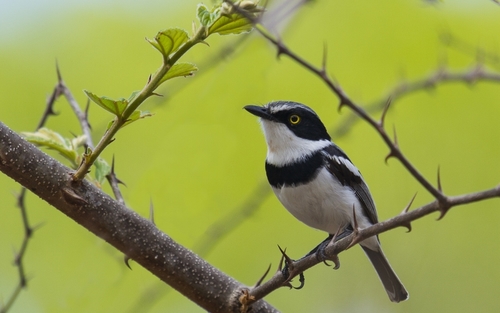 Pale Batis
In short
The most reliable field mark between Chinspot Batis and Pale Batis is the color and clarity of the breast band: male Chinspot Batis shows a solid black breast band, while male Pale Batis also has a black band but is generally paler overall and has a paler grey back. Females of both species have a rufous or chestnut breast band and spot on the throat, but the shade and intensity differ subtly (chestnut in Chinspot, paler rufous in Pale). Immature birds are similar to females but with even duller, tawny or buffy tones. Both species share a black face mask, white throat, and yellow eyes, but Pale Batis is slightly smaller and paler above, with faint white spots on the back. In the field, look for Chinspot’s more robust, darker appearance and Pale Batis’s lighter, more mottled upperparts. Vocalizations and subtle differences in behavior or habitat can help, but plumage—especially the breast band and back color—is key.
Identification tips
- Breast band color and clarity (adult males): Chinspot Batis shows a solid, crisp black breast band; Pale Batis also has a black band but is generally paler above and the band may appear less bold due to the lighter back and overall paler plumage.
- Female and immature breast band: Female Chinspot Batis has a chestnut breast band and throat spot; Pale Batis female has a paler rufous band and chin spot. Immatures of both are even duller, with Chinspot tending tawny and Pale Batis buffy or brownish.
- Back color and pattern: Chinspot Batis has a plain grey back; Pale Batis is paler grey above and shows faint white mottling or spots on the back, giving a frosted look—this is subtle but can be seen at close range.
- Face pattern: Both have a black mask and white supercilium/eyestring, but Pale Batis’s mask is bordered by a thinner, sharper white line, and the cap is paler grey.
- Wing stripe: Chinspot Batis has a prominent white wing stripe; Pale Batis’s wing markings are less emphasized, with more diffuse pale edges and spots.
- Underparts: Both are white below, but Chinspot Batis tends to look cleaner and more sharply marked, while Pale Batis may show a buffy wash in immatures.
- Eye color: Both species have yellow eyes—this is not a separator.
- Bill and legs: Both are black—no separation here.
- Size and structure: Chinspot Batis is slightly larger and stouter; Pale Batis is a bit smaller and more delicate, but this is rarely diagnostic unless seen side by side.
- Behavior: Chinspot Batis is more likely to be seen alone or in pairs and is notably territorial and aggressive, often flicking wings and tail, and making jinky display flights. Pale Batis is also active but more likely to join mixed-species flocks and is less aggressive.
- Habitat: Chinspot Batis is widespread in southern/central African woodlands; Pale Batis is more restricted to eastern Africa and miombo woodland. Use this only as a supporting clue.
- Vocalizations: Chinspot Batis gives a descending three-note whistle; Pale Batis repeats a mournful, piping 'pook pook pook.' Listen for the tone and repetition, but beware of overlap and mimicry.
- Display behavior: Both species engage in wing-fripping and display flights, but Chinspot Batis’s display is more aggressive and involves more pronounced jinking and head-up postures.
- Juvenile/immature confusion: Young birds of both species resemble females but are duller; look for the shade of the breast band (tawny in Chinspot, buffy/brownish in Pale) and the presence or absence of back mottling (faint white spots in Pale Batis only).
- Pitfalls: The most common mix-up is a female or immature Chinspot Batis mistaken for Pale Batis due to the paler breast band; always check for the back pattern and the clarity of the breast band, and use range and habitat as secondary clues.
Size
Both species are small, active batises, but Pale Batis is marginally lighter and shorter: Chinspot Batis averages 8.7 g and 12–13 cm, while Pale Batis averages 9.6 g and 10.5–11.5 cm. The difference is subtle and not likely to be diagnostic in the field, but Chinspot Batis may appear slightly bulkier and stouter, while Pale Batis is a touch more delicate and compact.
Plumage
No distinctive age-specific upperwing or flight pattern is described for either species, so focus on perched birds. Adult male Chinspot Batis has a solid black breast band, black face mask, short white eyestripe, grey cap, and grey upperparts with a prominent white wing stripe; the back is plain grey. Female Chinspot Batis replaces the black breast band with a chestnut band and spot on the throat. Juveniles resemble females but with a tawny breast band and throat spot. Pale Batis males also have a black breast band and mask, but the upperparts are a paler grey, and the back is mottled with faint white spots, giving a more 'frosted' or less uniform look. The female Pale Batis has a pale rufous breast band and chin spot, paler than the chestnut of Chinspot. Immatures are like females but with a browner breast band and a buffy wash below. Both species have yellow eyes, black bills and legs, and white underparts, but Pale Batis is overall paler and more finely marked above.
Behaviour
Both species are usually seen singly or in pairs and are active, restless foragers, flicking wings and tails. Chinspot Batis is notably territorial year-round, with males defending territories and displaying with wing-fripping and jinky flights. Pale Batis is also territorial but less is known about its social behavior; it often joins mixed-species foraging parties and forms single-sex 'parliaments' before breeding, similar to Chinspot. Both species use prominent perches and engage in courtship displays involving wing and tail movements, but Chinspot Batis is described as more aggressive and likely to mob predators.
Habitat
Chinspot Batis is widespread in southern African woodlands, from the Eastern Cape north to southern Kenya and Gabon, and is common in a variety of woodland habitats. Pale Batis is more localized, found mostly in eastern Africa in lowland miombo woodland. While both can occur in similar woodland settings, Chinspot Batis is more likely in southern and central regions, while Pale Batis is tied to the east coast and miombo zones. Overlap is possible in some areas, so habitat alone is not always diagnostic.
Voice
Both species have a three-note territorial call, but the quality differs: Chinspot Batis gives a descending three-note whistle, while Pale Batis’s call is a repeated, mournful, piping 'pook pook pook' up to 12 times. Both duet with excited 'wik-wik' calls, and both use bill snaps and wing fripping in displays. In the field, the difference in tone and repetition of the main call can help, but both are variable and can overlap in impression.