

Chinese Sparrowhawk vs Besra
Tachyspiza soloensis versus Tachyspiza virgata
Play a quiz with Chinese Sparrowhawk and Besra
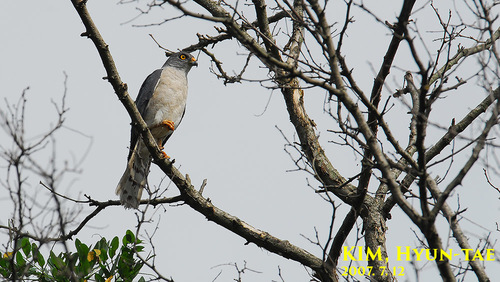 Chinese Sparrowhawk
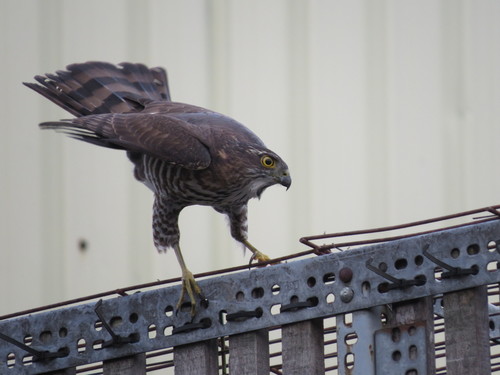 Besra
In short
The most reliable field mark between Chinese Sparrowhawk and Besra is the wing and underpart pattern, especially in juveniles and females. Juvenile Chinese Sparrowhawks show streaked underparts and less prominent black wingtips, while Besra juveniles are barred below and have a strongly barred underwing. Adult male Chinese Sparrowhawks are pale below with red eyes, while Besra males are darker and barred reddish brown below. Both are similar in size, but Besra is typically darker and more heavily barred, with a distinctive tail pattern. Structural and behavioral differences are subtle, so focus on underwing and underpart markings, especially in flight.
Identification tips
- Juvenile underpart pattern: Juvenile Chinese Sparrowhawks are streaked below (not barred), while juvenile Besras are barred brown below. This is the most reliable mark in immature birds, especially in flight or perched views of the underparts.
- Juvenile underwing: Juvenile Besras have a strongly barred underwing throughout, while Chinese Sparrowhawk juveniles show streaking (except for the coverts) and less prominent black wingtips.
- Adult male underparts: Chinese Sparrowhawk males are white below with little or no barring, while Besra males are white but heavily barred reddish brown below. Look for clean vs. barred underparts.
- Adult female underwing and breast: Female Chinese Sparrowhawks have rufous on the breast and underwing coverts, while female Besras are browner above and show strong barring below and on the underwing.
- Wingtip pattern: Adult Chinese Sparrowhawks have prominent black wingtips, especially in males. Besra lacks this feature; its wingtip is not uniquely marked.
- Tail pattern: Besra of all ages shows 3–4 equally sized dark bands on the uppertail. Chinese Sparrowhawk does not have this tail banding, so a clearly banded tail points to Besra.
- Eye color: Adult male Chinese Sparrowhawks have red eyes, while Besra adults (and female/juvenile Chinese Sparrowhawks) have yellow eyes. Use this only if the sex/age is clear.
- Upperparts: Besra is generally darker above (dark blue-grey in males, brown in females/juveniles) compared to the paler grey of Chinese Sparrowhawk males.
- Gular stripe: Besra has a broader gular stripe than Chinese Sparrowhawk, but this can be subtle and variable.
- Legs and toes: Besra is described as having thin, long legs and toes, but this is a subtle difference and not always reliable in the field.
- Flight style: Besra often shows a 'flap–flap–glide' flight, but this is not unique and should not be used as a primary separator.
- Habitat context: Besra is more likely in dense forest or deep cover, especially as a resident, but both species can overlap in more open woodland.
- Sexual dimorphism: Females of both species are larger, but size overlap is extensive and not a reliable field mark.
- Confusion risk: Immature birds in flight are most often confused; focus on underpart and underwing pattern (streaked vs. barred) and tail bands.
- When in doubt: If barring is strong below and on the underwing, and tail is clearly banded, Besra is most likely. If underparts are streaked and wingtips are black (especially in a paler bird), lean toward Chinese Sparrowhawk.
Size
Both species are very similar in size, with Chinese Sparrowhawk at 30–36 cm and Besra at 29–36 cm in length. Females of both species are larger than males. There is no reliable size difference in the field between them, so size alone is not diagnostic. [wikipedia]
Plumage
-
Juvenile/immature: Chinese Sparrowhawk juveniles have a grey face, brown upperparts, and yellow eyes. Their underparts are streaked (not barred), with barred thighs. The black wingtips are less prominent, and the underwings are streaked except for the coverts. In contrast, juvenile Besras are dark brown above and white below, but crucially, the underparts are barred with brown, and the underwing is strongly barred throughout. Both have yellow eyes at this age.
-
Adult male: Chinese Sparrowhawk males are grey above and white below, with prominent black wingtips and red eyes. Besra males are dark blue-grey above, white below but strongly barred reddish brown, and have a broader gular stripe. Their underwings are also strongly barred.
-
Adult female: Female Chinese Sparrowhawks have rufous on the breast and underwing coverts, yellow eyes, and less prominent black wingtips. Female Besras are browner above and also show strong barring below and on the underwing.
-
Tail: Besra of all ages shows 3–4 equally sized dark bands on the uppertail, a feature not described for Chinese Sparrowhawk.
-
Eyes: Adult Chinese Sparrowhawk males have red eyes; females and juveniles have yellow eyes. Besra adults and juveniles have yellow eyes.
-
Summary: Focus on underpart and underwing pattern (streaked vs. barred), and note the presence or absence of strong barring and tail bands for the best separation.
Behaviour
Both species are agile forest raptors, but Besra is noted for its characteristic 'flap–flap–glide' flight pattern and is adapted for maneuvering through dense vegetation with short broad wings and a long tail. Chinese Sparrowhawk flight behavior is not detailed in the notes, but both species rely on surprise attacks from cover. Behavior alone is not a reliable separator, but Besra may appear slightly more adapted to dense forest hunting.
Habitat
Besra is a widespread resident in dense forests across southern and eastern Asia, often remaining in thick cover but emerging into more open woodland, savannah, and cultivation in winter. Chinese Sparrowhawk habitat is not detailed in the notes, but it is generally less tied to dense forest than Besra. If seen in deep forest, Besra is more likely, but habitat overlap is significant, so this is not a primary field mark.