

Motmot

Chestnut Forest Rail vs Forbes's Forest Rail

Rallicula rubra versus Rallicula forbesi

Play a quiz with Chestnut Forest Rail and Forbes's Forest Rail

Chestnut Forest Rail (Rallicula rubra) Chestnut Forest Rail
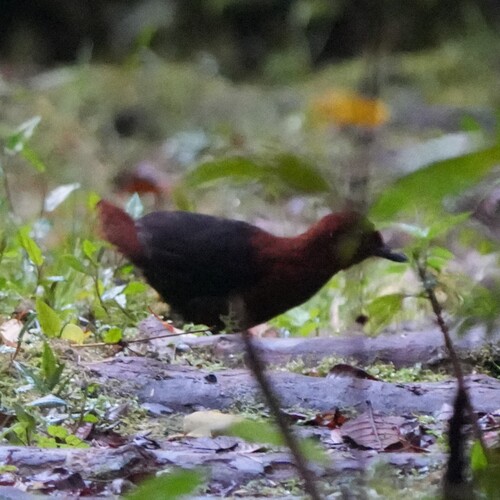
Forbes's Forest Rail (Rallicula forbesi) Forbes's Forest Rail

Media

Loading…

In short

The most reliable way to separate Chestnut Forest Rail from Forbes's Forest Rail in the field is by focusing on their habitat and elevation: Chestnut Forest Rail is restricted to the Arfak Mountains and western-central New Guinea Highlands, favoring montane forests, while Forbes's Forest Rail occurs more broadly across New Guinea in both lowland and montane forests. Structurally and in plumage, these two rails are very similar, and the available sources do not describe any age-specific wing or flight pattern differences. If you encounter a forest rail in lowland forest, it is almost certainly Forbes's; if you are in the high montane forests of the Arfak or central highlands, Chestnut is far more likely. When both occur in montane forest, careful attention to range is essential, as visual field marks are not well described for separating these species.

Identification tips

  1. Habitat and Elevation: The single most reliable clue is where you find the bird. Chestnut Forest Rail is limited to the Arfak Mountains and western-central New Guinea Highlands in montane forest; Forbes's is found throughout New Guinea in both lowland and montane forests.
  2. Geographic Range: If you are outside the Arfak Mountains or western-central highlands, you are almost certainly seeing Forbes's Forest Rail.
  3. Lowland vs Montane: Any forest rail in lowland forest is Forbes's; Chestnut does not occur there.
  4. Montane Overlap: In montane forests of the Arfak or central highlands, both species could occur, so check your exact location and elevation.
  5. Plumage: No diagnostic plumage or wing pattern differences are described for any age or season. Do not rely on color or pattern to separate these species.
  6. Structure: No structural differences (bill, tail, wing formula) are documented. Both species are similar in shape and size.
  7. Behavior: Both species are secretive and behave similarly in dense undergrowth. Do not use behavior for separation.
  8. Voice: No differences in vocalizations are described; do not use calls or songs for identification.
  9. Sex and Age: There are no known sex- or age-related differences that help in field separation.
  10. Pitfalls: The main pitfall is assuming you can separate these species visually; in reality, location and habitat are your only reliable clues.
  11. Quiz Context: If you mixed these up in a quiz, check the habitat and range clues in the question—visuals alone will not help.
  12. Documentation: If you believe you have found Chestnut Forest Rail outside its known range, document carefully and seek expert review, as misidentification is very likely.
  13. Community Input: Local birders and eBird reviewers will expect Chestnut only in its restricted montane range; unusual records should be scrutinized.
  14. Summary: For now, use range and habitat as your primary tools; field marks are not described well enough to separate these two rails by sight alone.

Size

There are no diagnostic size differences reported between Chestnut Forest Rail and Forbes's Forest Rail. Both are small rails in the Sarothruridae family, and the available sources do not provide adult measurement data to distinguish them. In the field, size alone is not a reliable separation point.

Plumage

No age-specific or adult plumage differences are documented in the available sources for these two species. Both are described as forest rails with similar coloration and structure. There are no notes on distinctive juvenile or immature upperwing patterns, nor on seasonal or sex-based plumage variation that would allow for field separation. If future field guides or photo references reveal subtle differences, those are not yet captured in the main references.

Behaviour

Behavioral differences are not described in the available notes. Both species are secretive forest rails, likely to be seen skulking in dense undergrowth or heard rather than seen. There is no evidence that one is more likely to flush, run, or behave differently in response to disturbance.

Habitat

Habitat is the most useful field clue. Chestnut Forest Rail is found only in the Arfak Mountains and western-central New Guinea Highlands, and is associated with subtropical or tropical moist montane forests. Forbes's Forest Rail is more widespread in New Guinea and occurs in both lowland and montane forests. Thus, a forest rail in lowland forest is Forbes's by default, while high-elevation records in the Arfak or central highlands point to Chestnut. Where their ranges overlap in montane forest, careful attention to locality is required.

Voice

No vocalization differences are described in the available sources. If you hear a rail in these habitats, voice alone cannot be used to distinguish Chestnut from Forbes's Forest Rail based on current information.

Submit a better description

Use the same sections as the comparison. Your text is published immediately.

The most reliable way to separate Chestnut Forest Rail from Forbes's Forest Rail in the field is by focusing on their habitat and elevation: Chestnut Forest Rail is restricted to the Arfak Mountains and western-central New Guinea Highlands, favoring montane forests, while Forbes's Forest Rail occurs more broadly across New Guinea in both lowland and montane forests. Structurally and in plumage, these two rails are very similar, and the available sources do not describe any age-specific wing or flight pattern differences. If you encounter a forest rail in lowland forest, it is almost certainly Forbes's; if you are in the high montane forests of the Arfak or central highlands, Chestnut is far more likely. When both occur in montane forest, careful attention to range is essential, as visual field marks are not well described for separating these species.

  1. Habitat and Elevation: The single most reliable clue is where you find the bird. Chestnut Forest Rail is limited to the Arfak Mountains and western-central New Guinea Highlands in montane forest; Forbes's is found throughout New Guinea in both lowland and montane forests.
  2. Geographic Range: If you are outside the Arfak Mountains or western-central highlands, you are almost certainly seeing Forbes's Forest Rail.
  3. Lowland vs Montane: Any forest rail in lowland forest is Forbes's; Chestnut does not occur there.
  4. Montane Overlap: In montane forests of the Arfak or central highlands, both species could occur, so check your exact location and elevation.
  5. Plumage: No diagnostic plumage or wing pattern differences are described for any age or season. Do not rely on color or pattern to separate these species.
  6. Structure: No structural differences (bill, tail, wing formula) are documented. Both species are similar in shape and size.
  7. Behavior: Both species are secretive and behave similarly in dense undergrowth. Do not use behavior for separation.
  8. Voice: No differences in vocalizations are described; do not use calls or songs for identification.
  9. Sex and Age: There are no known sex- or age-related differences that help in field separation.
  10. Pitfalls: The main pitfall is assuming you can separate these species visually; in reality, location and habitat are your only reliable clues.
  11. Quiz Context: If you mixed these up in a quiz, check the habitat and range clues in the question—visuals alone will not help.
  12. Documentation: If you believe you have found Chestnut Forest Rail outside its known range, document carefully and seek expert review, as misidentification is very likely.
  13. Community Input: Local birders and eBird reviewers will expect Chestnut only in its restricted montane range; unusual records should be scrutinized.
  14. Summary: For now, use range and habitat as your primary tools; field marks are not described well enough to separate these two rails by sight alone.

There are no diagnostic size differences reported between Chestnut Forest Rail and Forbes's Forest Rail. Both are small rails in the Sarothruridae family, and the available sources do not provide adult measurement data to distinguish them. In the field, size alone is not a reliable separation point.

No age-specific or adult plumage differences are documented in the available sources for these two species. Both are described as forest rails with similar coloration and structure. There are no notes on distinctive juvenile or immature upperwing patterns, nor on seasonal or sex-based plumage variation that would allow for field separation. If future field guides or photo references reveal subtle differences, those are not yet captured in the main references.

Behavioral differences are not described in the available notes. Both species are secretive forest rails, likely to be seen skulking in dense undergrowth or heard rather than seen. There is no evidence that one is more likely to flush, run, or behave differently in response to disturbance.

Habitat is the most useful field clue. Chestnut Forest Rail is found only in the Arfak Mountains and western-central New Guinea Highlands, and is associated with subtropical or tropical moist montane forests. Forbes's Forest Rail is more widespread in New Guinea and occurs in both lowland and montane forests. Thus, a forest rail in lowland forest is Forbes's by default, while high-elevation records in the Arfak or central highlands point to Chestnut. Where their ranges overlap in montane forest, careful attention to locality is required.

No vocalization differences are described in the available sources. If you hear a rail in these habitats, voice alone cannot be used to distinguish Chestnut from Forbes's Forest Rail based on current information.

Discard your changes?

You have unsaved edits. If you leave now, those changes will be lost.

Chestnut Forest Rail · Forbes's Forest Rail · My Tricky Birds