

Motmot

Caspian Gull vs Lesser Black-backed Gull

Larus cachinnans versus Larus fuscus

Play a quiz with Caspian Gull and Lesser Black-backed Gull
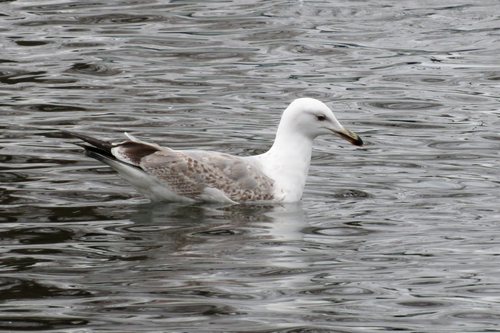
Caspian Gull (Larus cachinnans) Caspian Gull
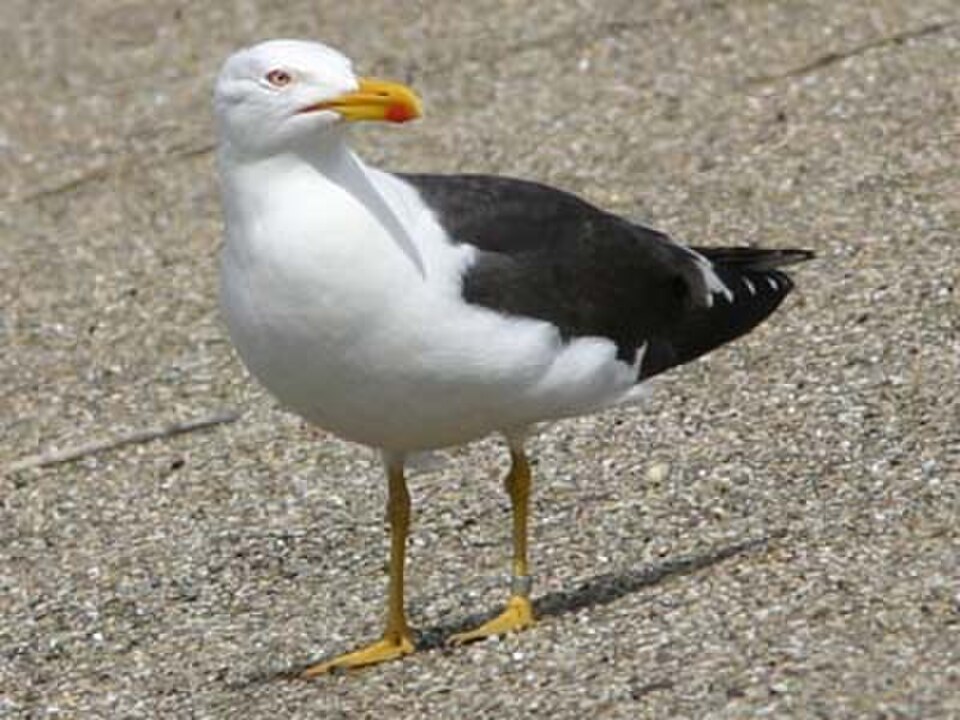
Lesser Black-backed Gull (Larus fuscus) Lesser Black-backed Gull

Media

Loading…

In short

The most reliable field mark between Caspian Gull and Lesser Black-backed Gull, especially in immature birds, is the wing and body pattern: first-winter Caspian Gulls show a pale head with dark nape streaks and two pale lines across the wing, while young Lesser Black-backed Gulls are darker and more uniformly scaly above. Caspian Gulls are also noticeably larger and longer-legged, with a longer, more slender bill and a sloping forehead, compared to the more compact, shorter-legged Lesser Black-backed Gull. Adult plumage differs in mantle color, with Lesser Black-backed Gulls showing a distinctly darker back and wings. Structural differences and subtle plumage cues are key, especially when birds are not in full adult plumage or are seen in flight.

Identification tips

  1. Juvenile/First-winter wing pattern: Look for two pale lines across the wing (formed by pale-tipped greater and median coverts) in Caspian Gull; Lesser Black-backed lacks these and is more uniformly dark above. This is most reliable in first-winter birds, especially in flight.
  2. Head and neck pattern (immatures): Caspian Gull immatures have a pale head with dark streaking on the nape; Lesser Black-backed is generally darker-headed and more uniform.
  3. Upperpart color (adults): Adult Caspian Gulls have a paler grey mantle and upperwings, while Lesser Black-backed Gulls are distinctly darker—almost black or dark slate, depending on subspecies.
  4. Leg color (adults): Adult Caspian Gulls show pale pink to pale yellowish legs; Lesser Black-backed Gulls have yellow legs. Leg color can be variable in Caspian and faded in worn birds, so use with caution.
  5. Bill structure: Caspian Gull has a longer, more slender bill with a gradual curve and a sloping forehead, giving a long-faced look. Lesser Black-backed's bill is shorter and stubbier in comparison.
  6. Body structure and posture: Caspian Gull appears longer-necked, longer-legged, and more upright, especially when alert. Lesser Black-backed is more compact and shorter-legged.
  7. Eye color: Caspian Gull often has a small, dark eye, while Lesser Black-backed's eye is variable but can be paler in some subspecies. Not always reliable at distance.
  8. Tertial pattern (juveniles): Lesser Black-backed Gulls have more solidly dark, unbarred tertials, whereas Caspian's tertials are less uniform and may show more contrast.
  9. Flight jizz: Caspian Gull's flight is more buoyant and elastic, with longer wings and a more graceful appearance. Lesser Black-backed is more direct and purposeful.
  10. Seasonal head streaking (adults): In winter, Lesser Black-backed Gulls develop a greyer head, while Caspian's head remains paler with less streaking.
  11. Size in mixed flocks: When seen together, Caspian Gulls are larger and bulkier, but beware of overlap and individual variation.
  12. Habitat context: In western Europe, Lesser Black-backed is more likely, especially along the Atlantic coast; Caspian is more expected in eastern Europe and Central Asia, but both can occur at large inland water bodies.
  13. Bill color (adults): Both have yellow bills with a red spot, so this is not a reliable separator.
  14. Moult timing: Lesser Black-backed adults may show incomplete moult into late autumn, but this is subtle and not usually diagnostic in the field.
  15. Vocalizations: Not covered in the provided notes; do not rely on calls for separation based on this data.

Size

Caspian Gull is significantly heavier and longer than Lesser Black-backed Gull, with an average adult body mass of 1154 g compared to 817.5 g for Lesser Black-backed. Caspian also has a longer wing chord (up to 48 cm vs. 45 cm), longer bill, and longer tarsus. In the field, Caspian appears lankier, with a longer neck, legs, and wings, while Lesser Black-backed is more compact and slightly smaller overall. These differences are most apparent when the two species are side by side, but can be subtle at a distance or with lone birds.

Plumage

Juvenile and first-winter Caspian Gulls are distinctive for their pale heads with dark streaking on the nape, pale underparts, and greyish backs. Their greater and median coverts have whitish tips, forming two pale lines across the wing—these are visible both at rest and in flight and are a key separation from Lesser Black-backed. In contrast, young Lesser Black-backed Gulls are darker overall, with scaly black-brown upperparts and a neat, more uniform wing pattern lacking the pale lines. Their tertials are more solidly dark and unbarred, which helps distinguish them from juvenile herring gulls but also sets them apart from Caspian. Adults are more straightforward: Caspian Gulls have a paler grey back and wings, while Lesser Black-backed Gulls show a much darker (almost black or dark slate) mantle and upperwings. Both species have yellow bills with a red spot in adults, but Caspian's bill is longer and more slender. Leg color can help: adult Caspian Gulls have pale pink to pale yellowish legs, while Lesser Black-backed Gulls typically have yellow legs. In winter, Lesser Black-backed Gulls develop a greyer head, but this is less marked in Caspian.

Behaviour

Caspian Gulls often appear more upright and elongated, with a distinctive long-necked, long-legged stance, especially when alert or walking. Their flight is more buoyant and elastic, with longer wings and a more graceful, almost languid jizz. Lesser Black-backed Gulls are more compact and purposeful in movement, both on the ground and in flight. They tend to be more gregarious and are often seen in mixed flocks with other large gulls, especially at coastal sites or rubbish tips.

Habitat

Both species can be found in similar habitats, including coasts, lakes, and urban areas, but their core ranges differ: Caspian Gull is more common in eastern Europe and Central Asia, while Lesser Black-backed Gull breeds along the Atlantic and Arctic coasts of Europe and winters further south, including West Africa. In areas of overlap, both may be seen at large inland water bodies, estuaries, and landfill sites. Lesser Black-backed is now increasingly recorded in North America, especially along the east coast, while Caspian remains rare there.

Submit a better description

Use the same sections as the comparison. Your text is published immediately.

The most reliable field mark between Caspian Gull and Lesser Black-backed Gull, especially in immature birds, is the wing and body pattern: first-winter Caspian Gulls show a pale head with dark nape streaks and two pale lines across the wing, while young Lesser Black-backed Gulls are darker and more uniformly scaly above. Caspian Gulls are also noticeably larger and longer-legged, with a longer, more slender bill and a sloping forehead, compared to the more compact, shorter-legged Lesser Black-backed Gull. Adult plumage differs in mantle color, with Lesser Black-backed Gulls showing a distinctly darker back and wings. Structural differences and subtle plumage cues are key, especially when birds are not in full adult plumage or are seen in flight.

  1. Juvenile/First-winter wing pattern: Look for two pale lines across the wing (formed by pale-tipped greater and median coverts) in Caspian Gull; Lesser Black-backed lacks these and is more uniformly dark above. This is most reliable in first-winter birds, especially in flight.
  2. Head and neck pattern (immatures): Caspian Gull immatures have a pale head with dark streaking on the nape; Lesser Black-backed is generally darker-headed and more uniform.
  3. Upperpart color (adults): Adult Caspian Gulls have a paler grey mantle and upperwings, while Lesser Black-backed Gulls are distinctly darker—almost black or dark slate, depending on subspecies.
  4. Leg color (adults): Adult Caspian Gulls show pale pink to pale yellowish legs; Lesser Black-backed Gulls have yellow legs. Leg color can be variable in Caspian and faded in worn birds, so use with caution.
  5. Bill structure: Caspian Gull has a longer, more slender bill with a gradual curve and a sloping forehead, giving a long-faced look. Lesser Black-backed's bill is shorter and stubbier in comparison.
  6. Body structure and posture: Caspian Gull appears longer-necked, longer-legged, and more upright, especially when alert. Lesser Black-backed is more compact and shorter-legged.
  7. Eye color: Caspian Gull often has a small, dark eye, while Lesser Black-backed's eye is variable but can be paler in some subspecies. Not always reliable at distance.
  8. Tertial pattern (juveniles): Lesser Black-backed Gulls have more solidly dark, unbarred tertials, whereas Caspian's tertials are less uniform and may show more contrast.
  9. Flight jizz: Caspian Gull's flight is more buoyant and elastic, with longer wings and a more graceful appearance. Lesser Black-backed is more direct and purposeful.
  10. Seasonal head streaking (adults): In winter, Lesser Black-backed Gulls develop a greyer head, while Caspian's head remains paler with less streaking.
  11. Size in mixed flocks: When seen together, Caspian Gulls are larger and bulkier, but beware of overlap and individual variation.
  12. Habitat context: In western Europe, Lesser Black-backed is more likely, especially along the Atlantic coast; Caspian is more expected in eastern Europe and Central Asia, but both can occur at large inland water bodies.
  13. Bill color (adults): Both have yellow bills with a red spot, so this is not a reliable separator.
  14. Moult timing: Lesser Black-backed adults may show incomplete moult into late autumn, but this is subtle and not usually diagnostic in the field.
  15. Vocalizations: Not covered in the provided notes; do not rely on calls for separation based on this data.

Caspian Gull is significantly heavier and longer than Lesser Black-backed Gull, with an average adult body mass of 1154 g compared to 817.5 g for Lesser Black-backed. Caspian also has a longer wing chord (up to 48 cm vs. 45 cm), longer bill, and longer tarsus. In the field, Caspian appears lankier, with a longer neck, legs, and wings, while Lesser Black-backed is more compact and slightly smaller overall. These differences are most apparent when the two species are side by side, but can be subtle at a distance or with lone birds.

Juvenile and first-winter Caspian Gulls are distinctive for their pale heads with dark streaking on the nape, pale underparts, and greyish backs. Their greater and median coverts have whitish tips, forming two pale lines across the wing—these are visible both at rest and in flight and are a key separation from Lesser Black-backed. In contrast, young Lesser Black-backed Gulls are darker overall, with scaly black-brown upperparts and a neat, more uniform wing pattern lacking the pale lines. Their tertials are more solidly dark and unbarred, which helps distinguish them from juvenile herring gulls but also sets them apart from Caspian. Adults are more straightforward: Caspian Gulls have a paler grey back and wings, while Lesser Black-backed Gulls show a much darker (almost black or dark slate) mantle and upperwings. Both species have yellow bills with a red spot in adults, but Caspian's bill is longer and more slender. Leg color can help: adult Caspian Gulls have pale pink to pale yellowish legs, while Lesser Black-backed Gulls typically have yellow legs. In winter, Lesser Black-backed Gulls develop a greyer head, but this is less marked in Caspian.

Caspian Gulls often appear more upright and elongated, with a distinctive long-necked, long-legged stance, especially when alert or walking. Their flight is more buoyant and elastic, with longer wings and a more graceful, almost languid jizz. Lesser Black-backed Gulls are more compact and purposeful in movement, both on the ground and in flight. They tend to be more gregarious and are often seen in mixed flocks with other large gulls, especially at coastal sites or rubbish tips.

Both species can be found in similar habitats, including coasts, lakes, and urban areas, but their core ranges differ: Caspian Gull is more common in eastern Europe and Central Asia, while Lesser Black-backed Gull breeds along the Atlantic and Arctic coasts of Europe and winters further south, including West Africa. In areas of overlap, both may be seen at large inland water bodies, estuaries, and landfill sites. Lesser Black-backed is now increasingly recorded in North America, especially along the east coast, while Caspian remains rare there.

Discard your changes?

You have unsaved edits. If you leave now, those changes will be lost.

Caspian Gull · Lesser Black-backed Gull · My Tricky Birds