

Motmot

Caspian Gull vs Great Black-backed Gull

Larus cachinnans versus Larus marinus

Play a quiz with Caspian Gull and Great Black-backed Gull
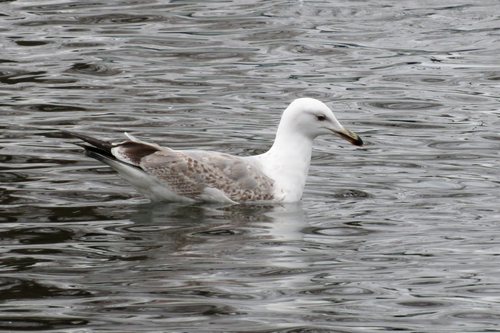
Caspian Gull (Larus cachinnans) Caspian Gull
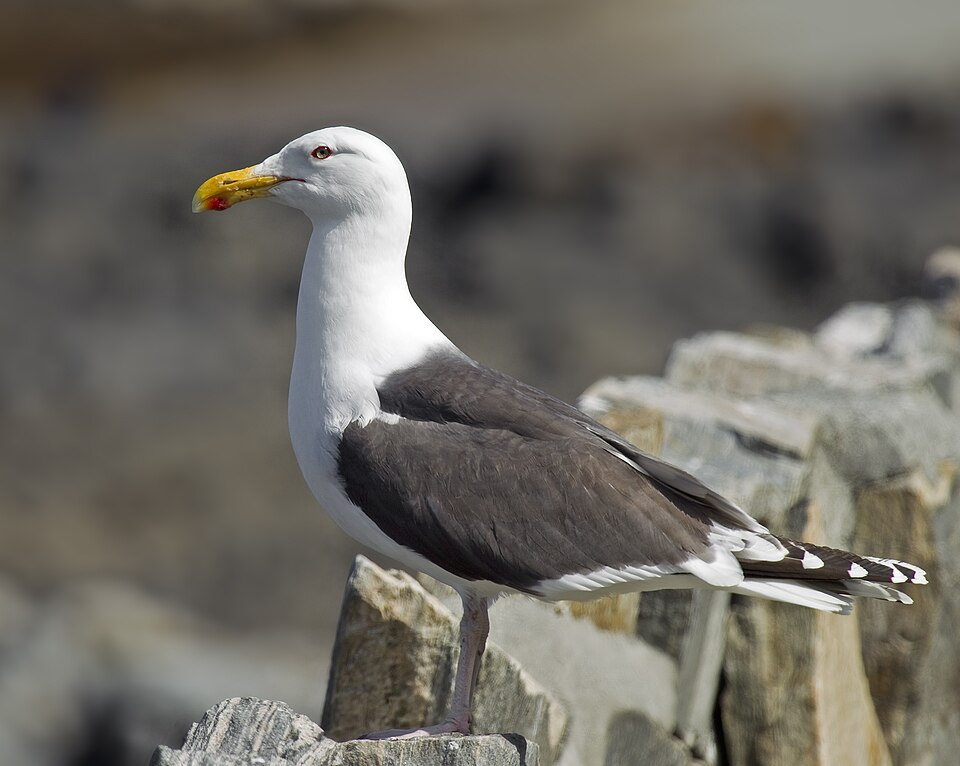
Great Black-backed Gull (Larus marinus) Great Black-backed Gull

Media

Loading…

In short

Juvenile and first-winter Caspian Gulls show pale heads with dark neck streaking and two pale lines across the wing coverts, while Great Black-backed Gulls of the same age are much darker, with scaly, checkered upperparts and a bold, banded tail. Adults are more easily separated: Great Black-backed is the only very large gull in the North Atlantic with a jet-black mantle and upperwings, while Caspian is paler grey. Caspian is slimmer, longer-legged, and longer-billed, with a small, often dark eye, compared to the bulkier, barrel-chested Great Black-backed. Structure and flight jizz, as well as juvenile wing and tail patterns, are key for separating these two, especially in immature birds.

Identification tips

  1. Juvenile/first-winter wing and tail pattern: Caspian shows two pale lines across the greater and median coverts (from whitish tips), a pale head with dark nape streaking, and a greyish back. Great Black-backed is much darker, with scaly, checkered upperparts and a white tail with zigzag bars and a broken blackish band near the tip—look for this bold tail pattern in flight.
  2. Overall darkness in immatures: Great Black-backed juveniles are much darker and more heavily marked above than Caspian, which appears paler and cleaner, especially on the head and underparts.
  3. Bill shape: Caspian has a long, slender bill (accentuated by a sloping forehead), while Great Black-backed's bill is stouter and more powerful. This is most obvious in profile at rest.
  4. Leg color: Caspian's legs are pale pink to yellowish, while Great Black-backed's are dark bluish-grey with some pink tones in juveniles. In adults, Great Black-backed's legs remain pinkish but are generally duller and darker than Caspian's.
  5. Eye color: Caspian often has a small, dark eye, while Great Black-backed's eye is not specifically described here, but is not a key mark.
  6. Adult upperwing/mantle color: Adult Great Black-backed is the only very large gull in the North Atlantic with a truly black back and upperwings. Caspian is pale grey above, never approaching the blackness of Great Black-backed.
  7. Primary pattern (adult): Caspian's outermost primary has a large white tip and a white tongue along the inner web, but this is subtle and not as obvious as the overall blackness of Great Black-backed's wing.
  8. Structure and jizz: Caspian is long-legged, long-necked, and slim, with a long bill and sloping forehead, giving a more elegant, upright appearance. Great Black-backed is barrel-chested, heavy, and powerful, with a thick neck and massive bill—appearing more menacing and less graceful.
  9. Flight silhouette: Caspian appears more elongated and slender in flight, with longer wings and neck, while Great Black-backed is broad-winged and heavy-bodied.
  10. Behavior: Great Black-backed is often seen dominating other gulls, behaving aggressively, and even hunting other birds. Caspian is less aggressive and more likely to be seen loafing or feeding with mixed gull flocks.
  11. Habitat context: In strictly marine or North Atlantic coastal settings, especially in winter, Great Black-backed is more likely. Caspian is more often found inland or in eastern Europe and Asia, but both can overlap in Western Europe.
  12. Age progression: Great Black-backed takes at least four years to reach adult plumage, remaining darker and more heavily marked for longer than Caspian, which matures more quickly and becomes paler sooner.
  13. Vocalization: If heard, Great Black-backed's call is much deeper and more resonant than Caspian's.
  14. Pitfall—size overlap: While Great Black-backed is larger, a large male Caspian can approach a small female Great Black-backed in size; rely on structure and plumage, not just bulk.
  15. Pitfall—other large gulls: Both can be confused with Herring or Yellow-legged Gulls, but only Great Black-backed is truly black above as an adult; Caspian is always paler and more slender.

Size

Caspian Gull is a large gull (mean body mass ~1154 g [wikidata]), but Great Black-backed Gull is even larger and bulkier, the largest gull in its range. While precise mass for Great Black-backed isn't given here, it is consistently described as heavier and more powerful, with a broader chest and more robust build. Caspian appears longer-legged and more slender, with a longer neck and bill, while Great Black-backed is stockier and heavier set.

Plumage

Juvenile/first-winter Caspian Gull has a pale head with dark streaking on the nape, pale underparts, and a greyish back; its greater and median wing coverts have whitish tips, forming two pale lines across the wing. In contrast, juvenile Great Black-backed Gull is much darker overall, with scaly, checkered black-brown upperparts, a paler face and nape, and blackish-brown flight feathers. The tail of Great Black-backed is white with zigzag bars and a broken blackish band near the tip, a strong field mark in flight. As Great Black-backed ages, it remains darker and more heavily streaked than Caspian, only gradually acquiring the adult's black upperparts over several years. Adult Caspian is pale grey above, slightly darker than Herring Gull but paler than Yellow-legged; Great Black-backed adult is unmistakable with its blackish upperwings and back. Caspian's outermost primary has a large white tip and a white tongue along the inner web, but this is subtle compared to the overall blackness of Great Black-backed's wing. Bill and leg color also differ: Caspian's bill is long and slender, legs pale pink to yellowish; Great Black-backed's bill is stouter, legs dark bluish-grey with pink tones in immatures.

Behaviour

Great Black-backed Gull is notably aggressive and predatory, often behaving more like a raptor—hunting, killing, and scavenging a wide range of prey, including other birds and mammals. Caspian Gull, while large and assertive, is not described as being nearly as predatory or dominant. In mixed gull flocks, Great Black-backed often dominates by sheer size and aggression, while Caspian appears more elegant and less confrontational.

Habitat

Both species can be found in coastal and inland habitats, but Great Black-backed Gull is closely tied to North Atlantic coasts and islands, especially in northern Europe and northeastern North America. Caspian Gull is more widespread in Eurasia, often found inland as well as along coasts. In Western Europe, Great Black-backed is more marine, while Caspian is increasingly found at inland lakes and reservoirs.

Voice

Great Black-backed Gull has a deep, laughing 'kaa-ga-ga' call, with the first note sometimes drawn out and a voice distinctly deeper than most other gulls. Caspian Gull's voice is not described in detail here, but is not noted as being as deep or distinctive as Great Black-backed's.

Submit a better description

Use the same sections as the comparison. Your text is published immediately.

Juvenile and first-winter Caspian Gulls show pale heads with dark neck streaking and two pale lines across the wing coverts, while Great Black-backed Gulls of the same age are much darker, with scaly, checkered upperparts and a bold, banded tail. Adults are more easily separated: Great Black-backed is the only very large gull in the North Atlantic with a jet-black mantle and upperwings, while Caspian is paler grey. Caspian is slimmer, longer-legged, and longer-billed, with a small, often dark eye, compared to the bulkier, barrel-chested Great Black-backed. Structure and flight jizz, as well as juvenile wing and tail patterns, are key for separating these two, especially in immature birds.

  1. Juvenile/first-winter wing and tail pattern: Caspian shows two pale lines across the greater and median coverts (from whitish tips), a pale head with dark nape streaking, and a greyish back. Great Black-backed is much darker, with scaly, checkered upperparts and a white tail with zigzag bars and a broken blackish band near the tip—look for this bold tail pattern in flight.
  2. Overall darkness in immatures: Great Black-backed juveniles are much darker and more heavily marked above than Caspian, which appears paler and cleaner, especially on the head and underparts.
  3. Bill shape: Caspian has a long, slender bill (accentuated by a sloping forehead), while Great Black-backed's bill is stouter and more powerful. This is most obvious in profile at rest.
  4. Leg color: Caspian's legs are pale pink to yellowish, while Great Black-backed's are dark bluish-grey with some pink tones in juveniles. In adults, Great Black-backed's legs remain pinkish but are generally duller and darker than Caspian's.
  5. Eye color: Caspian often has a small, dark eye, while Great Black-backed's eye is not specifically described here, but is not a key mark.
  6. Adult upperwing/mantle color: Adult Great Black-backed is the only very large gull in the North Atlantic with a truly black back and upperwings. Caspian is pale grey above, never approaching the blackness of Great Black-backed.
  7. Primary pattern (adult): Caspian's outermost primary has a large white tip and a white tongue along the inner web, but this is subtle and not as obvious as the overall blackness of Great Black-backed's wing.
  8. Structure and jizz: Caspian is long-legged, long-necked, and slim, with a long bill and sloping forehead, giving a more elegant, upright appearance. Great Black-backed is barrel-chested, heavy, and powerful, with a thick neck and massive bill—appearing more menacing and less graceful.
  9. Flight silhouette: Caspian appears more elongated and slender in flight, with longer wings and neck, while Great Black-backed is broad-winged and heavy-bodied.
  10. Behavior: Great Black-backed is often seen dominating other gulls, behaving aggressively, and even hunting other birds. Caspian is less aggressive and more likely to be seen loafing or feeding with mixed gull flocks.
  11. Habitat context: In strictly marine or North Atlantic coastal settings, especially in winter, Great Black-backed is more likely. Caspian is more often found inland or in eastern Europe and Asia, but both can overlap in Western Europe.
  12. Age progression: Great Black-backed takes at least four years to reach adult plumage, remaining darker and more heavily marked for longer than Caspian, which matures more quickly and becomes paler sooner.
  13. Vocalization: If heard, Great Black-backed's call is much deeper and more resonant than Caspian's.
  14. Pitfall—size overlap: While Great Black-backed is larger, a large male Caspian can approach a small female Great Black-backed in size; rely on structure and plumage, not just bulk.
  15. Pitfall—other large gulls: Both can be confused with Herring or Yellow-legged Gulls, but only Great Black-backed is truly black above as an adult; Caspian is always paler and more slender.

Caspian Gull is a large gull (mean body mass ~1154 g [wikidata]), but Great Black-backed Gull is even larger and bulkier, the largest gull in its range. While precise mass for Great Black-backed isn't given here, it is consistently described as heavier and more powerful, with a broader chest and more robust build. Caspian appears longer-legged and more slender, with a longer neck and bill, while Great Black-backed is stockier and heavier set.

Juvenile/first-winter Caspian Gull has a pale head with dark streaking on the nape, pale underparts, and a greyish back; its greater and median wing coverts have whitish tips, forming two pale lines across the wing. In contrast, juvenile Great Black-backed Gull is much darker overall, with scaly, checkered black-brown upperparts, a paler face and nape, and blackish-brown flight feathers. The tail of Great Black-backed is white with zigzag bars and a broken blackish band near the tip, a strong field mark in flight. As Great Black-backed ages, it remains darker and more heavily streaked than Caspian, only gradually acquiring the adult's black upperparts over several years. Adult Caspian is pale grey above, slightly darker than Herring Gull but paler than Yellow-legged; Great Black-backed adult is unmistakable with its blackish upperwings and back. Caspian's outermost primary has a large white tip and a white tongue along the inner web, but this is subtle compared to the overall blackness of Great Black-backed's wing. Bill and leg color also differ: Caspian's bill is long and slender, legs pale pink to yellowish; Great Black-backed's bill is stouter, legs dark bluish-grey with pink tones in immatures.

Great Black-backed Gull is notably aggressive and predatory, often behaving more like a raptor—hunting, killing, and scavenging a wide range of prey, including other birds and mammals. Caspian Gull, while large and assertive, is not described as being nearly as predatory or dominant. In mixed gull flocks, Great Black-backed often dominates by sheer size and aggression, while Caspian appears more elegant and less confrontational.

Both species can be found in coastal and inland habitats, but Great Black-backed Gull is closely tied to North Atlantic coasts and islands, especially in northern Europe and northeastern North America. Caspian Gull is more widespread in Eurasia, often found inland as well as along coasts. In Western Europe, Great Black-backed is more marine, while Caspian is increasingly found at inland lakes and reservoirs.

Great Black-backed Gull has a deep, laughing 'kaa-ga-ga' call, with the first note sometimes drawn out and a voice distinctly deeper than most other gulls. Caspian Gull's voice is not described in detail here, but is not noted as being as deep or distinctive as Great Black-backed's.

Discard your changes?

You have unsaved edits. If you leave now, those changes will be lost.

Caspian Gull · Great Black-backed Gull · My Tricky Birds