

Motmot

カスピセグロカモメ 対 オオカモメ

Larus cachinnans 対 Larus marinus

カスピセグロカモメとオオカモメのクイズ
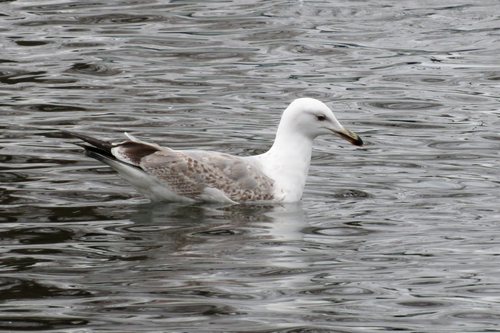
カスピセグロカモメ (Larus cachinnans) カスピセグロカモメ
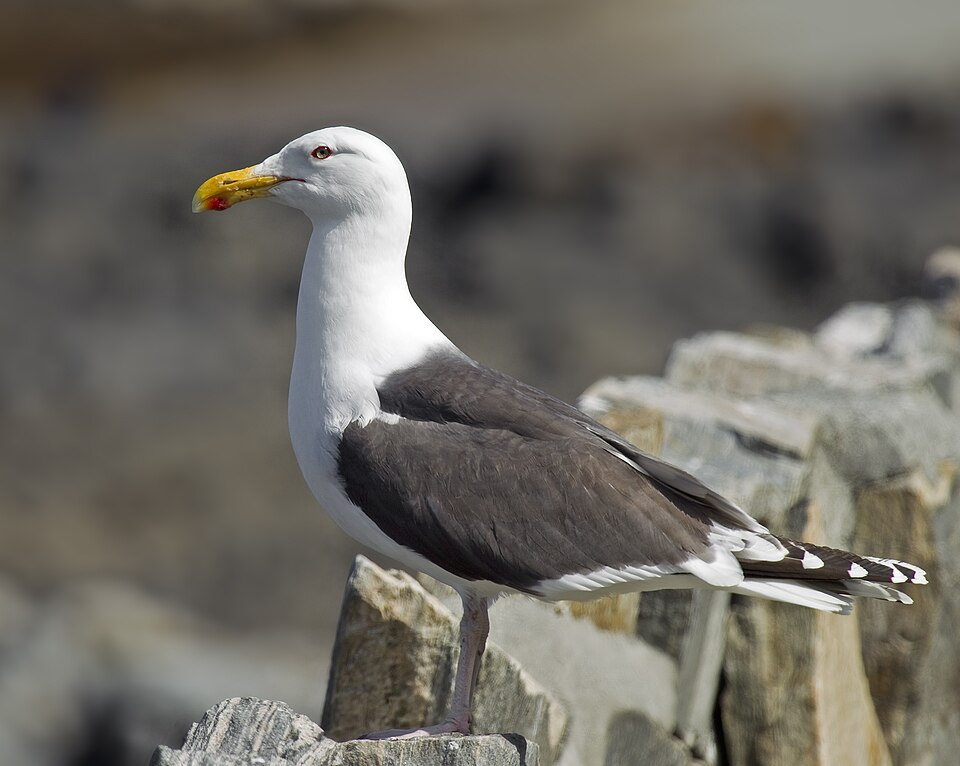
オオカモメ (Larus marinus) オオカモメ

メディア

読み込み中…

要点

幼鳥と初冬のカスピセグロカモメは、暗い首の縞模様と翼の覆羽に2本の淡い線を持つ淡い頭を示しますが、同じ年齢のオオカモメははるかに暗く、鱗状の市松模様の上面と太く帯状の尾を持っています。 成鳥はより簡単に区別できます:オオカモメは北大西洋で唯一の非常に大きなカモメで、漆黒の背中と上翼を持ち、カスピはより淡い灰色です。カスピはスリムで、脚が長く、くちばしも長く、小さく、しばしば暗い目を持ち、より大きく、樽状の胸を持つオオカモメと比較されます。構造と飛行の特徴、さらに幼鳥の翼と尾のパターンは、特に未熟な鳥においてこれら二つを区別するための鍵です。

識別のコツ

  1. 幼鳥/初冬の翼と尾のパターン: カスピは大きな覆羽と中間覆羽に淡い2本の線(白っぽい先端から)を示し、暗い後頭部の縞模様を持つ淡い頭と灰色の背中を持ちます。オオカモメははるかに暗く、鱗状の市松模様の上面と、ジグザグのバーと先端近くに壊れた黒っぽい帯を持つ白い尾を持っています—この大胆な尾のパターンを飛行中に探してください。
  2. 未熟な個体の全体的な暗さ: オオカモメの幼鳥はカスピよりもはるかに暗く、上面により重いマーキングがありますが、カスピは特に頭部と腹部でより淡く、きれいに見えます。
  3. くちばしの形: カスピは長くスリムなくちばしを持ち(傾斜した額によって強調され)、オオカモメのくちばしはより太く、より強力です。これは休息中の横から見ると最も明らかです。
  4. 脚の色: カスピの脚は淡いピンクから黄色がかっており、オオカモメの脚は暗い青灰色で、幼鳥にはいくつかのピンクのトーンがあります。成鳥では、オオカモメの脚はピンクがかっていますが、一般的にカスピよりも鈍く、暗いです。
  5. 目の色: カスピはしばしば小さく暗い目を持ちますが、オオカモメの目はここでは特に説明されておらず、重要な特徴ではありません。
  6. 成鳥の上翼/背中の色: 成鳥のオオカモメは北大西洋で唯一の本当に黒い背中と上翼を持つ非常に大きなカモメです。カスピは上面が淡い灰色で、オオカモメの黒さには決して近づきません。
  7. 成鳥の一次羽パターン: カスピの最も外側の一次羽は大きな白い先端と内側の膜に沿った白い舌を持っていますが、これは微妙で、オオカモメの翼の全体的な黒さほど明白ではありません。
  8. 構造と特徴: カスピは脚が長く、首が長く、スリムで、長いくちばしと傾斜した額を持ち、より優雅で直立した外観を与えます。オオカモメは樽状の胸を持ち、重く、力強く、太い首と巨大なくちばしを持ち—より威圧的で優雅さに欠けるように見えます。
  9. 飛行のシルエット: カスピは飛行中により細長くスリムに見え、翼と首が長く、オオカモメは広い翼と重い体を持っています。
  10. 行動: オオカモメは他のカモメを支配する姿がよく見られ、攻撃的に振る舞い、他の鳥を狩ることさえあります。カスピはそれほど攻撃的ではなく、混合カモメの群れでくつろいだり餌を食べたりしている姿が見られることが多いです。
  11. 生息地の文脈: 厳密に海洋的または北大西洋の沿岸環境、特に冬には、オオカモメの方が見られる可能性が高いです。カスピは内陸や東ヨーロッパ、アジアでより多く見られますが、両者は西ヨーロッパで重なることがあります。
  12. 年齢の進行: オオカモメは成鳥の羽毛に達するのに少なくとも4年かかり、カスピよりも長く暗く、重いマーキングを維持しますが、カスピはより早く成熟し、早く淡くなります。
  13. 鳴き声: 聞こえた場合、オオカモメの鳴き声はカスピのものよりもはるかに深く、共鳴します。
  14. 落とし穴—サイズの重なり: オオカモメは大きいですが、大きなオスのカスピは小さなメスのオオカモメにサイズで近づくことがあります;構造と羽毛に頼り、単に体重だけでは判断しないでください。
  15. 落とし穴—他の大きなカモメ: 両者はハイイロカモメやキアシセグロカモメと混同されることがありますが、成鳥として本当に黒いのはオオカモメだけです;カスピは常により淡く、よりスリムです。

大きさ

カスピセグロカモメは大きなカモメで(平均体重約1154g [wikidata])、オオカモメはさらに大きく、より重い、範囲内で最大のカモメです。オオカモメの正確な体重はここでは示されていませんが、常により重く、より力強いと説明されています。カスピは脚が長く、スリムに見え、首とくちばしが長いのに対し、オオカモメはよりがっしりとして重い体型です。

羽色

幼鳥/初冬のカスピセグロカモメは、後頭部に暗い縞模様のある淡い頭、淡い腹部、灰色がかった背中を持ち、より大きな覆羽と中間覆羽には白っぽい先端があり、翼に2本の淡い線を形成します。対照的に、幼鳥のオオカモメは全体的にはるかに暗く、鱗状の市松模様の黒褐色の上面、淡い顔と後頭部、黒褐色の飛行羽を持っています。オオカモメの尾は白く、ジグザグのバーと先端近くに壊れた黒褐色の帯を持ち、飛行中の強いフィールドマークです。オオカモメが年を重ねるにつれて、カスピよりも暗く、より重い縞模様を維持し、数年かけて成鳥の黒い上面を徐々に獲得します。成鳥のカスピは上面が淡い灰色で、ハイイロカモメよりやや暗いですが、キアシセグロカモメよりは淡いです;成鳥のオオカモメは黒っぽい上翼と背中を持ち、明確です。カスピの最も外側の一次羽は大きな白い先端と内側の膜に沿った白い舌を持っていますが、これはオオカモメの翼の全体的な黒さと比較すると微妙です。くちばしと脚の色も異なります:カスピのくちばしは長くスリムで、脚は淡いピンクから黄色がかっています;オオカモメのくちばしはより太く、脚は暗い青灰色で、幼鳥にはピンクのトーンがあります。

行動

オオカモメは特に攻撃的で捕食的であり、しばしば猛禽類のように振る舞い、他の鳥や哺乳類を含む広範な獲物を狩り、殺し、食べることがあります。カスピセグロカモメは大きくて主張が強いですが、捕食的または支配的であるとはほとんど説明されていません。混合カモメの群れでは、オオカモメはその大きさと攻撃性によってしばしば支配し、カスピはより優雅で対立を避けるように見えます。

生息環境

両種は沿岸および内陸の生息地で見られますが、オオカモメは北大西洋の沿岸や島に密接に関連しており、特に北ヨーロッパや北東北アメリカで見られます。カスピセグロカモメはユーラシア全体に広く分布し、内陸や沿岸でも見られます。西ヨーロッパでは、オオカモメはより海洋的であり、カスピは内陸の湖や貯水池でますます見られます。

声

オオカモメは深く、笑うような「カーガガ」という鳴き声を持ち、最初の音は時々引き延ばされ、他のほとんどのカモメよりも明らかに深い声です。カスピセグロカモメの声はここでは詳細に説明されていませんが、オオカモメほど深くも特徴的でもないとされています。

より良い説明を送る

比較と同じ項目を使ってください。文章はすぐに公開されます。

Juvenile and first-winter Caspian Gulls show pale heads with dark neck streaking and two pale lines across the wing coverts, while Great Black-backed Gulls of the same age are much darker, with scaly, checkered upperparts and a bold, banded tail. Adults are more easily separated: Great Black-backed is the only very large gull in the North Atlantic with a jet-black mantle and upperwings, while Caspian is paler grey. Caspian is slimmer, longer-legged, and longer-billed, with a small, often dark eye, compared to the bulkier, barrel-chested Great Black-backed. Structure and flight jizz, as well as juvenile wing and tail patterns, are key for separating these two, especially in immature birds.

  1. Juvenile/first-winter wing and tail pattern: Caspian shows two pale lines across the greater and median coverts (from whitish tips), a pale head with dark nape streaking, and a greyish back. Great Black-backed is much darker, with scaly, checkered upperparts and a white tail with zigzag bars and a broken blackish band near the tip—look for this bold tail pattern in flight.
  2. Overall darkness in immatures: Great Black-backed juveniles are much darker and more heavily marked above than Caspian, which appears paler and cleaner, especially on the head and underparts.
  3. Bill shape: Caspian has a long, slender bill (accentuated by a sloping forehead), while Great Black-backed's bill is stouter and more powerful. This is most obvious in profile at rest.
  4. Leg color: Caspian's legs are pale pink to yellowish, while Great Black-backed's are dark bluish-grey with some pink tones in juveniles. In adults, Great Black-backed's legs remain pinkish but are generally duller and darker than Caspian's.
  5. Eye color: Caspian often has a small, dark eye, while Great Black-backed's eye is not specifically described here, but is not a key mark.
  6. Adult upperwing/mantle color: Adult Great Black-backed is the only very large gull in the North Atlantic with a truly black back and upperwings. Caspian is pale grey above, never approaching the blackness of Great Black-backed.
  7. Primary pattern (adult): Caspian's outermost primary has a large white tip and a white tongue along the inner web, but this is subtle and not as obvious as the overall blackness of Great Black-backed's wing.
  8. Structure and jizz: Caspian is long-legged, long-necked, and slim, with a long bill and sloping forehead, giving a more elegant, upright appearance. Great Black-backed is barrel-chested, heavy, and powerful, with a thick neck and massive bill—appearing more menacing and less graceful.
  9. Flight silhouette: Caspian appears more elongated and slender in flight, with longer wings and neck, while Great Black-backed is broad-winged and heavy-bodied.
  10. Behavior: Great Black-backed is often seen dominating other gulls, behaving aggressively, and even hunting other birds. Caspian is less aggressive and more likely to be seen loafing or feeding with mixed gull flocks.
  11. Habitat context: In strictly marine or North Atlantic coastal settings, especially in winter, Great Black-backed is more likely. Caspian is more often found inland or in eastern Europe and Asia, but both can overlap in Western Europe.
  12. Age progression: Great Black-backed takes at least four years to reach adult plumage, remaining darker and more heavily marked for longer than Caspian, which matures more quickly and becomes paler sooner.
  13. Vocalization: If heard, Great Black-backed's call is much deeper and more resonant than Caspian's.
  14. Pitfall—size overlap: While Great Black-backed is larger, a large male Caspian can approach a small female Great Black-backed in size; rely on structure and plumage, not just bulk.
  15. Pitfall—other large gulls: Both can be confused with Herring or Yellow-legged Gulls, but only Great Black-backed is truly black above as an adult; Caspian is always paler and more slender.

Caspian Gull is a large gull (mean body mass ~1154 g [wikidata]), but Great Black-backed Gull is even larger and bulkier, the largest gull in its range. While precise mass for Great Black-backed isn't given here, it is consistently described as heavier and more powerful, with a broader chest and more robust build. Caspian appears longer-legged and more slender, with a longer neck and bill, while Great Black-backed is stockier and heavier set.

Juvenile/first-winter Caspian Gull has a pale head with dark streaking on the nape, pale underparts, and a greyish back; its greater and median wing coverts have whitish tips, forming two pale lines across the wing. In contrast, juvenile Great Black-backed Gull is much darker overall, with scaly, checkered black-brown upperparts, a paler face and nape, and blackish-brown flight feathers. The tail of Great Black-backed is white with zigzag bars and a broken blackish band near the tip, a strong field mark in flight. As Great Black-backed ages, it remains darker and more heavily streaked than Caspian, only gradually acquiring the adult's black upperparts over several years. Adult Caspian is pale grey above, slightly darker than Herring Gull but paler than Yellow-legged; Great Black-backed adult is unmistakable with its blackish upperwings and back. Caspian's outermost primary has a large white tip and a white tongue along the inner web, but this is subtle compared to the overall blackness of Great Black-backed's wing. Bill and leg color also differ: Caspian's bill is long and slender, legs pale pink to yellowish; Great Black-backed's bill is stouter, legs dark bluish-grey with pink tones in immatures.

Great Black-backed Gull is notably aggressive and predatory, often behaving more like a raptor—hunting, killing, and scavenging a wide range of prey, including other birds and mammals. Caspian Gull, while large and assertive, is not described as being nearly as predatory or dominant. In mixed gull flocks, Great Black-backed often dominates by sheer size and aggression, while Caspian appears more elegant and less confrontational.

Both species can be found in coastal and inland habitats, but Great Black-backed Gull is closely tied to North Atlantic coasts and islands, especially in northern Europe and northeastern North America. Caspian Gull is more widespread in Eurasia, often found inland as well as along coasts. In Western Europe, Great Black-backed is more marine, while Caspian is increasingly found at inland lakes and reservoirs.

Great Black-backed Gull has a deep, laughing 'kaa-ga-ga' call, with the first note sometimes drawn out and a voice distinctly deeper than most other gulls. Caspian Gull's voice is not described in detail here, but is not noted as being as deep or distinctive as Great Black-backed's.

変更を破棄しますか?

保存していない編集があります。今離れると失われます。

カスピセグロカモメ · オオカモメ · 苦手な鳥