

Motmot

Cape Cormorant vs Great Cormorant

Phalacrocorax capensis versus Phalacrocorax carbo

Play a quiz with Cape Cormorant and Great Cormorant
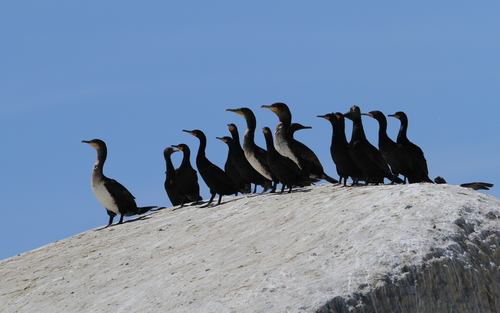
Cape Cormorant (Phalacrocorax capensis) Cape Cormorant
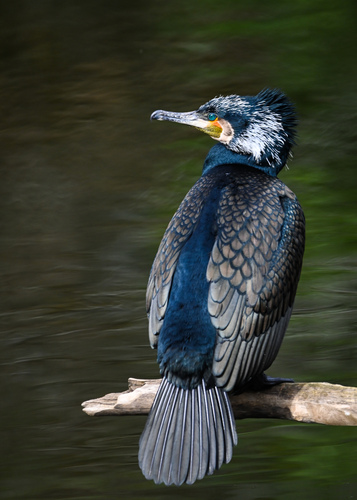
Great Cormorant (Phalacrocorax carbo) Great Cormorant

Media

Loading…

In short

The most reliable field mark between Cape Cormorant and Great Cormorant is the overall body size and the color and extent of the gular (throat) pouch: Cape Cormorant is distinctly slimmer and smaller, with a deep yellow-orange gular pouch, while Great Cormorant is heavier, bulkier, and shows a yellow (sometimes red) gular patch, often with a paler base to the bill. Juvenile and immature birds are especially tricky, but Great Cormorant immatures have pale underparts, while Cape Cormorant immatures and juveniles are browner overall with a brown throat and lack the strong underpart contrast. Adult Cape Cormorant is a glossy blue-black with turquoise eyes, whereas Great Cormorant adults have green eyes and, in breeding season, white thigh and head patches. Structure, especially bill thickness and body bulk, is a key separator at all ages.

Identification tips

  1. Size and bulk: Great Cormorant is nearly twice as heavy as Cape Cormorant and appears much bulkier, with a thicker neck and heavier bill. This is often the first clue, especially when birds are perched together or near familiar species.
  2. Gular pouch color and shape: Cape Cormorant has a deep yellow-orange gular pouch, often brighter and more extensive than the Great Cormorant's yellow (sometimes red) patch, which may be less vivid and is bordered by a paler base to the bill.
  3. Bill structure: Great Cormorant has a stouter, more strongly hooked bill, with a pale base and dark tip. Cape Cormorant's bill is slimmer, all dark grey-black, and less robust.
  4. Eye color: Adult Cape Cormorant has striking turquoise eyes with a greenish ring, while Great Cormorant adults have deep sea-green eyes. Juveniles of both species have duller, greyish eyes, but this is not a strong separator.
  5. Juvenile/immature underparts: Great Cormorant immatures and juveniles have pale to whitish underparts, sharply contrasting with the dark upperparts. Cape Cormorant immatures are brownish overall, with a brown throat and no pale belly—this is a key mark for young birds.
  6. Adult plumage gloss: Cape Cormorant adults are glossy blue-black all over, sometimes with bottle green wings in breeding season. Great Cormorant adults are black with bronze or greenish iridescence on the wings and tail, and purple on the body, but lack the uniform blue-black gloss.
  7. Breeding plumage patches: Great Cormorant adults in breeding season show conspicuous white filoplume patches on the thighs, head, and neck. Cape Cormorant never shows white patches in these areas.
  8. Gular pouch in juveniles: Cape Cormorant juveniles may have a black, white, or speckled gular pouch, while Great Cormorant juveniles always have a yellow or red patch, though it may be duller.
  9. Tail structure: Great Cormorant has a fairly long tail with 14 feathers. Cape Cormorant's tail is not specifically described as diagnostic, but is not as prominent.
  10. Flight jizz: Cape Cormorant is more streamlined in flight, with a slimmer profile and narrower wings. Great Cormorant appears heavier and broader-winged in flight, with slower, deeper wingbeats.
  11. Habitat context: If seen inland or outside southwestern Africa, it is almost certainly Great Cormorant. Cape Cormorant is strictly coastal and endemic to southwestern Africa.
  12. Vocalization: If you hear a repeated low-pitch cluck (courtship) or a 'gra-gra-gra' call, it is Cape Cormorant. Great Cormorant is mostly silent except for guttural colony noises.
  13. Sexual dimorphism: Both species show little to no sexual dimorphism in plumage, but Great Cormorant males are typically larger than females, while Cape Cormorant sexes are very similar in size and appearance.
  14. Seasonal changes: Great Cormorant's white breeding patches are only present in the breeding season; outside this period, the plumage is more uniformly black and less glossy, potentially causing confusion with Cape Cormorant. Look for structural and gular pouch differences in non-breeding birds.
  15. Pitfalls: Immature Great Cormorant with faded underparts may resemble Cape Cormorant, but the presence of any pale belly or breast, and overall bulk, still point to Great Cormorant. Cape Cormorant immatures never show a sharply pale belly.

Size

Great Cormorant is much larger and heavier than Cape Cormorant. Great Cormorant averages around 2200 g, nearly double the Cape Cormorant's 1217 g. In the field, Great Cormorant appears bulkier, with a stouter build and a heavier, thicker bill. Cape Cormorant is more slender, with a lighter, more streamlined appearance. Both species are similar in length, but the difference in mass and bulk is usually obvious when seen together or with experience.

Plumage

Juvenile and immature plumage is the main pitfall. Young Great Cormorants show pale to whitish underparts, a strong contrast with the dark upperparts, and dull grey eyes. As they age, their underparts become browner, but the pale belly and breast remain a key mark until they reach full adult plumage at 3–4 years. Cape Cormorant juveniles and immatures are browner overall, with a brown throat and no sharp pale underparts; their eyes are grey, and the gular pouch can be black, white, or speckled. Adult Cape Cormorant is glossy blue-black all over, with a deep yellow-orange gular pouch and turquoise eyes, while adult Great Cormorant is black with bronze to greenish iridescence on the wings and tail, purple on the body, and a yellow or red gular patch. In breeding season, Great Cormorant adults develop white filoplume patches on the thighs, head, and neck, which Cape Cormorant lacks. Cape Cormorant's breeding adults have bottle green wings, but this is subtle. Bill color is dark grey-black in Cape Cormorant, while Great Cormorant's bill is dark at the tip and paler at the base.

Behaviour

Both species are typical cormorants in behavior, often seen perched with wings spread to dry. Great Cormorant, being bulkier, may appear less agile in flight and more ponderous when taking off or landing. Cape Cormorant is more streamlined and may look more graceful in flight. Both are strong swimmers and divers, but Great Cormorant's larger size and heavier build are apparent when seen side by side.

Habitat

Cape Cormorant is endemic to the southwestern coast of Africa and is not found outside this region. Great Cormorant is widespread across the Old World, Australasia, and the Atlantic coast of North America, and can overlap with Cape Cormorant only in southern Africa. If seen outside southwestern Africa, the bird is almost certainly Great Cormorant. Both species use coastal waters, but Great Cormorant is also found inland on lakes and rivers, whereas Cape Cormorant is more strictly marine.

Voice

Cape Cormorant is more vocal, with both sexes producing a variety of calls for different contexts. Males give a repeated low-pitch cluck during courtship, while females respond with a 'gra-gra-gra' call. After pair formation, the male switches to a call similar to the female's. Great Cormorant is mostly silent except at breeding colonies, where it makes various guttural noises. In the field, vocalizations are rarely diagnostic unless observing courtship or colony behavior.

Submit a better description

Use the same sections as the comparison. Your text is published immediately.

The most reliable field mark between Cape Cormorant and Great Cormorant is the overall body size and the color and extent of the gular (throat) pouch: Cape Cormorant is distinctly slimmer and smaller, with a deep yellow-orange gular pouch, while Great Cormorant is heavier, bulkier, and shows a yellow (sometimes red) gular patch, often with a paler base to the bill. Juvenile and immature birds are especially tricky, but Great Cormorant immatures have pale underparts, while Cape Cormorant immatures and juveniles are browner overall with a brown throat and lack the strong underpart contrast. Adult Cape Cormorant is a glossy blue-black with turquoise eyes, whereas Great Cormorant adults have green eyes and, in breeding season, white thigh and head patches. Structure, especially bill thickness and body bulk, is a key separator at all ages.

  1. Size and bulk: Great Cormorant is nearly twice as heavy as Cape Cormorant and appears much bulkier, with a thicker neck and heavier bill. This is often the first clue, especially when birds are perched together or near familiar species.
  2. Gular pouch color and shape: Cape Cormorant has a deep yellow-orange gular pouch, often brighter and more extensive than the Great Cormorant's yellow (sometimes red) patch, which may be less vivid and is bordered by a paler base to the bill.
  3. Bill structure: Great Cormorant has a stouter, more strongly hooked bill, with a pale base and dark tip. Cape Cormorant's bill is slimmer, all dark grey-black, and less robust.
  4. Eye color: Adult Cape Cormorant has striking turquoise eyes with a greenish ring, while Great Cormorant adults have deep sea-green eyes. Juveniles of both species have duller, greyish eyes, but this is not a strong separator.
  5. Juvenile/immature underparts: Great Cormorant immatures and juveniles have pale to whitish underparts, sharply contrasting with the dark upperparts. Cape Cormorant immatures are brownish overall, with a brown throat and no pale belly—this is a key mark for young birds.
  6. Adult plumage gloss: Cape Cormorant adults are glossy blue-black all over, sometimes with bottle green wings in breeding season. Great Cormorant adults are black with bronze or greenish iridescence on the wings and tail, and purple on the body, but lack the uniform blue-black gloss.
  7. Breeding plumage patches: Great Cormorant adults in breeding season show conspicuous white filoplume patches on the thighs, head, and neck. Cape Cormorant never shows white patches in these areas.
  8. Gular pouch in juveniles: Cape Cormorant juveniles may have a black, white, or speckled gular pouch, while Great Cormorant juveniles always have a yellow or red patch, though it may be duller.
  9. Tail structure: Great Cormorant has a fairly long tail with 14 feathers. Cape Cormorant's tail is not specifically described as diagnostic, but is not as prominent.
  10. Flight jizz: Cape Cormorant is more streamlined in flight, with a slimmer profile and narrower wings. Great Cormorant appears heavier and broader-winged in flight, with slower, deeper wingbeats.
  11. Habitat context: If seen inland or outside southwestern Africa, it is almost certainly Great Cormorant. Cape Cormorant is strictly coastal and endemic to southwestern Africa.
  12. Vocalization: If you hear a repeated low-pitch cluck (courtship) or a 'gra-gra-gra' call, it is Cape Cormorant. Great Cormorant is mostly silent except for guttural colony noises.
  13. Sexual dimorphism: Both species show little to no sexual dimorphism in plumage, but Great Cormorant males are typically larger than females, while Cape Cormorant sexes are very similar in size and appearance.
  14. Seasonal changes: Great Cormorant's white breeding patches are only present in the breeding season; outside this period, the plumage is more uniformly black and less glossy, potentially causing confusion with Cape Cormorant. Look for structural and gular pouch differences in non-breeding birds.
  15. Pitfalls: Immature Great Cormorant with faded underparts may resemble Cape Cormorant, but the presence of any pale belly or breast, and overall bulk, still point to Great Cormorant. Cape Cormorant immatures never show a sharply pale belly.

Great Cormorant is much larger and heavier than Cape Cormorant. Great Cormorant averages around 2200 g, nearly double the Cape Cormorant's 1217 g. In the field, Great Cormorant appears bulkier, with a stouter build and a heavier, thicker bill. Cape Cormorant is more slender, with a lighter, more streamlined appearance. Both species are similar in length, but the difference in mass and bulk is usually obvious when seen together or with experience.

Juvenile and immature plumage is the main pitfall. Young Great Cormorants show pale to whitish underparts, a strong contrast with the dark upperparts, and dull grey eyes. As they age, their underparts become browner, but the pale belly and breast remain a key mark until they reach full adult plumage at 3–4 years. Cape Cormorant juveniles and immatures are browner overall, with a brown throat and no sharp pale underparts; their eyes are grey, and the gular pouch can be black, white, or speckled. Adult Cape Cormorant is glossy blue-black all over, with a deep yellow-orange gular pouch and turquoise eyes, while adult Great Cormorant is black with bronze to greenish iridescence on the wings and tail, purple on the body, and a yellow or red gular patch. In breeding season, Great Cormorant adults develop white filoplume patches on the thighs, head, and neck, which Cape Cormorant lacks. Cape Cormorant's breeding adults have bottle green wings, but this is subtle. Bill color is dark grey-black in Cape Cormorant, while Great Cormorant's bill is dark at the tip and paler at the base.

Both species are typical cormorants in behavior, often seen perched with wings spread to dry. Great Cormorant, being bulkier, may appear less agile in flight and more ponderous when taking off or landing. Cape Cormorant is more streamlined and may look more graceful in flight. Both are strong swimmers and divers, but Great Cormorant's larger size and heavier build are apparent when seen side by side.

Cape Cormorant is endemic to the southwestern coast of Africa and is not found outside this region. Great Cormorant is widespread across the Old World, Australasia, and the Atlantic coast of North America, and can overlap with Cape Cormorant only in southern Africa. If seen outside southwestern Africa, the bird is almost certainly Great Cormorant. Both species use coastal waters, but Great Cormorant is also found inland on lakes and rivers, whereas Cape Cormorant is more strictly marine.

Cape Cormorant is more vocal, with both sexes producing a variety of calls for different contexts. Males give a repeated low-pitch cluck during courtship, while females respond with a 'gra-gra-gra' call. After pair formation, the male switches to a call similar to the female's. Great Cormorant is mostly silent except at breeding colonies, where it makes various guttural noises. In the field, vocalizations are rarely diagnostic unless observing courtship or colony behavior.

Discard your changes?

You have unsaved edits. If you leave now, those changes will be lost.

Cape Cormorant · Great Cormorant · My Tricky Birds