

California Condor vs Turkey Vulture
Gymnogyps californianus versus Cathartes aura
Play a quiz with California Condor and Turkey Vulture
 California Condor
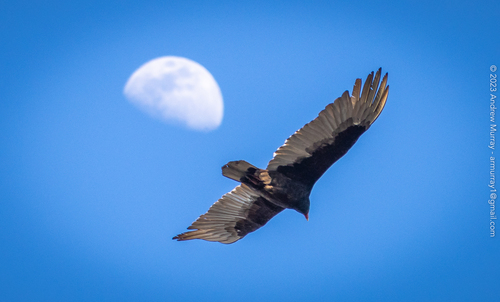 Turkey Vulture
In short
The most reliable field mark for separating California Condor from Turkey Vulture is the pattern on the underside of the wings in flight: adult condors show large, sharply defined white triangles or bands on the underwing, while turkey vultures display a silvery-gray color restricted to the flight feathers, with dark wing linings. Juvenile condors lack the crisp white, instead showing mottled gray patches, but still differ from the uniform silvery pattern of turkey vultures. Structurally, condors are much larger and bulkier, with broader wings and a stouter build, but at a distance, the underwing pattern remains the best clue. Both species have bare heads, but condors show a variable reddish to orange skin tone, while adult turkey vultures have a consistently red head. Habitat overlap is possible in the American West, so careful observation is needed.
Identification tips
- Underwing pattern in flight (all ages): Adult California Condors show large, sharply defined white triangles or bands on the underside of the wings; Turkey Vultures have silvery-gray flight feathers with dark wing linings, never forming bold white triangles. Juvenile condors have mottled gray underwings, still differing from the uniform silvery pattern of turkey vultures.
- Overall size and structure: Condors are massive, with very broad wings and a heavy, blocky body. Turkey Vultures are large but slimmer and more agile, with narrower wings and a smaller head.
- Head color and shape: Adult condors have bare heads with variable reddish to orange skin, sometimes flushed depending on mood; turkey vultures have a consistently red, small head. Juvenile turkey vultures have a gray head, while juvenile condors have a blackish head.
- Neck frill: Condors have a prominent black feathered frill at the base of the neck, absent in turkey vultures.
- Bill: Condors have a large, ivory-colored bill, more robust than the turkey vulture's shorter, hooked, ivory bill.
- Leg and foot color: Condors have gray legs and feet; turkey vultures have pinkish legs, often stained white.
- Tail shape in flight: Turkey Vultures have a long, slim tail; condors have a proportionally shorter, broader tail.
- Flight style: Turkey Vultures soar with wings held in a shallow V (dihedral) and rock side to side. Condors soar with wings held flat or only slightly raised, appearing steadier and more powerful.
- Roosting behavior: Turkey Vultures often roost in large groups on dead trees or man-made structures. Condors are less gregarious and prefer cliffs or large trees near open spaces.
- Habitat context: If seen outside of reintroduction areas (Grand Canyon, Zion, coastal California, northern Baja), a giant vulture is almost certainly a turkey vulture. Condors are extremely rare and localized.
- Plumage pitfalls: Juvenile condors lack the bold white underwing triangles, but their underwings are still mottled gray, not the even silvery pattern of turkey vultures. Immature turkey vultures may have duller heads, but the underwing pattern is consistent.
- Perched birds: Size and structure are key; condors appear much bulkier with a larger, blockier head and thicker bill. Turkey vultures are slimmer and have a smaller head.
- Voice: Both species are nearly silent, producing only hisses and grunts at close range; not useful for field ID.
- Season/sex: No significant seasonal or sexual dimorphism in either species for field marks.
- Community context: In condor reintroduction zones, always check for wing tags or transmitters, as all wild condors are marked for monitoring.
Size
California Condor is by far the largest North American land bird, with an average mass of 8450 g [wikidata], dwarfing the Turkey Vulture, which typically weighs between 800–2410 g. In the field, condors appear massive and heavy-bodied, with extremely broad wings and a large, blocky head. Turkey Vultures are large but noticeably lighter, slimmer, and more agile in flight. The condor's wingspan and body bulk are unmatched by any other vulture in North America.
Plumage
- Juvenile/Immature birds: Juvenile California Condors show mostly dark brown plumage with blackish heads and mottled gray on the underside of the flight feathers, lacking the clean white triangles of adults. Juvenile Turkey Vultures have a gray head with a black beak tip, and their underwings already show the classic silvery flight feathers with dark linings.
- Adults: Adult condors are black overall with large, sharply defined white triangular patches or bands on the underside of the wings. Turkey Vultures are brownish-black with silvery-gray flight feathers below, but the dark underwing linings create a two-toned effect, never showing the bold white triangles of condors. Both species have bare heads, but adult condors have variable reddish-orange skin, while turkey vultures have a consistently red head. The condor's neck is surrounded by a black feathered frill, not present in turkey vultures.
Behaviour
Turkey Vultures are highly gregarious, often seen roosting in large communal groups and foraging alone during the day. They soar with wings held in a shallow V (dihedral) and frequently rock side to side. California Condors are less social, usually seen singly or in small family groups, and soar with wings held flat or only slightly raised. Condors are more likely to be seen perched on cliffs or large trees, while turkey vultures often use dead trees or man-made structures for roosting.
Habitat
California Condors are now restricted to select reintroduction sites in northern Arizona, southern Utah, coastal California, and northern Baja California, favoring cliffs, canyons, and open spaces for soaring and nesting. Turkey Vultures are far more widespread, found across the Americas in a wide range of open and semi-open habitats, including forests, shrublands, pastures, and deserts. Overlap occurs in the American West, but condors are much rarer and more localized.
Voice
Both species lack true vocalizations due to the absence of a syrinx. They can only produce hisses and grunts, which are rarely heard except at close range. Voice is not a useful field mark for separating these two species.