

California Condor vs Turkey Vulture
Gymnogyps californianus contro Cathartes aura
Fai un quiz con California Condor e Turkey Vulture
 California Condor
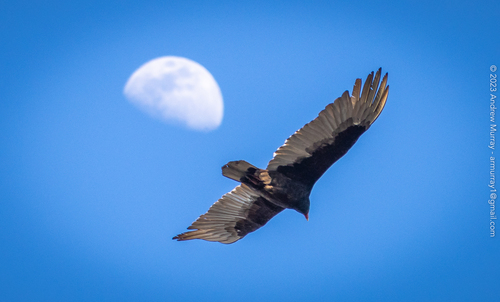 Turkey Vulture
In breve
Il segno di campo più affidabile per separare il California Condor dal Turkey Vulture è il motivo sulla parte inferiore delle ali in volo: i condor adulti mostrano grandi triangoli o bande bianche ben definiti sulla parte inferiore dell'ala, mentre i turkey vultures mostrano un colore grigio argenteo limitato alle penne da volo, con bordi scuri. I condor juvenili mancano del bianco netto, mostrando invece macchie grigie screziate, ma differiscono ancora dal motivo argenteo uniforme dei turkey vultures. Strutturalmente, i condor sono molto più grandi e massicci, con ali più larghe e una corporatura più robusta, ma da lontano, il motivo della parte inferiore dell'ala rimane il miglior indizio. Entrambe le specie hanno teste nude, ma i condor mostrano un tono di pelle variabile da rosso a arancione, mentre i turkey vultures adulti hanno una testa rossa costante. È possibile una sovrapposizione degli habitat nell'ovest americano, quindi è necessaria un'osservazione attenta.
Consigli di identificazione
- Motivo della parte inferiore dell'ala in volo (tutte le età): I condor adulti mostrano grandi triangoli o bande bianche ben definiti sulla parte inferiore delle ali; i turkey vultures hanno penne da volo grigio argenteo con bordi scuri, senza mai formare triangoli bianchi audaci. I condor juvenili hanno ali inferiori grigie screziate, differendo ancora dal motivo argenteo uniforme dei turkey vultures.
- Dimensioni e struttura complessive: I condor sono massicci, con ali molto larghe e un corpo pesante e massiccio. I turkey vultures sono grandi ma più snelli e agili, con ali più strette e una testa più piccola.
- Colore e forma della testa: I condor adulti hanno teste nude con pelle variabile da rossa a arancione, a volte arrossita a seconda dell'umore; i turkey vultures hanno una testa piccola e costantemente rossa. I turkey vultures juvenili hanno una testa grigia, mentre i condor juvenili hanno una testa nerastra.
- Collare del collo: I condor hanno un collare di piume nere prominente alla base del collo, assente nei turkey vultures.
- Becco: I condor hanno un grande becco di colore avorio, più robusto rispetto al becco più corto e ricurvo del turkey vulture.
- Colore delle gambe e dei piedi: I condor hanno gambe e piedi grigi; i turkey vultures hanno gambe rosate, spesso macchiate di bianco.
- Forma della coda in volo: I turkey vultures hanno una coda lunga e sottile; i condor hanno una coda proporzionalmente più corta e più larga.
- Stile di volo: I turkey vultures planano con le ali tenute in una V poco profonda (dihedrale) e oscillano da un lato all'altro. I condor planano con le ali tenute piatte o solo leggermente sollevate, apparendo più stabili e potenti.
- Comportamento di posato: I turkey vultures spesso si posano in grandi gruppi su alberi morti o strutture artificiali. I condor sono meno gregari e preferiscono scogliere o grandi alberi vicino a spazi aperti.
- Contesto dell'habitat: Se visti al di fuori delle aree di reintroduzione (Grand Canyon, Zion, California costiera, Baja settentrionale), un avvoltoio gigante è quasi certamente un turkey vulture. I condor sono estremamente rari e localizzati.
- Trappole del piumaggio: I condor juvenili mancano dei triangoli bianchi audaci sulla parte inferiore dell'ala, ma le loro ali inferiori sono ancora grigie screziate, non il motivo argenteo uniforme dei turkey vultures. I turkey vultures immaturi possono avere teste più opache, ma il motivo della parte inferiore dell'ala è costante.
- Uccelli posati: Dimensioni e struttura sono fondamentali; i condor appaiono molto più massicci con una testa più grande e squadrata e un becco più spesso. I turkey vultures sono più snelli e hanno una testa più piccola.
- Voce: Entrambe le specie sono quasi silenziose, producendo solo sibili e grugniti a distanza ravvicinata; non utili per l'identificazione sul campo.
- Stagione/sesso: Nessun dimorfismo sessuale o stagionale significativo in nessuna delle due specie per i segni di campo.
- Contesto comunitario: Nelle zone di reintroduzione dei condor, controlla sempre la presenza di etichette sulle ali o trasmettitori, poiché tutti i condor selvatici sono contrassegnati per il monitoraggio.
Taglia
Il California Condor è di gran lunga il più grande uccello terrestre del Nord America, con una massa media di 8450 g [wikidata], che fa sembrare piccoli i Turkey Vultures, che pesano tipicamente tra 800 e 2410 g. Sul campo, i condor appaiono massicci e corpulenti, con ali estremamente larghe e una testa grande e squadrata. I turkey vultures sono grandi ma notevolmente più leggeri, più snelli e più agili in volo. L'apertura alare e la massa corporea del condor non hanno pari con nessun altro avvoltoio del Nord America.
Piumaggio
- Uccelli juvenili/immaturi: I condor juvenili mostrano un piumaggio per lo più marrone scuro con teste nerastre e grigio screziato sulla parte inferiore delle penne da volo, mancando dei triangoli bianchi puliti degli adulti. I turkey vultures juvenili hanno una testa grigia con una punta di becco nera, e le loro ali inferiori mostrano già le classiche penne da volo argentee con bordi scuri.
- Adulti: I condor adulti sono neri nel complesso con grandi macchie o bande triangolari bianche ben definite sulla parte inferiore delle ali. I turkey vultures sono marrone scuro con penne da volo grigio argenteo sotto, ma i bordi scuri delle ali inferiori creano un effetto bicolore, senza mai mostrare i triangoli bianchi audaci dei condor. Entrambe le specie hanno teste nude, ma i condor adulti hanno pelle variabile da rossa a arancione, mentre i turkey vultures hanno una testa costantemente rossa. Il collo del condor è circondato da un collare di piume nere, assente nei turkey vultures.
Comportamento
I turkey vultures sono altamente gregari, spesso visti posati in grandi gruppi comuni e a cercare cibo da soli durante il giorno. Planano con le ali tenute in una V poco profonda (dihedrale) e oscillano frequentemente da un lato all'altro. I California Condors sono meno sociali, di solito visti singolarmente o in piccoli gruppi familiari, e planano con le ali tenute piatte o solo leggermente sollevate. I condor sono più propensi a essere visti posati su scogliere o grandi alberi, mentre i turkey vultures usano spesso alberi morti o strutture artificiali per posarsi.
Habitat
I California Condors sono ora ristretti a siti di reintroduzione selezionati nel nord dell'Arizona, nel sud dello Utah, nella California costiera e nel nord della Baja California, preferendo scogliere, canyon e spazi aperti per planare e nidificare. I turkey vultures sono molto più diffusi, trovati in tutta l'America in una vasta gamma di habitat aperti e semi-aperti, tra cui foreste, cespugli, pascoli e deserti. Si verifica una sovrapposizione nell'ovest americano, ma i condor sono molto più rari e localizzati.
Voce
Entrambe le specie mancano di vocalizzazioni vere e proprie a causa dell'assenza di un syrinx. Possono solo produrre sibili e grugniti, che sono raramente uditi se non a distanza ravvicinata. La voce non è un segno utile per separare queste due specie.
California Condor · Turkey Vulture · I miei uccelli difficili