

Buller's Shearwater vs Red-footed Booby
Ardenna bulleri versus Sula sula
Play a quiz with Buller's Shearwater and Red-footed Booby
 Buller's Shearwater
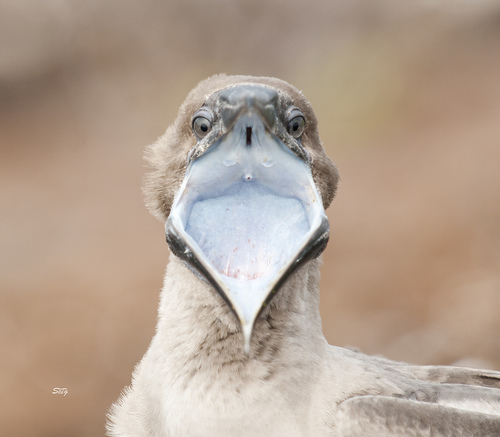 Red-footed Booby
In short
The most reliable field mark to separate Buller's Shearwater from Red-footed Booby is the distinctive upperwing pattern in flight: Buller's Shearwater of all ages shows a striking, broken black 'M' across bluish-grey upperwings, while Red-footed Booby (regardless of morph or age) never shows this pattern and instead has plain or two-toned wings depending on morph. Buller's Shearwater is a streamlined, medium-large shearwater with a wedge-shaped tail and dark bill, always appearing more slender and agile in flight compared to the chunkier, long-necked, and big-billed Red-footed Booby. Red-footed Booby is much heavier and bulkier, with unmistakable red feet in adults and a variety of plumage morphs, but never the crisp 'M' of Buller's. If you see a seabird with a bold 'M' on the upperwing, it's Buller's Shearwater; if you see red feet or a bird perching in trees, it's Red-footed Booby.
Identification tips
- Upperwing pattern in flight (all ages): Buller's Shearwater shows a bold, broken black 'M' across bluish-grey upperwings, with black primaries and tertials separated by a pale grey panel. No Red-footed Booby morph or age ever shows this pattern; their wings are plain or two-toned, depending on morph.
- Red feet (adults): Only Red-footed Booby has bright red feet as an adult. Buller's Shearwater has dark legs and feet.
- Bill color: Buller's Shearwater has a dark bill; Red-footed Booby has a pink and blue bill and throat pouch in adults.
- Tail shape: Buller's Shearwater has a wedge-shaped, blackish tail; Red-footed Booby's tail varies with morph (black or white) but is never wedge-shaped.
- Body structure: Buller's Shearwater is slender, long-winged, and streamlined, with a relatively small head and short neck. Red-footed Booby is bulkier, with a longer neck, deeper chest, and a large, thick bill.
- Flight style: Buller's Shearwater glides low over waves with quick, stiff wingbeats and long glides. Red-footed Booby soars higher, with slower, deeper wingbeats, and is clumsy at takeoff and landing.
- Perching behavior: Red-footed Booby often perches in trees or on branches, especially at breeding colonies. Buller's Shearwater is never seen perching above ground level.
- Plumage variation: Red-footed Booby comes in several morphs (white, brown, mixed), but none have the bluish-grey and black 'M' of Buller's. Juvenile boobies are brownish with dark wings and pale legs, lacking any bold wing pattern.
- Underparts: Buller's Shearwater has bright white underparts with a sharp contrast to the grey upperparts. Red-footed Booby's underparts vary by morph but are never as crisply white below with a grey cap as Buller's.
- Head pattern: Buller's Shearwater shows a grey cap down to the eye and white cheeks; Red-footed Booby's head color varies but never matches this pattern.
- Size in mixed flocks: If seen together, Red-footed Booby is much larger and bulkier than Buller's Shearwater.
- Bill size and shape: Buller's has a fine, dark, shearwater bill; Red-footed Booby's bill is long, thick, and colored.
- Habitat context: A seabird seen perched in a tree or on a branch is a Red-footed Booby; Buller's Shearwater never perches above ground.
- Juvenile confusion: Juvenile Buller's Shearwater already shows the adult wing pattern; juvenile Red-footed Booby is brownish with no 'M' on the wing and pale pinkish legs.
- Feeding behavior: Buller's Shearwater picks food from the surface or just below, rarely diving; Red-footed Booby plunge-dives from height.
Size
Red-footed Booby is substantially larger and bulkier than Buller's Shearwater. Adult Buller's averages about 325–425 g in mass, 46–47 cm in length, and 97–99 cm wingspan. Red-footed Booby averages nearly 1 kg (998 g), is about 70 cm long, and has a wingspan up to 152 cm. In the field, this means Red-footed Booby looks much heavier-bodied, with a deeper chest and longer neck, while Buller's Shearwater is more streamlined and slender. Size alone can be misleading at a distance, but in mixed flocks or close views, the booby's bulk and longer wings are evident.
Plumage
The most diagnostic plumage difference is in the upperwing pattern seen in flight. Buller's Shearwater (all ages, including fledged juveniles) shows a unique, broken black 'M' across the bluish-grey upperwings: a blackish stripe runs from the tertials to the primary coverts, with black primaries, but the two black areas are separated by a pale grey (sometimes almost white) panel, creating the 'M' effect. The underparts are bright white, and the head shows a grey cap down to the eye, with white cheeks. The tail is wedge-shaped and blackish. Red-footed Booby, regardless of morph, never shows this 'M' pattern. Instead, the white morph is mostly white with black flight feathers, the brown morph is overall brown, and intermediate morphs mix brown and white in various combinations. All adult Red-footed Boobies have red feet, and the bill is pink and blue. Juvenile boobies are brownish with darker wings and pale pinkish legs, lacking any 'M' pattern. No Red-footed Booby morph or age shows the crisp, contrasting upperwing of Buller's Shearwater.
Behaviour
Buller's Shearwater is a classic shearwater, rarely perching, always seen flying low over the ocean with buoyant, gliding flight interspersed with short bursts of flapping. It does not dive from flight and feeds mostly by snatching prey at or just below the surface. Red-footed Booby is a powerful but less graceful flier, often seen soaring high, and is notably clumsy when taking off or landing. Boobies are frequently seen perched in trees or on branches, sometimes in large colonies, which Buller's Shearwater never does. Red-footed Booby forages by plunge-diving for fish and is more likely to be seen diving from height.
Habitat
Buller's Shearwater is strictly pelagic, usually seen well offshore, especially in the Pacific from New Zealand to the west coast of the Americas, and rarely comes close to land except at breeding colonies. Red-footed Booby is also pelagic but is more likely to be seen near tropical islands and coasts, and is unique among boobies for nesting and perching in trees. If you see a seabird perched in a tree or on a branch, it is a Red-footed Booby, not a Buller's Shearwater. Both species may be seen far from land, but the booby is more tied to tropical islands.