
Motmot

Brown Booby vs Song Thrush

Sula leucogaster versus Turdus philomelos

Play a quiz with Brown Booby and Song Thrush
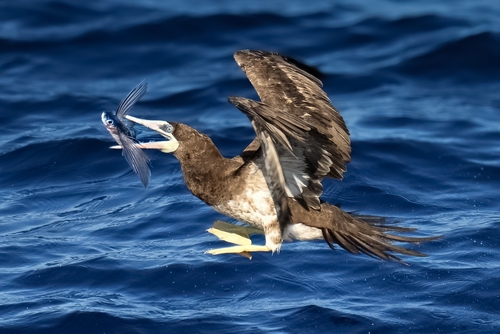
Brown Booby (Sula leucogaster) Brown Booby
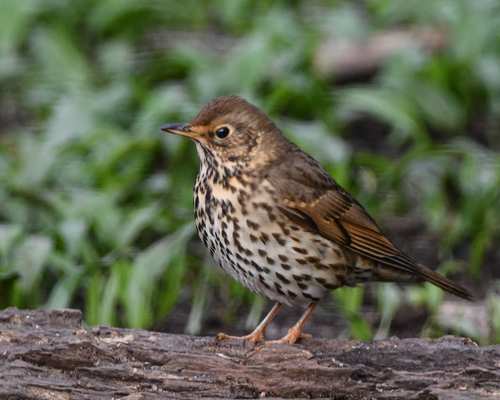
Song Thrush (Turdus philomelos) Song Thrush

Media

Loading…

In short

The most reliable field mark is overall size and structure: Brown Booby is a massive, long-winged seabird with sharply contrasting dark brown upperparts and white underparts, while Song Thrush is a small, compact landbird with plain brown upperparts and spotted cream underparts. Juvenile Brown Booby already shows a two-tone pattern (dark above, pale below), whereas juvenile Song Thrush is more uniform brown above with buff streaks and spotted underparts. In flight, the booby’s long, pointed wings and tapered tail are unmistakable compared to the thrush’s short, rounded wings and short tail. If seen perched, the booby’s huge size, dagger bill, and webbed feet are diagnostic, while the thrush is much smaller, with a slender bill and pink legs.

Identification tips

  1. Size and shape: Brown Booby is enormous compared to Song Thrush—look for a bird the size of a goose versus a small thrush. This is diagnostic at any distance.
  2. Wing shape in flight: Booby has long, narrow, pointed wings and a long, tapered tail; thrush has short, rounded wings and a short tail. This difference is clear in all ages and seasons.
  3. Plumage contrast (all ages): Booby shows a sharp division between dark brown upperparts and white underparts, even in juveniles. Song Thrush is brown above and pale below, but the transition is gradual and the underparts are spotted, not clean white.
  4. Juvenile marks: Juvenile Song Thrush has buff or orange streaks on the back and wing coverts, and warm yellow underwings; juvenile booby lacks these, instead showing a two-tone dark/pale pattern with flecking below.
  5. Bill shape: Booby has a long, sharply pointed bill with jagged edges; thrush has a short, slender, straight bill. Bill color varies in booby by sex and geography but is always massive compared to the thrush.
  6. Feet: Booby has webbed feet (not always visible); thrush has slender, pink, unwebbed legs and feet.
  7. Perched posture: Booby is upright, bulky, and often perches on rocks or ships; thrush is upright but much smaller and perches in trees, bushes, or on the ground.
  8. Habitat: Booby is strictly marine—never inland; thrush is strictly terrestrial—never at sea.
  9. Behavior: Booby is gregarious, often in flocks or pairs; thrush is solitary or in loose groups. Booby forages by plunge-diving; thrush forages on the ground for invertebrates.
  10. Vocalization: Thrush sings loudly with repeated musical phrases; booby is mostly silent, with rare grunts or quacks.
  11. Bare part colors: Booby males have a blue orbital ring, females yellow, but this is subtle. Thrush has a yellowish bill and pink legs—much less striking than the booby’s bare parts.
  12. Context: Any large, two-tone bird flying low over the sea or perched on a ship is a booby. Any small, brown, spotted bird in a garden, woodland, or park is a thrush.
  13. Confusion risk: In poor light, a distant booby might seem less contrasting, but size and shape will still separate them. Juvenile thrushes never show the booby’s dark head and crisp white belly.
  14. Flight style: Booby’s flight is strong and direct with rapid wingbeats; thrush is bounding and fluttery.
  15. Seasonal variation: Booby’s plumage and bare part colors vary little seasonally; thrush’s song is seasonal (mainly spring/summer), but plumage is consistent year-round.

Size

Brown Booby is vastly larger, weighing about 1266.5 g and measuring up to 80 cm in length with a wingspan approaching 150 cm. In contrast, Song Thrush weighs only about 72 g, is 20–23.5 cm long, and has a much shorter wingspan. Even at a distance, the booby’s bulk, long wings, and overall proportions are impossible to confuse with the small, compact thrush.

Plumage

Juvenile Brown Booby already resembles the adult, showing a strong contrast between dark brown to blackish head, back, and upperwings, and a white or heavily brown-flecked belly and underparts. This two-tone effect is visible both perched and in flight, and the wings are long and pointed. Juvenile Song Thrush, on the other hand, is more uniform brown above with buff or orange streaks on the back and wing coverts, and the underparts are cream or buff with neat black spots; the underwing is warm yellow. Adults of both species retain these patterns: Brown Booby always shows a sharp dark/light split, while Song Thrush is brown above, pale below with spots, and never shows the booby’s crisp division or dark head. The booby’s bare part colors (orbital ring and bill) vary by sex and geography, but these are subtle compared to the overall plumage contrast.

Behaviour

Brown Booby is a highly gregarious seabird, often seen flying low over inshore waters or perched on rocks and ships, rarely coming to land except to breed. Its flight is powerful and direct, with rapid wingbeats and long glides. Song Thrush is a solitary or loosely social landbird, foraging on the ground in woodland, gardens, or hedgerows, and is rarely seen near water. Its flight is bounding and undulating, with short, rounded wings and a quick, fluttery style. Perched, the booby is upright and massive, while the thrush is upright but much smaller and slimmer.

Habitat

Brown Booby is strictly marine, found over tropical and subtropical seas, often near coasts or islands, and never inland. Song Thrush is a terrestrial species of the West Palearctic, breeding in woodlands, parks, gardens, and hedgerows, and is never found at sea. Any bird seen over open ocean or perched on a ship is a booby; any bird in a garden or woodland is a thrush.

Voice

Brown Booby is typically silent, but may give occasional grunting or quacking sounds, which are rarely heard at sea. Song Thrush is highly vocal, especially the male, with a loud, clear, musical song of repeated phrases, and a variety of calls including a sharp 'tsip' and a chook-chook alarm. If you hear a rich, repeated song or sharp call, it is the thrush; silence or odd grunts point to the booby.

Submit a better description

Use the same sections as the comparison. Your text is published immediately.

The most reliable field mark is overall size and structure: Brown Booby is a massive, long-winged seabird with sharply contrasting dark brown upperparts and white underparts, while Song Thrush is a small, compact landbird with plain brown upperparts and spotted cream underparts. Juvenile Brown Booby already shows a two-tone pattern (dark above, pale below), whereas juvenile Song Thrush is more uniform brown above with buff streaks and spotted underparts. In flight, the booby’s long, pointed wings and tapered tail are unmistakable compared to the thrush’s short, rounded wings and short tail. If seen perched, the booby’s huge size, dagger bill, and webbed feet are diagnostic, while the thrush is much smaller, with a slender bill and pink legs.

  1. Size and shape: Brown Booby is enormous compared to Song Thrush—look for a bird the size of a goose versus a small thrush. This is diagnostic at any distance.
  2. Wing shape in flight: Booby has long, narrow, pointed wings and a long, tapered tail; thrush has short, rounded wings and a short tail. This difference is clear in all ages and seasons.
  3. Plumage contrast (all ages): Booby shows a sharp division between dark brown upperparts and white underparts, even in juveniles. Song Thrush is brown above and pale below, but the transition is gradual and the underparts are spotted, not clean white.
  4. Juvenile marks: Juvenile Song Thrush has buff or orange streaks on the back and wing coverts, and warm yellow underwings; juvenile booby lacks these, instead showing a two-tone dark/pale pattern with flecking below.
  5. Bill shape: Booby has a long, sharply pointed bill with jagged edges; thrush has a short, slender, straight bill. Bill color varies in booby by sex and geography but is always massive compared to the thrush.
  6. Feet: Booby has webbed feet (not always visible); thrush has slender, pink, unwebbed legs and feet.
  7. Perched posture: Booby is upright, bulky, and often perches on rocks or ships; thrush is upright but much smaller and perches in trees, bushes, or on the ground.
  8. Habitat: Booby is strictly marine—never inland; thrush is strictly terrestrial—never at sea.
  9. Behavior: Booby is gregarious, often in flocks or pairs; thrush is solitary or in loose groups. Booby forages by plunge-diving; thrush forages on the ground for invertebrates.
  10. Vocalization: Thrush sings loudly with repeated musical phrases; booby is mostly silent, with rare grunts or quacks.
  11. Bare part colors: Booby males have a blue orbital ring, females yellow, but this is subtle. Thrush has a yellowish bill and pink legs—much less striking than the booby’s bare parts.
  12. Context: Any large, two-tone bird flying low over the sea or perched on a ship is a booby. Any small, brown, spotted bird in a garden, woodland, or park is a thrush.
  13. Confusion risk: In poor light, a distant booby might seem less contrasting, but size and shape will still separate them. Juvenile thrushes never show the booby’s dark head and crisp white belly.
  14. Flight style: Booby’s flight is strong and direct with rapid wingbeats; thrush is bounding and fluttery.
  15. Seasonal variation: Booby’s plumage and bare part colors vary little seasonally; thrush’s song is seasonal (mainly spring/summer), but plumage is consistent year-round.

Brown Booby is vastly larger, weighing about 1266.5 g and measuring up to 80 cm in length with a wingspan approaching 150 cm. In contrast, Song Thrush weighs only about 72 g, is 20–23.5 cm long, and has a much shorter wingspan. Even at a distance, the booby’s bulk, long wings, and overall proportions are impossible to confuse with the small, compact thrush.

Juvenile Brown Booby already resembles the adult, showing a strong contrast between dark brown to blackish head, back, and upperwings, and a white or heavily brown-flecked belly and underparts. This two-tone effect is visible both perched and in flight, and the wings are long and pointed. Juvenile Song Thrush, on the other hand, is more uniform brown above with buff or orange streaks on the back and wing coverts, and the underparts are cream or buff with neat black spots; the underwing is warm yellow. Adults of both species retain these patterns: Brown Booby always shows a sharp dark/light split, while Song Thrush is brown above, pale below with spots, and never shows the booby’s crisp division or dark head. The booby’s bare part colors (orbital ring and bill) vary by sex and geography, but these are subtle compared to the overall plumage contrast.

Brown Booby is a highly gregarious seabird, often seen flying low over inshore waters or perched on rocks and ships, rarely coming to land except to breed. Its flight is powerful and direct, with rapid wingbeats and long glides. Song Thrush is a solitary or loosely social landbird, foraging on the ground in woodland, gardens, or hedgerows, and is rarely seen near water. Its flight is bounding and undulating, with short, rounded wings and a quick, fluttery style. Perched, the booby is upright and massive, while the thrush is upright but much smaller and slimmer.

Brown Booby is strictly marine, found over tropical and subtropical seas, often near coasts or islands, and never inland. Song Thrush is a terrestrial species of the West Palearctic, breeding in woodlands, parks, gardens, and hedgerows, and is never found at sea. Any bird seen over open ocean or perched on a ship is a booby; any bird in a garden or woodland is a thrush.

Brown Booby is typically silent, but may give occasional grunting or quacking sounds, which are rarely heard at sea. Song Thrush is highly vocal, especially the male, with a loud, clear, musical song of repeated phrases, and a variety of calls including a sharp 'tsip' and a chook-chook alarm. If you hear a rich, repeated song or sharp call, it is the thrush; silence or odd grunts point to the booby.

Discard your changes?

You have unsaved edits. If you leave now, those changes will be lost.

Brown Booby · Song Thrush · My Tricky Birds