
Sula fosca vs Tordo bottaccio
Sula leucogaster contro Turdus philomelos
Fai un quiz con Sula fosca e Tordo bottaccio
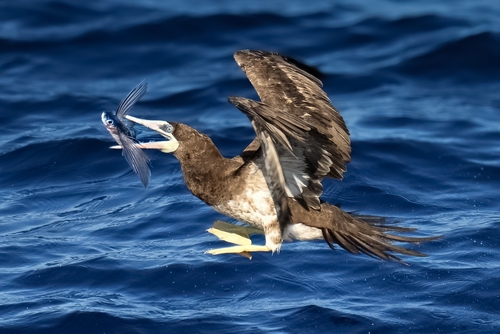 Sula fosca
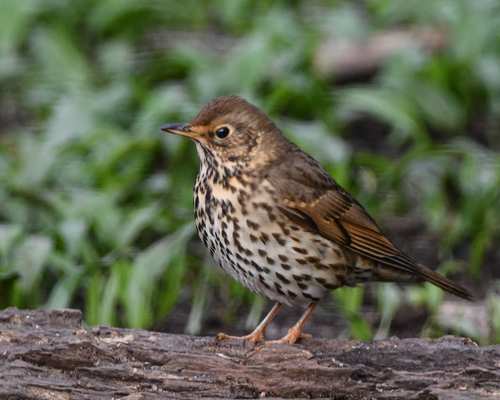 Tordo bottaccio
In breve
Il segno distintivo più affidabile è la dimensione e la struttura complessiva: Sula fosca è un uccello marino massiccio e dalle lunghe ali con un forte contrasto tra il dorso marrone scuro e il ventre bianco, mentre il Tordo bottaccio è un uccello terrestre piccolo e compatto con il dorso marrone uniforme e il ventre crema maculato. La Sula fosca giovane mostra già un motivo bicolore (scuro sopra, chiaro sotto), mentre il Tordo bottaccio giovane è più marrone uniforme sopra con striature color crema e ventre maculato. In volo, le lunghe ali appuntite e la coda affusolata della sula sono inconfondibili rispetto alle ali corte e arrotondate e alla coda corta del tordo. Se visto in posizione perpendicolare, la grande dimensione della sula, il becco a forma di pugnale e i piedi palmati sono diagnostici, mentre il tordo è molto più piccolo, con un becco snello e gambe rosa.
Consigli di identificazione
- Dimensione e forma: Sula fosca è enorme rispetto al Tordo bottaccio—cerca un uccello delle dimensioni di un'oca rispetto a un piccolo tordo. Questo è diagnostico a qualsiasi distanza.
- Forma dell'ala in volo: La sula ha ali lunghe, strette e appuntite e una coda lunga e affusolata; il tordo ha ali corte e arrotondate e una coda corta. Questa differenza è chiara in tutte le età e stagioni.
- Contrasto del piumaggio (tutte le età): La sula mostra una netta divisione tra il dorso marrone scuro e il ventre bianco, anche nei giovani. Il Tordo bottaccio è marrone sopra e chiaro sotto, ma la transizione è graduale e il ventre è maculato, non bianco pulito.
- Segni giovanili: Il Tordo bottaccio giovane ha striature color crema o arancione sulla schiena e sulle copritrici delle ali, e ali inferiori giallo caldo; la sula giovane non ha questi, mostrando invece un motivo bicolore scuro/chiaro con macchie sotto.
- Forma del becco: La sula ha un becco lungo e appuntito con bordi seghettati; il tordo ha un becco corto, snello e dritto. Il colore del becco varia nella sula a seconda del sesso e della geografia, ma è sempre massiccio rispetto al tordo.
- Piedi: La sula ha piedi palmati (non sempre visibili); il tordo ha gambe e piedi snelli e rosa, non palmati.
- Postura in perching: La sula è eretta, massiccia e spesso si posa su rocce o navi; il tordo è eretto ma molto più piccolo e si posa su alberi, cespugli o a terra.
- Habitat: La sula è strettamente marina—mai nell'entroterra; il tordo è strettamente terrestre—mai in mare.
- Comportamento: La sula è gregaria, spesso in stormi o coppie; il tordo è solitario o in gruppi sciolti. La sula si nutre tuffandosi; il tordo si nutre a terra di invertebrati.
- Vocalizzazione: Il tordo canta forte con frasi musicali ripetute; la sula è per lo più silenziosa, con rari grugniti o quack.
- Colori delle parti nude: I maschi di sula hanno un anello orbitale blu, le femmine giallo, ma questo è sottile. Il tordo ha un becco giallastro e gambe rosa—molto meno appariscenti rispetto alle parti nude della sula.
- Contesto: Qualsiasi grande uccello bicolore che vola basso sopra il mare o si posa su una nave è una sula. Qualsiasi piccolo uccello marrone maculato in un giardino, bosco o parco è un tordo.
- Rischio di confusione: In scarsa illuminazione, una sula distante potrebbe sembrare meno contrastante, ma dimensione e forma li separeranno comunque. I tordi giovani non mostrano mai la testa scura e il ventre bianco della sula.
- Stile di volo: Il volo della sula è forte e diretto con battiti d'ali rapidi; il tordo è saltellante e fluttuante.
- Variazione stagionale: Il piumaggio e i colori delle parti nude della sula variano poco stagionalmente; il canto del tordo è stagionale (principalmente primavera/estate), ma il piumaggio è costante tutto l'anno.
Taglia
Sula fosca è di gran lunga più grande, pesando circa 1266,5 g e misurando fino a 80 cm di lunghezza con un'apertura alare che si avvicina ai 150 cm. Al contrario, il Tordo bottaccio pesa solo circa 72 g, è lungo 20–23,5 cm e ha un'apertura alare molto più corta. Anche a distanza, la massa, le lunghe ali e le proporzioni complessive della sula sono impossibili da confondere con il piccolo e compatto tordo.
Piumaggio
La Sula fosca giovane assomiglia già all'adulto, mostrando un forte contrasto tra la testa, la schiena e le ali superiori marrone scuro o nerastro, e un ventre bianco o pesantemente macchiato di marrone. Questo effetto bicolore è visibile sia in posizione perpendicolare che in volo, e le ali sono lunghe e appuntite. Il Tordo bottaccio giovane, d'altra parte, è più marrone uniforme sopra con striature color crema o arancione sulla schiena e sulle copritrici delle ali, e il ventre è crema o color crema con macchie nere ordinate; l'ala inferiore è giallo caldo. Gli adulti di entrambe le specie mantengono questi schemi: la Sula fosca mostra sempre una netta divisione scuro/chiaro, mentre il Tordo bottaccio è marrone sopra, chiaro sotto con macchie, e non mostra mai la netta divisione o la testa scura della sula. I colori delle parti nude della sula (anello orbitale e becco) variano a seconda del sesso e della geografia, ma questi sono sottili rispetto al contrasto complessivo del piumaggio.
Comportamento
La Sula fosca è un uccello marino altamente gregario, spesso visto volare basso sopra le acque costiere o posato su rocce e navi, raramente atterrando se non per riprodursi. Il suo volo è potente e diretto, con battiti d'ali rapidi e lunghi scivolamenti. Il Tordo bottaccio è un uccello terrestre solitario o socialmente sciolto, che si nutre a terra in boschi, giardini o siepi, e raramente è visto vicino all'acqua. Il suo volo è saltellante e ondulato, con ali corte e arrotondate e uno stile rapido e fluttuante. In posizione perpendicolare, la sula è eretta e massiccia, mentre il tordo è eretto ma molto più piccolo e snello.
Habitat
La Sula fosca è strettamente marina, trovata sopra mari tropicali e subtropicali, spesso vicino a coste o isole, e mai nell'entroterra. Il Tordo bottaccio è una specie terrestre del Paleartico occidentale, che nidifica in boschi, parchi, giardini e siepi, e non si trova mai in mare. Qualsiasi uccello visto sopra l'oceano aperto o posato su una nave è una sula; qualsiasi uccello in un giardino o bosco è un tordo.
Voce
La Sula fosca è tipicamente silenziosa, ma può emettere occasionali suoni di grugnito o quack, che sono raramente uditi in mare. Il Tordo bottaccio è altamente vocale, specialmente il maschio, con un canto forte, chiaro e musicale di frasi ripetute, e una varietà di richiami tra cui un netto 'tsip' e un allerta chook-chook. Se senti un canto ricco e ripetuto o un richiamo netto, è il tordo; il silenzio o grugniti strani indicano la sula.