

atobá-pardo vs tordo-pinto
Sula leucogaster versus Turdus philomelos
Jogue um quiz com atobá-pardo e tordo-pinto
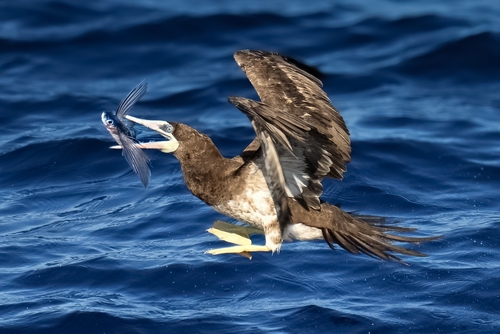 atobá-pardo
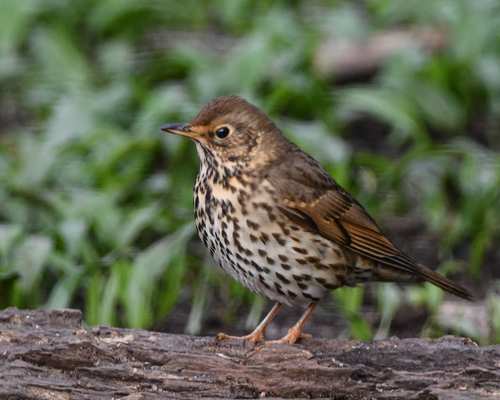 tordo-pinto
Em resumo
A marca de campo mais confiável é o tamanho e a estrutura geral: atobá-pardo é uma ave marinha maciça, de asas longas, com partes superiores marrom-escuras em forte contraste com as partes inferiores brancas, enquanto o tordo-pinto é uma ave terrestre pequena e compacta, com partes superiores marrons simples e partes inferiores creme manchadas. O jovem atobá-pardo já apresenta um padrão bicolor (escuro por cima, claro por baixo), enquanto o jovem tordo-pinto é mais uniforme marrom por cima, com listras amarelas e partes inferiores manchadas. Em voo, as longas asas pontudas e a cauda afilada do atobá são inconfundíveis em comparação com as asas curtas e arredondadas e a cauda curta do tordo. Se visto empoleirado, o enorme tamanho do atobá, seu bico em forma de adaga e pés palmados são diagnósticos, enquanto o tordo é muito menor, com um bico esguio e pernas rosas.
Dicas de identificação
- Tamanho e forma: atobá-pardo é enorme em comparação com tordo-pinto—procure uma ave do tamanho de um ganso versus um pequeno tordo. Isso é diagnóstico a qualquer distância.
- Forma da asa em voo: O atobá tem asas longas, estreitas e pontudas e uma cauda longa e afilada; o tordo tem asas curtas e arredondadas e uma cauda curta. Essa diferença é clara em todas as idades e estações.
- Contraste da plumagem (todas as idades): O atobá mostra uma divisão nítida entre as partes superiores marrom-escuras e as partes inferiores brancas, mesmo em juvenis. O tordo-pinto é marrom por cima e claro por baixo, mas a transição é gradual e as partes inferiores são manchadas, não brancas limpas.
- Marcas juvenis: O jovem tordo-pinto tem listras amarelas ou laranjas nas costas e nas coberturas das asas, e as partes inferiores são creme ou amarelas com manchas pretas organizadas; o jovem atobá não possui essas, mostrando em vez disso um padrão bicolor escuro/claro com manchas por baixo.
- Forma do bico: O atobá tem um bico longo e pontudo com bordas serrilhadas; o tordo tem um bico curto, esguio e reto. A cor do bico varia no atobá por sexo e geografia, mas é sempre maciça em comparação com o tordo.
- Pés: O atobá tem pés palmados (nem sempre visíveis); o tordo tem pernas e pés esguios e rosas, não palmados.
- Postura empoleirada: O atobá é ereto, volumoso e frequentemente empoleira em rochas ou navios; o tordo é ereto, mas muito menor e empoleira em árvores, arbustos ou no chão.
- Habitat: O atobá é estritamente marinho—nunca em terra; o tordo é estritamente terrestre—nunca no mar.
- Comportamento: O atobá é gregário, frequentemente em bandos ou pares; o tordo é solitário ou em grupos soltos. O atobá se alimenta mergulhando; o tordo se alimenta no chão em busca de invertebrados.
- Vocalização: O tordo canta alto com frases musicais repetidas; o atobá é em sua maioria silencioso, com raros grunhidos ou grasnidos.
- Cores das partes nuas: Os machos de atobá têm um anel orbital azul, as fêmeas amarelo, mas isso é sutil. O tordo tem um bico amarelado e pernas rosas—muito menos marcantes do que as partes nuas do atobá.
- Contexto: Qualquer ave grande e bicolor voando baixo sobre o mar ou empoleirada em um navio é um atobá. Qualquer ave pequena, marrom e manchada em um jardim, bosque ou parque é um tordo.
- Risco de confusão: Em pouca luz, um atobá distante pode parecer menos contrastante, mas o tamanho e a forma ainda os separarão. Os tordos juvenis nunca mostram a cabeça escura do atobá e a barriga branca nítida.
- Estilo de voo: O voo do atobá é forte e direto, com batidas rápidas das asas; o tordo é saltitante e flutuante.
- Variação sazonal: A plumagem e as cores das partes nuas do atobá variam pouco sazonalmente; o canto do tordo é sazonal (principalmente primavera/verão), mas a plumagem é consistente durante todo o ano.
Tamanho
O atobá-pardo é vastamente maior, pesando cerca de 1266,5 g e medindo até 80 cm de comprimento, com uma envergadura que se aproxima de 150 cm. Em contraste, o tordo-pinto pesa apenas cerca de 72 g, mede 20–23,5 cm de comprimento e tem uma envergadura muito mais curta. Mesmo à distância, o volume do atobá, suas longas asas e proporções gerais são impossíveis de confundir com o pequeno e compacto tordo.
Plumagem
O jovem atobá-pardo já se assemelha ao adulto, mostrando um forte contraste entre a cabeça, costas e asas superiores marrom-escuras a negras, e uma barriga e partes inferiores brancas ou fortemente manchadas de marrom. Esse efeito bicolor é visível tanto empoleirado quanto em voo, e as asas são longas e pontudas. O jovem tordo-pinto, por outro lado, é mais uniforme marrom por cima, com listras amarelas ou laranjas nas costas e nas coberturas das asas, e as partes inferiores são creme ou amarelas com manchas pretas organizadas; a parte inferior da asa é amarela quente. Os adultos de ambas as espécies mantêm esses padrões: o atobá-pardo sempre mostra uma divisão nítida entre escuro/claro, enquanto o tordo-pinto é marrom por cima, claro por baixo com manchas, e nunca mostra a divisão nítida do atobá ou a cabeça escura. As cores das partes nuas do atobá (anel orbital e bico) variam por sexo e geografia, mas são sutis em comparação com o contraste geral da plumagem.
Comportamento
O atobá-pardo é uma ave marinha altamente gregária, frequentemente vista voando baixo sobre águas costeiras ou empoleirada em rochas e navios, raramente indo para a terra, exceto para reproduzir-se. Seu voo é poderoso e direto, com batidas rápidas das asas e longos deslizamentos. O tordo-pinto é uma ave terrestre solitária ou socialmente solta, forrageando no chão em florestas, jardins ou cercas vivas, e raramente é visto perto da água. Seu voo é saltitante e ondulante, com asas curtas e arredondadas e um estilo rápido e flutuante. Empoleirado, o atobá é ereto e maciço, enquanto o tordo é ereto, mas muito menor e mais esguio.
Habitat
O atobá-pardo é estritamente marinho, encontrado sobre mares tropicais e subtropicais, frequentemente perto de costas ou ilhas, e nunca em terra. O tordo-pinto é uma espécie terrestre do Oeste Paleártico, reproduzindo-se em florestas, parques, jardins e cercas vivas, e nunca é encontrado no mar. Qualquer ave vista sobre o oceano aberto ou empoleirada em um navio é um atobá; qualquer ave em um jardim ou floresta é um tordo.
Voz
O atobá-pardo é tipicamente silencioso, mas pode emitir sons ocasionais de grunhidos ou grasnidos, que raramente são ouvidos no mar. O tordo-pinto é altamente vocal, especialmente o macho, com um canto alto, claro e musical de frases repetidas, e uma variedade de chamadas, incluindo um agudo 'tsip' e um alarme chook-chook. Se você ouvir um canto rico e repetido ou uma chamada aguda, é o tordo; silêncio ou grunhidos estranhos apontam para o atobá.