

Motmot

Broad-billed Hummingbird vs Tres Marias Hummingbird

Cynanthus latirostris versus Cynanthus lawrencei

Play a quiz with Broad-billed Hummingbird and Tres Marias Hummingbird
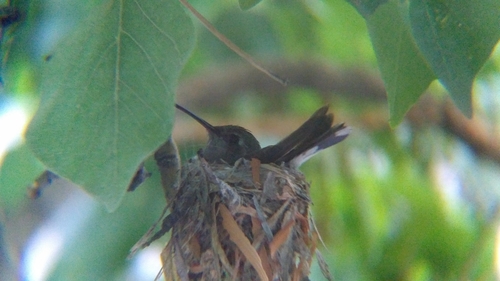
Broad-billed Hummingbird (Cynanthus latirostris) Broad-billed Hummingbird
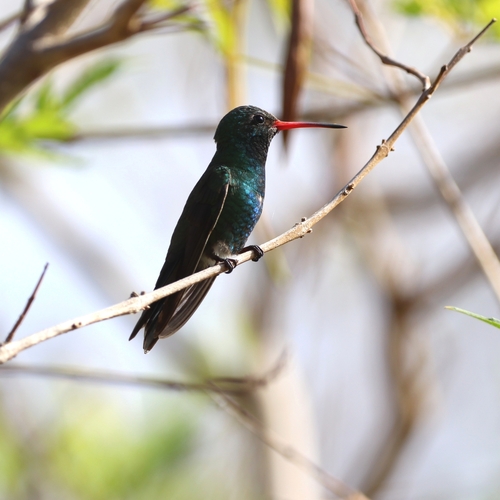
Tres Marias Hummingbird (Cynanthus lawrencei) Tres Marias Hummingbird

Media

Loading…

In short

The most reliable field mark between Broad-billed and Tres Marias Hummingbird is the underpart coloration and tail pattern in females and immatures: Broad-billed females and young show a pale belly and a distinct white eyestripe, while Tres Marias females have gray underparts and lack a strong eyestripe. Both species have a broad reddish bill with a black tip, but Broad-billed males have a brighter, shorter red bill and a blue gorget, whereas Tres Marias males show a turquoise to emerald green throat and a greeny-bronze breast. Juvenile Broad-billeds resemble adult females but lack the white tail tips seen in adult females, while Tres Marias females and immatures have white tips only on the outermost tail feathers. Both species are similar in size and structure, but their ranges do not overlap: Tres Marias is endemic to the Islas Marías, while Broad-billed is found in mainland Mexico and the southwestern US. Vocalizations are not reliably separable in the field.

Identification tips

  1. Female/immature underparts: Broad-billed females and young show a pale belly and a strong white eyestripe behind the eye, while Tres Marias females have gray underparts and lack a pronounced eyestripe. This is the most useful mark in non-males.
  2. Tail pattern (female/immature): Broad-billed females have white tips on all tail feathers; Tres Marias females have white tips only on the outermost two pairs of tail feathers. Juvenile Broad-billed males lack white tail tips, resembling adult females otherwise.
  3. Bill color and shape (adult males): Broad-billed males have a shorter, brighter red bill with a black tip; Tres Marias males have a broad reddish bill with a black tip, but it is not as bright or short as in Broad-billed.
  4. Throat color (adult males): Broad-billed males have a blue gorget; Tres Marias males have a turquoise-green to emerald green throat. In good light, this can be a strong separator.
  5. Breast and belly (adult males): Broad-billed males are metallic green overall with white undertail coverts; Tres Marias males have a greeny-bronze breast and a dark green belly, with dark undertail coverts.
  6. Tail color (adult males): Both have a glossy blue-black tail, but Broad-billed's is described as blackish-blue and broad, while Tres Marias' is glossy blue-black. This is subtle and not always reliable in the field.
  7. Upperparts (both sexes): Tres Marias of both sexes have metallic bronze-green upperparts, duller on the crown and forehead; Broad-billed is metallic green above, with duller crown/forehead as well. This is not a strong separator without direct comparison.
  8. Juvenile progression: Juvenile Broad-billed males develop a redder bill and iridescent throat feathers with age, but initially resemble females. Tres Marias juvenile plumage is not separately described but likely similar to adult female.
  9. Eyestripe (females/immatures): Broad-billed females/immatures have a distinct white eyestripe; Tres Marias lack this feature.
  10. Range: Tres Marias is found only on the Islas Marías; Broad-billed is widespread in mainland Mexico and the US Southwest. If you are not on the islands, you are almost certainly seeing Broad-billed.
  11. Habitat: Broad-billed prefers canyons, riparian areas, and desert edges; Tres Marias is restricted to island habitats.
  12. Vocalization: Do not rely on voice for separation; they are not reliably different in the field.
  13. Behavior: Both species behave like typical hummingbirds and are not separable by jizz or feeding style.
  14. Size: Both are similar in size and structure; do not use size to separate them.
  15. Pitfalls: Immature Broad-billed males may lack white tail tips and can be confused with Tres Marias females/immatures; focus on underpart color and eyestripe for these birds.

Size

Both species are very similar in size, with Broad-billed Hummingbird measuring about 8–10 cm in length and a wingspan of about 13 cm. Tres Marias Hummingbird is not described as differing in size from Broad-billed, and no distinguishing size or mass differences are noted in the available sources. In hand or at close range, both appear as small, compact hummingbirds with broad tails and relatively long, straight bills.

Plumage

Juvenile and female Broad-billed Hummingbirds have a pale belly and a distinct white eyestripe, with white tips on all tail feathers in adult females. Juvenile males resemble females but lack the white tail tips and gradually develop a redder bill and iridescent throat feathers. Tres Marias Hummingbird females and immatures have duller bronze-green upperparts, gray underparts, and white tips only on the outermost two pairs of tail feathers. They lack a strong eyestripe. Adult male Broad-billeds are metallic green with a blue gorget and white undertail coverts, while Tres Marias males have a turquoise-green to emerald green throat, greeny-bronze breast, and glossy blue-black tail. Both species have a broad reddish bill with a black tip, but Broad-billed males have a shorter, brighter red bill. In flight, upperwing pattern is not described as diagnostic for either species.

Behaviour

Behaviorally, both species are typical hummingbirds: highly active, feeding on nectar and small arthropods, and exhibiting rapid, darting flight. No behavioral differences are noted in the sources that would aid field separation. Both perch frequently and may defend feeding territories. Nesting behavior is similar, with nests placed low to the ground.

Habitat

Habitat is a strong separator: Broad-billed Hummingbird occurs in mainland Mexico and the southwestern United States, often in canyons, riparian areas, and desert edges. Tres Marias Hummingbird is endemic to the Islas Marías off the west coast of Mexico and does not occur on the mainland. If you are birding on the Islas Marías, only Tres Marias should be expected; elsewhere, only Broad-billed.

Voice

Vocalizations are not reliably separable in the field. Tres Marias Hummingbird's voice has not been described as different from Broad-billed Hummingbird. The Broad-billed's song starts with a short chip followed by a series of similar notes ranging from 2 to 13 kHz, sung only by males. Use visual marks for separation.

Submit a better description

Use the same sections as the comparison. Your text is published immediately.

The most reliable field mark between Broad-billed and Tres Marias Hummingbird is the underpart coloration and tail pattern in females and immatures: Broad-billed females and young show a pale belly and a distinct white eyestripe, while Tres Marias females have gray underparts and lack a strong eyestripe. Both species have a broad reddish bill with a black tip, but Broad-billed males have a brighter, shorter red bill and a blue gorget, whereas Tres Marias males show a turquoise to emerald green throat and a greeny-bronze breast. Juvenile Broad-billeds resemble adult females but lack the white tail tips seen in adult females, while Tres Marias females and immatures have white tips only on the outermost tail feathers. Both species are similar in size and structure, but their ranges do not overlap: Tres Marias is endemic to the Islas Marías, while Broad-billed is found in mainland Mexico and the southwestern US. Vocalizations are not reliably separable in the field.

  1. Female/immature underparts: Broad-billed females and young show a pale belly and a strong white eyestripe behind the eye, while Tres Marias females have gray underparts and lack a pronounced eyestripe. This is the most useful mark in non-males.
  2. Tail pattern (female/immature): Broad-billed females have white tips on all tail feathers; Tres Marias females have white tips only on the outermost two pairs of tail feathers. Juvenile Broad-billed males lack white tail tips, resembling adult females otherwise.
  3. Bill color and shape (adult males): Broad-billed males have a shorter, brighter red bill with a black tip; Tres Marias males have a broad reddish bill with a black tip, but it is not as bright or short as in Broad-billed.
  4. Throat color (adult males): Broad-billed males have a blue gorget; Tres Marias males have a turquoise-green to emerald green throat. In good light, this can be a strong separator.
  5. Breast and belly (adult males): Broad-billed males are metallic green overall with white undertail coverts; Tres Marias males have a greeny-bronze breast and a dark green belly, with dark undertail coverts.
  6. Tail color (adult males): Both have a glossy blue-black tail, but Broad-billed's is described as blackish-blue and broad, while Tres Marias' is glossy blue-black. This is subtle and not always reliable in the field.
  7. Upperparts (both sexes): Tres Marias of both sexes have metallic bronze-green upperparts, duller on the crown and forehead; Broad-billed is metallic green above, with duller crown/forehead as well. This is not a strong separator without direct comparison.
  8. Juvenile progression: Juvenile Broad-billed males develop a redder bill and iridescent throat feathers with age, but initially resemble females. Tres Marias juvenile plumage is not separately described but likely similar to adult female.
  9. Eyestripe (females/immatures): Broad-billed females/immatures have a distinct white eyestripe; Tres Marias lack this feature.
  10. Range: Tres Marias is found only on the Islas Marías; Broad-billed is widespread in mainland Mexico and the US Southwest. If you are not on the islands, you are almost certainly seeing Broad-billed.
  11. Habitat: Broad-billed prefers canyons, riparian areas, and desert edges; Tres Marias is restricted to island habitats.
  12. Vocalization: Do not rely on voice for separation; they are not reliably different in the field.
  13. Behavior: Both species behave like typical hummingbirds and are not separable by jizz or feeding style.
  14. Size: Both are similar in size and structure; do not use size to separate them.
  15. Pitfalls: Immature Broad-billed males may lack white tail tips and can be confused with Tres Marias females/immatures; focus on underpart color and eyestripe for these birds.

Both species are very similar in size, with Broad-billed Hummingbird measuring about 8–10 cm in length and a wingspan of about 13 cm. Tres Marias Hummingbird is not described as differing in size from Broad-billed, and no distinguishing size or mass differences are noted in the available sources. In hand or at close range, both appear as small, compact hummingbirds with broad tails and relatively long, straight bills.

Juvenile and female Broad-billed Hummingbirds have a pale belly and a distinct white eyestripe, with white tips on all tail feathers in adult females. Juvenile males resemble females but lack the white tail tips and gradually develop a redder bill and iridescent throat feathers. Tres Marias Hummingbird females and immatures have duller bronze-green upperparts, gray underparts, and white tips only on the outermost two pairs of tail feathers. They lack a strong eyestripe. Adult male Broad-billeds are metallic green with a blue gorget and white undertail coverts, while Tres Marias males have a turquoise-green to emerald green throat, greeny-bronze breast, and glossy blue-black tail. Both species have a broad reddish bill with a black tip, but Broad-billed males have a shorter, brighter red bill. In flight, upperwing pattern is not described as diagnostic for either species.

Behaviorally, both species are typical hummingbirds: highly active, feeding on nectar and small arthropods, and exhibiting rapid, darting flight. No behavioral differences are noted in the sources that would aid field separation. Both perch frequently and may defend feeding territories. Nesting behavior is similar, with nests placed low to the ground.

Habitat is a strong separator: Broad-billed Hummingbird occurs in mainland Mexico and the southwestern United States, often in canyons, riparian areas, and desert edges. Tres Marias Hummingbird is endemic to the Islas Marías off the west coast of Mexico and does not occur on the mainland. If you are birding on the Islas Marías, only Tres Marias should be expected; elsewhere, only Broad-billed.

Vocalizations are not reliably separable in the field. Tres Marias Hummingbird's voice has not been described as different from Broad-billed Hummingbird. The Broad-billed's song starts with a short chip followed by a series of similar notes ranging from 2 to 13 kHz, sung only by males. Use visual marks for separation.

Discard your changes?

You have unsaved edits. If you leave now, those changes will be lost.

Broad-billed Hummingbird · Tres Marias Hummingbird · My Tricky Birds