

Broad-billed Hummingbird vs Tres Marias Hummingbird
Cynanthus latirostris contro Cynanthus lawrencei
Fai un quiz con Broad-billed Hummingbird e Tres Marias Hummingbird
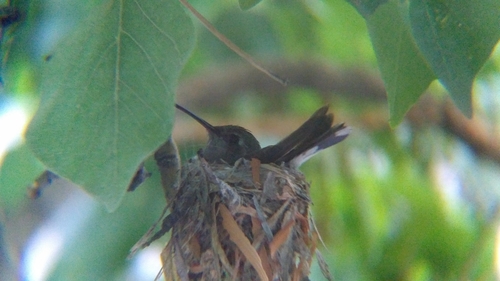 Broad-billed Hummingbird
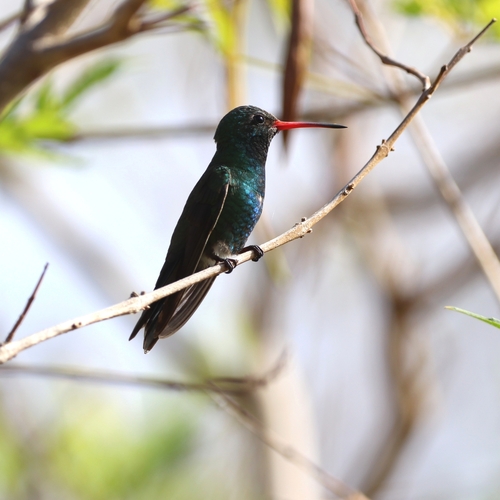 Tres Marias Hummingbird
In breve
Il segno di campo più affidabile tra il Broad-billed Hummingbird e il Tres Marias Hummingbird è la colorazione delle parti inferiori e il modello della coda nelle femmine e nei giovani: le femmine e i giovani del Broad-billed mostrano un ventre chiaro e una distintiva striscia bianca intorno all'occhio, mentre le femmine del Tres Marias hanno parti inferiori grigie e mancano di una forte striscia intorno all'occhio. Entrambe le specie hanno un becco rosso allargato con una punta nera, ma i maschi del Broad-billed hanno un becco rosso più brillante e corto e un gorget blu, mentre i maschi del Tres Marias mostrano una gola turchese a verde smeraldo e un petto verde-bronzo. I giovani Broad-billed somigliano alle femmine adulte ma mancano delle punte bianche della coda visibili nelle femmine adulte, mentre le femmine e i giovani del Tres Marias hanno punte bianche solo sulle piume della coda più esterne. Entrambe le specie sono simili in dimensioni e struttura, ma i loro areali non si sovrappongono: il Tres Marias è endemico delle Islas Marías, mentre il Broad-billed si trova nel Messico continentale e nel sud-ovest degli Stati Uniti. Le vocalizzazioni non sono separabili in modo affidabile sul campo.
Consigli di identificazione
- Female/immature underparts: Le femmine e i giovani del Broad-billed mostrano un ventre chiaro e una forte striscia bianca intorno all'occhio, mentre le femmine del Tres Marias hanno parti inferiori grigie e mancano di una striscia intorno all'occhio pronunciata. Questo è il segno più utile nei non maschi.
- Tail pattern (female/immature): Le femmine del Broad-billed hanno punte bianche su tutte le piume della coda; le femmine del Tres Marias hanno punte bianche solo sulle due coppie più esterne di piume della coda. I maschi giovani del Broad-billed mancano di punte bianche sulla coda, somigliando altrimenti alle femmine adulte.
- Bill color and shape (adult males): I maschi del Broad-billed hanno un becco più corto e rosso più brillante con una punta nera; i maschi del Tres Marias hanno un becco rosso allargato con una punta nera, ma non è così brillante o corto come nel Broad-billed.
- Throat color (adult males): I maschi del Broad-billed hanno un gorget blu; i maschi del Tres Marias hanno una gola verde turchese a verde smeraldo. In buona luce, questo può essere un forte separatore.
- Breast and belly (adult males): I maschi del Broad-billed sono verdi metallici nel complesso con copritrici bianche sotto la coda; i maschi del Tres Marias hanno un petto verde-bronzo e un ventre verde scuro, con copritrici sotto la coda scure.
- Tail color (adult males): Entrambi hanno una coda blu-nera lucida, ma quella del Broad-billed è descritta come blu-nerastra e larga, mentre quella del Tres Marias è blu-nera lucida. Questo è sottile e non sempre affidabile sul campo.
- Upperparts (both sexes): I Tres Marias di entrambi i sessi hanno parti superiori verde-bronzo metallico, più opache sulla corona e sulla fronte; il Broad-billed è verde metallico sopra, con corona/fronte più opache anch'esse. Questo non è un forte separatore senza un confronto diretto.
- Juvenile progression: I maschi giovani del Broad-billed sviluppano un becco più rosso e piume della gola iridescenti con l'età, ma inizialmente somigliano alle femmine. La livrea giovanile del Tres Marias non è descritta separatamente ma probabilmente è simile a quella della femmina adulta.
- Eyestripe (females/immatures): Le femmine/immaturi del Broad-billed hanno una distintiva striscia bianca intorno all'occhio; il Tres Marias manca di questa caratteristica.
- Range: Il Tres Marias si trova solo sulle Islas Marías; il Broad-billed è diffuso nel Messico continentale e nel sud-ovest degli Stati Uniti. Se non sei sulle isole, stai quasi certamente vedendo un Broad-billed.
- Habitat: Il Broad-billed preferisce canyon, aree ripariali e bordi desertici; il Tres Marias è ristretto agli habitat insulari.
- Vocalization: Non fare affidamento sulla voce per la separazione; non sono affidabilmente diversi sul campo.
- Behavior: Entrambe le specie si comportano come tipici colibrì e non sono separabili per jizz o stile di alimentazione.
- Size: Entrambi sono simili in dimensioni e struttura; non usare la dimensione per separarli.
- Pitfalls: I maschi immaturi del Broad-billed possono mancare di punte bianche sulla coda e possono essere confusi con le femmine/immaturi del Tres Marias; concentrati sul colore delle parti inferiori e sulla striscia intorno all'occhio per questi uccelli.
Taglia
Entrambe le specie sono molto simili in dimensioni, con il Broad-billed Hummingbird che misura circa 8–10 cm di lunghezza e un'apertura alare di circa 13 cm. Il Tres Marias Hummingbird non è descritto come diverso in dimensioni dal Broad-billed, e non sono notate differenze distintive di dimensione o massa nelle fonti disponibili. In mano o a distanza ravvicinata, entrambi appaiono come piccoli colibrì compatti con code larghe e becchi relativamente lunghi e dritti.
Piumaggio
I colibrì Broad-billed giovani e femmine hanno un ventre chiaro e una distintiva striscia bianca intorno all'occhio, con punte bianche su tutte le piume della coda nelle femmine adulte. I maschi giovani somigliano alle femmine ma mancano delle punte bianche della coda e sviluppano gradualmente un becco più rosso e piume della gola iridescenti. Le femmine e gli immaturi del Tres Marias Hummingbird hanno parti superiori verde-bronzo più opache, parti inferiori grigie e punte bianche solo sulle due coppie più esterne di piume della coda. Mancano di una forte striscia intorno all'occhio. I maschi adulti del Broad-billed sono verdi metallici con un gorget blu e copritrici bianche sotto la coda, mentre i maschi del Tres Marias hanno una gola verde turchese a verde smeraldo, un petto verde-bronzo e una coda blu-nera lucida. Entrambe le specie hanno un becco rosso allargato con una punta nera, ma i maschi del Broad-billed hanno un becco più corto e rosso più brillante. In volo, il modello dell'ala superiore non è descritto come diagnostico per nessuna delle due specie.
Comportamento
Comportamentalmente, entrambe le specie sono colibrì tipici: altamente attivi, si nutrono di nettare e piccoli artropodi, e mostrano un volo rapido e a zig-zag. Non sono notate differenze comportamentali nelle fonti che possano aiutare nella separazione sul campo. Entrambi si posano frequentemente e possono difendere i territori di alimentazione. Il comportamento di nidificazione è simile, con nidi posizionati bassi a terra.
Habitat
L'habitat è un forte separatore: il Broad-billed Hummingbird si verifica nel Messico continentale e nel sud-ovest degli Stati Uniti, spesso in canyon, aree ripariali e bordi desertici. Il Tres Marias Hummingbird è endemico delle Islas Marías al largo della costa occidentale del Messico e non si verifica nel continente. Se stai osservando uccelli sulle Islas Marías, solo il Tres Marias dovrebbe essere previsto; altrove, solo il Broad-billed.
Voce
Le vocalizzazioni non sono separabili in modo affidabile sul campo. La voce del Tres Marias Hummingbird non è stata descritta come diversa da quella del Broad-billed Hummingbird. Il canto del Broad-billed inizia con un breve chip seguito da una serie di note simili che vanno da 2 a 13 kHz, cantato solo dai maschi. Usa segni visivi per la separazione.
Broad-billed Hummingbird · Tres Marias Hummingbird · I miei uccelli difficili