

Motmot

Blue-winged Warbler vs Common Yellowthroat

Vermivora cyanoptera versus Geothlypis trichas

Play a quiz with Blue-winged Warbler and Common Yellowthroat
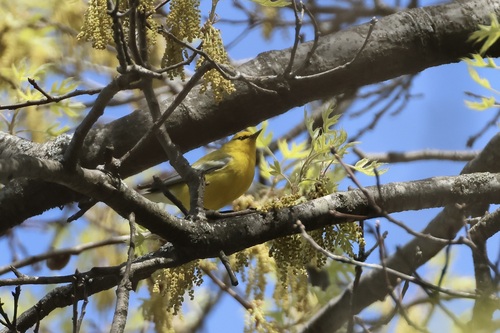
Blue-winged Warbler (Vermivora cyanoptera) Blue-winged Warbler
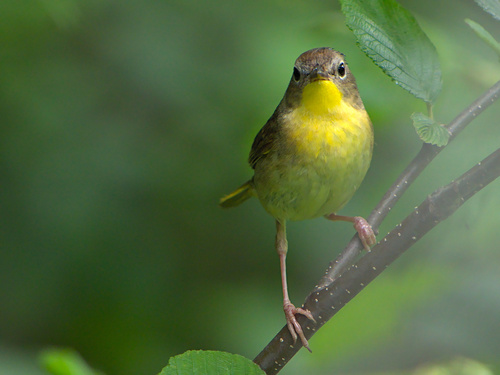
Common Yellowthroat (Geothlypis trichas) Common Yellowthroat

Media

Loading…

In short

The most reliable field mark to separate Blue-winged Warbler from Common Yellowthroat is the presence of two white wing bars on blue-gray wings in all but the youngest Blue-winged Warblers, versus the uniform olive wings without wing bars in Common Yellowthroat of any age. Immature Blue-winged Warblers may have faint or nearly invisible wing bars, but never show a black mask. Adult male Common Yellowthroat is unique among the two for its bold black facial mask, which Blue-winged Warbler never shows. Both species are small yellowish warblers, but Blue-winged Warbler is slightly slimmer with a pointed bill and a more vibrant yellow overall, while Common Yellowthroat is rounder with a heavier head and olive upperparts. Habitat can help: Blue-winged Warbler prefers shrubby fields and edges, while Common Yellowthroat is almost always in marshes or dense, wet thickets.

Identification tips

  1. Wing bars: Blue-winged Warbler (adult and most immatures) shows two white wing bars on blue-gray wings; Common Yellowthroat never shows wing bars at any age. This is the single best field mark when visible.
  2. Wing color: Blue-winged Warbler has blue-gray wings, contrasting with yellow or olive body; Common Yellowthroat has plain olive wings and back, blending with the rest of the upperparts.
  3. Facial pattern (adult males): Common Yellowthroat adult male has a bold black mask across the face, bordered above by white or gray; Blue-winged Warbler never shows a mask, only a narrow black eye line.
  4. Facial pattern (females/immatures): Female and immature Blue-winged Warbler have a faint or grayish eye line, sometimes hard to see, but never a mask. Female and immature Common Yellowthroat lack both mask and eye line, giving a plain face.
  5. Underparts: Blue-winged Warbler is bright yellow from throat to undertail (male) or paler yellow (female), with no streaking. Common Yellowthroat has yellow throat and chest, but belly is white or pale, often with a sharp contrast.
  6. Bill shape: Blue-winged Warbler has a pointed, fine bill; Common Yellowthroat's bill is slightly heavier and more conical, though this is subtle.
  7. Tail and structure: Blue-winged Warbler often appears more slender and longer-tailed, with a more pointed look; Common Yellowthroat is rounder, with a shorter tail and heavier head.
  8. Juvenile confusion: Immature Blue-winged Warbler may have faint or nearly invisible wing bars and a pinkish bill, but never shows a black mask or strong facial contrast. Immature Common Yellowthroat is plain olive above, yellowish below, and always lacks wing bars and mask.
  9. Habitat context: Blue-winged Warbler is found in dry, shrubby fields and woodland edges; Common Yellowthroat is almost always in or near marshes, wet meadows, or dense, damp thickets.
  10. Behavior: Blue-winged Warbler is more likely to be seen foraging in the open or at mid-levels; Common Yellowthroat is a skulker, staying low in dense cover and flicking its tail.
  11. Song: Blue-winged Warbler sings a short, buzzy "bee-buzz"; Common Yellowthroat gives a rolling "witchety witchety witchety witch."
  12. Call: Blue-winged Warbler's call is a sharp chip; Common Yellowthroat's is a soft "jip."
  13. Seasonal variation: Both species migrate, but Blue-winged Warbler is more likely in shrubby uplands during breeding, while Common Yellowthroat is widespread in migration but still prefers wet habitats.
  14. Sex differences: Female Blue-winged Warbler is duller yellow with a faint eye line; female Common Yellowthroat is olive above, yellowish below, with a plain face.
  15. Pitfalls: Hybrids (Brewster's and Lawrence's Warblers) can show mixed features, but even these usually retain some wing bar or facial pattern clues. Always check for wing bars and mask first.

Size

Blue-winged Warbler is slightly smaller and slimmer, measuring about 11.4–12.7 cm (4.5–5.0 in) in length and weighing around 8.5 g (0.3 oz) [wikipedia][avonet]. Common Yellowthroat is similar in length but appears a bit bulkier, with a rounder body and heavier head. Both are small warblers, but Blue-winged Warbler often looks more delicate and pointed, especially in the bill and tail. In the field, size alone is not a strong separator, but Blue-winged Warbler may appear more streamlined and active, while Common Yellowthroat is chunkier and more skulking.

Plumage

Juvenile and immature Blue-winged Warblers can be tricky: they are olive above with wings similar to adults, but their wing bars may be faint or nearly invisible, and their bills are pinkish. However, even young Blue-winged Warblers never show a black facial mask. Adult Blue-winged Warblers (especially males) are bright yellow below and on the head, with a narrow black eye line, blue-gray wings with two white wing bars, and no streaking below. Females are duller yellow with a less distinct eye line and paler crown, but still show wing bars. Immature Common Yellowthroats resemble adult females: olive above, yellowish throat and chest, white belly, and no wing bars or facial mask. Adult male Common Yellowthroat is distinctive with its black mask bordered above by white or gray, olive upperparts, yellow throat/chest, and white belly. Females and immatures lack the mask and are generally duller, but still never show wing bars or a sharp eye line. In all ages and sexes, Common Yellowthroat has plain olive wings and tail, never blue-gray or barred.

Behaviour

Blue-winged Warbler is often seen foraging actively in shrubby fields, hedgerows, or woodland edges, frequently moving through low vegetation or perching in the open. It tends to be more visible and less skulking than Common Yellowthroat. Common Yellowthroat is a classic skulker, usually staying low in dense, wet vegetation such as cattails, reeds, or thick brush near water. It often flicks its tail and gives quick, darting movements, rarely perching fully in the open. In flight, Blue-winged Warbler may appear more direct and agile, while Common Yellowthroat is more likely to drop quickly into cover.

Habitat

Blue-winged Warbler breeds in shrubby fields, regenerating clearings, woodland edges, and overgrown pastures, often away from water. It is rarely found in dense marshes. Common Yellowthroat is strongly tied to wet habitats: marshes, wet meadows, swamps, and dense thickets near water, though it can occur in drier brushy areas during migration. If you find a small yellow warbler in a cattail marsh, Common Yellowthroat is far more likely; in a dry shrubby field or woodland edge, Blue-winged Warbler is the better bet.

Voice

Blue-winged Warbler's song is a series of buzzing notes, often described as "bee-buzz" or similar, and its call is a sharp chip. Common Yellowthroat sings a loud, rolling "witchety witchety witchety witch," and its call is a soft "jip." While both can be buzzy, the Common Yellowthroat's song is more musical and repetitive, while Blue-winged Warbler's is shorter and more insect-like. Calls are different: Blue-winged's is sharper and more metallic, Common Yellowthroat's is softer.

Submit a better description

Use the same sections as the comparison. Your text is published immediately.

The most reliable field mark to separate Blue-winged Warbler from Common Yellowthroat is the presence of two white wing bars on blue-gray wings in all but the youngest Blue-winged Warblers, versus the uniform olive wings without wing bars in Common Yellowthroat of any age. Immature Blue-winged Warblers may have faint or nearly invisible wing bars, but never show a black mask. Adult male Common Yellowthroat is unique among the two for its bold black facial mask, which Blue-winged Warbler never shows. Both species are small yellowish warblers, but Blue-winged Warbler is slightly slimmer with a pointed bill and a more vibrant yellow overall, while Common Yellowthroat is rounder with a heavier head and olive upperparts. Habitat can help: Blue-winged Warbler prefers shrubby fields and edges, while Common Yellowthroat is almost always in marshes or dense, wet thickets.

  1. Wing bars: Blue-winged Warbler (adult and most immatures) shows two white wing bars on blue-gray wings; Common Yellowthroat never shows wing bars at any age. This is the single best field mark when visible.
  2. Wing color: Blue-winged Warbler has blue-gray wings, contrasting with yellow or olive body; Common Yellowthroat has plain olive wings and back, blending with the rest of the upperparts.
  3. Facial pattern (adult males): Common Yellowthroat adult male has a bold black mask across the face, bordered above by white or gray; Blue-winged Warbler never shows a mask, only a narrow black eye line.
  4. Facial pattern (females/immatures): Female and immature Blue-winged Warbler have a faint or grayish eye line, sometimes hard to see, but never a mask. Female and immature Common Yellowthroat lack both mask and eye line, giving a plain face.
  5. Underparts: Blue-winged Warbler is bright yellow from throat to undertail (male) or paler yellow (female), with no streaking. Common Yellowthroat has yellow throat and chest, but belly is white or pale, often with a sharp contrast.
  6. Bill shape: Blue-winged Warbler has a pointed, fine bill; Common Yellowthroat's bill is slightly heavier and more conical, though this is subtle.
  7. Tail and structure: Blue-winged Warbler often appears more slender and longer-tailed, with a more pointed look; Common Yellowthroat is rounder, with a shorter tail and heavier head.
  8. Juvenile confusion: Immature Blue-winged Warbler may have faint or nearly invisible wing bars and a pinkish bill, but never shows a black mask or strong facial contrast. Immature Common Yellowthroat is plain olive above, yellowish below, and always lacks wing bars and mask.
  9. Habitat context: Blue-winged Warbler is found in dry, shrubby fields and woodland edges; Common Yellowthroat is almost always in or near marshes, wet meadows, or dense, damp thickets.
  10. Behavior: Blue-winged Warbler is more likely to be seen foraging in the open or at mid-levels; Common Yellowthroat is a skulker, staying low in dense cover and flicking its tail.
  11. Song: Blue-winged Warbler sings a short, buzzy "bee-buzz"; Common Yellowthroat gives a rolling "witchety witchety witchety witch."
  12. Call: Blue-winged Warbler's call is a sharp chip; Common Yellowthroat's is a soft "jip."
  13. Seasonal variation: Both species migrate, but Blue-winged Warbler is more likely in shrubby uplands during breeding, while Common Yellowthroat is widespread in migration but still prefers wet habitats.
  14. Sex differences: Female Blue-winged Warbler is duller yellow with a faint eye line; female Common Yellowthroat is olive above, yellowish below, with a plain face.
  15. Pitfalls: Hybrids (Brewster's and Lawrence's Warblers) can show mixed features, but even these usually retain some wing bar or facial pattern clues. Always check for wing bars and mask first.

Blue-winged Warbler is slightly smaller and slimmer, measuring about 11.4–12.7 cm (4.5–5.0 in) in length and weighing around 8.5 g (0.3 oz) [wikipedia][avonet]. Common Yellowthroat is similar in length but appears a bit bulkier, with a rounder body and heavier head. Both are small warblers, but Blue-winged Warbler often looks more delicate and pointed, especially in the bill and tail. In the field, size alone is not a strong separator, but Blue-winged Warbler may appear more streamlined and active, while Common Yellowthroat is chunkier and more skulking.

Juvenile and immature Blue-winged Warblers can be tricky: they are olive above with wings similar to adults, but their wing bars may be faint or nearly invisible, and their bills are pinkish. However, even young Blue-winged Warblers never show a black facial mask. Adult Blue-winged Warblers (especially males) are bright yellow below and on the head, with a narrow black eye line, blue-gray wings with two white wing bars, and no streaking below. Females are duller yellow with a less distinct eye line and paler crown, but still show wing bars. Immature Common Yellowthroats resemble adult females: olive above, yellowish throat and chest, white belly, and no wing bars or facial mask. Adult male Common Yellowthroat is distinctive with its black mask bordered above by white or gray, olive upperparts, yellow throat/chest, and white belly. Females and immatures lack the mask and are generally duller, but still never show wing bars or a sharp eye line. In all ages and sexes, Common Yellowthroat has plain olive wings and tail, never blue-gray or barred.

Blue-winged Warbler is often seen foraging actively in shrubby fields, hedgerows, or woodland edges, frequently moving through low vegetation or perching in the open. It tends to be more visible and less skulking than Common Yellowthroat. Common Yellowthroat is a classic skulker, usually staying low in dense, wet vegetation such as cattails, reeds, or thick brush near water. It often flicks its tail and gives quick, darting movements, rarely perching fully in the open. In flight, Blue-winged Warbler may appear more direct and agile, while Common Yellowthroat is more likely to drop quickly into cover.

Blue-winged Warbler breeds in shrubby fields, regenerating clearings, woodland edges, and overgrown pastures, often away from water. It is rarely found in dense marshes. Common Yellowthroat is strongly tied to wet habitats: marshes, wet meadows, swamps, and dense thickets near water, though it can occur in drier brushy areas during migration. If you find a small yellow warbler in a cattail marsh, Common Yellowthroat is far more likely; in a dry shrubby field or woodland edge, Blue-winged Warbler is the better bet.

Blue-winged Warbler's song is a series of buzzing notes, often described as "bee-buzz" or similar, and its call is a sharp chip. Common Yellowthroat sings a loud, rolling "witchety witchety witchety witch," and its call is a soft "jip." While both can be buzzy, the Common Yellowthroat's song is more musical and repetitive, while Blue-winged Warbler's is shorter and more insect-like. Calls are different: Blue-winged's is sharper and more metallic, Common Yellowthroat's is softer.

Discard your changes?

You have unsaved edits. If you leave now, those changes will be lost.

Blue-winged Warbler · Common Yellowthroat · My Tricky Birds