

Blue-winged Warbler vs Common Yellowthroat
Vermivora cyanoptera contro Geothlypis trichas
Fai un quiz con Blue-winged Warbler e Common Yellowthroat
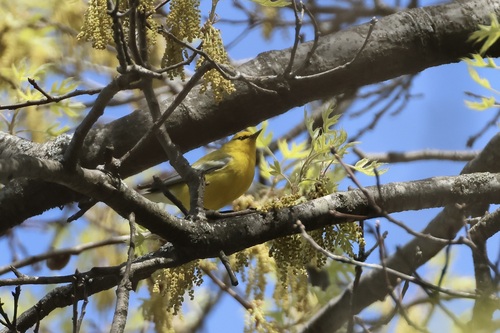 Blue-winged Warbler
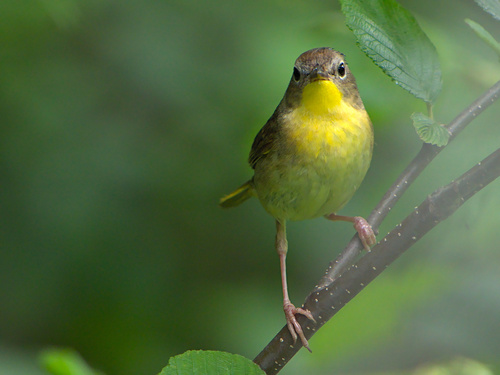 Common Yellowthroat
In breve
Il segno distintivo più affidabile per separare il Blue-winged Warbler dal Common Yellowthroat è la presenza di due barre alari bianche su ali blu-grigie in tutti tranne i più giovani Blue-winged Warblers, rispetto alle ali olive uniformi senza barre alari nel Common Yellowthroat di qualsiasi età. I Blue-winged Warblers immaturi possono avere barre alari deboli o quasi invisibili, ma non mostrano mai una maschera nera. Il Common Yellowthroat maschio adulto è unico tra i due per la sua audace maschera facciale nera, che il Blue-winged Warbler non mostra mai. Entrambe le specie sono piccoli warbler giallastri, ma il Blue-winged Warbler è leggermente più snello con un becco appuntito e un giallo più vibrante nel complesso, mentre il Common Yellowthroat è più rotondo con una testa più pesante e parti superiori olive. L'habitat può aiutare: il Blue-winged Warbler preferisce campi e bordi cespugliosi, mentre il Common Yellowthroat è quasi sempre in paludi o folti cespugli umidi.
Consigli di identificazione
- Barre alari: Il Blue-winged Warbler (adulto e la maggior parte degli immaturi) mostra due barre alari bianche su ali blu-grigie; il Common Yellowthroat non mostra mai barre alari a nessuna età. Questo è il segno distintivo migliore quando visibile.
- Colore delle ali: Il Blue-winged Warbler ha ali blu-grigie, in contrasto con il corpo giallo o olive; il Common Yellowthroat ha ali e dorso olive semplici, che si fondono con il resto delle parti superiori.
- Schema facciale (maschi adulti): Il maschio adulto del Common Yellowthroat ha una audace maschera nera sul viso, bordata sopra da bianco o grigio; il Blue-winged Warbler non mostra mai una maschera, solo una sottile linea nera attorno agli occhi.
- Schema facciale (femmine/immaturi): La femmina e l'immaturo del Blue-winged Warbler hanno una sottile o grigia linea attorno agli occhi, a volte difficile da vedere, ma non hanno mai una maschera. La femmina e l'immaturo del Common Yellowthroat mancano sia della maschera che della linea attorno agli occhi, dando un viso semplice.
- Parti inferiori: Il Blue-winged Warbler è di un giallo brillante dalla gola fino all'area sottocoda (maschio) o di un giallo più pallido (femmina), senza striature. Il Common Yellowthroat ha una gola e un petto gialli, ma il ventre è bianco o pallido, spesso con un forte contrasto.
- Forma del becco: Il Blue-winged Warbler ha un becco appuntito e fine; il becco del Common Yellowthroat è leggermente più pesante e più conico, anche se questo è sottile.
- Coda e struttura: Il Blue-winged Warbler appare spesso più snello e con una coda più lunga, con un aspetto più appuntito; il Common Yellowthroat è più rotondo, con una coda più corta e una testa più pesante.
- Confusione giovanile: L'immaturo Blue-winged Warbler può avere barre alari deboli o quasi invisibili e un becco rosato, ma non mostra mai una maschera nera o un forte contrasto facciale. L'immaturo Common Yellowthroat è olive sopra, giallastro sotto, e manca sempre di barre alari e maschera.
- Contesto dell'habitat: Il Blue-winged Warbler si trova in campi asciutti e cespugliosi e bordi boschivi; il Common Yellowthroat è quasi sempre in o vicino a paludi, prati umidi, o folti cespugli umidi.
- Comportamento: Il Blue-winged Warbler è più probabile che venga visto cercare cibo in spazi aperti o a livelli medi; il Common Yellowthroat è un furtivo, rimanendo basso in copertura densa e muovendo la sua coda.
- Canto: Il Blue-winged Warbler canta un breve e ronzante "bee-buzz"; il Common Yellowthroat emette un rotolante "witchety witchety witchety witch."
- Richiamo: Il richiamo del Blue-winged Warbler è un forte chip; quello del Common Yellowthroat è un morbido "jip."
- Variazione stagionale: Entrambe le specie migrano, ma il Blue-winged Warbler è più probabile che si trovi in alture cespugliose durante la riproduzione, mentre il Common Yellowthroat è diffuso in migrazione ma preferisce ancora habitat umidi.
- Differenze sessuali: La femmina del Blue-winged Warbler è di un giallo più opaco con una sottile linea attorno agli occhi; la femmina del Common Yellowthroat è olive sopra, giallastra sotto, con un viso semplice.
- Trappole: Gli ibridi (Brewster's e Lawrence's Warblers) possono mostrare caratteristiche miste, ma anche questi di solito mantengono alcuni indizi di barre alari o schemi facciali. Controlla sempre prima le barre alari e la maschera.
Taglia
Il Blue-winged Warbler è leggermente più piccolo e snello, misurando circa 11.4–12.7 cm (4.5–5.0 in) di lunghezza e pesando circa 8.5 g (0.3 oz) [wikipedia][avonet]. Il Common Yellowthroat è simile in lunghezza ma appare un po' più robusto, con un corpo più rotondo e una testa più pesante. Entrambi sono piccoli warbler, ma il Blue-winged Warbler spesso appare più delicato e appuntito, specialmente nel becco e nella coda. Sul campo, la dimensione da sola non è un forte separatore, ma il Blue-winged Warbler può apparire più snello e attivo, mentre il Common Yellowthroat è più massiccio e furtivo.
Piumaggio
I Blue-winged Warblers giovanili e immaturi possono essere difficili: sono olive sopra con ali simili agli adulti, ma le loro barre alari possono essere deboli o quasi invisibili, e i loro becchi sono rosati. Tuttavia, anche i giovani Blue-winged Warblers non mostrano mai una maschera facciale nera. Gli adulti Blue-winged Warblers (soprattutto i maschi) sono di un giallo brillante sotto e sulla testa, con una sottile linea nera attorno agli occhi, ali blu-grigie con due barre alari bianche, e senza striature sotto. Le femmine sono di un giallo più opaco con una linea attorno agli occhi meno distinta e una corona più pallida, ma mostrano ancora barre alari. Gli immaturi Common Yellowthroats assomigliano alle femmine adulte: olive sopra, gola e petto giallastri, ventre bianco, e senza barre alari o maschera facciale. Il maschio adulto del Common Yellowthroat è distintivo con la sua maschera nera bordata sopra da bianco o grigio, parti superiori olive, gola/petto giallo, e ventre bianco. Le femmine e gli immaturi mancano della maschera e sono generalmente più opachi, ma non mostrano mai barre alari o una linea attorno agli occhi netta. In tutte le età e sessi, il Common Yellowthroat ha ali e coda olive semplici, mai blu-grigie o a barre.
Comportamento
Il Blue-winged Warbler è spesso visto cercare attivamente cibo in campi cespugliosi, siepi, o bordi boschivi, muovendosi frequentemente attraverso la vegetazione bassa o posandosi in spazi aperti. Tende a essere più visibile e meno furtivo rispetto al Common Yellowthroat. Il Common Yellowthroat è un classico furtivo, di solito rimanendo basso in vegetazione densa e umida come canne, giunchi, o folta vegetazione vicino all'acqua. Spesso muove la sua coda e compie movimenti rapidi e veloci, raramente posandosi completamente in spazi aperti. In volo, il Blue-winged Warbler può apparire più diretto e agile, mentre il Common Yellowthroat è più probabile che scenda rapidamente in copertura.
Habitat
Il Blue-winged Warbler nidifica in campi cespugliosi, radure in rigenerazione, bordi boschivi, e pascoli incolti, spesso lontano dall'acqua. È raramente trovato in paludi dense. Il Common Yellowthroat è fortemente legato a habitat umidi: paludi, prati umidi, zone umide, e folti cespugli vicino all'acqua, anche se può verificarsi in aree cespugliose più secche durante la migrazione. Se trovi un piccolo warbler giallo in una palude di canne, è molto più probabile che sia un Common Yellowthroat; in un campo cespuglioso secco o bordo boschivo, il Blue-winged Warbler è la scommessa migliore.
Voce
Il canto del Blue-winged Warbler è una serie di note ronzanti, spesso descritto come "bee-buzz" o simile, e il suo richiamo è un forte chip. Il Common Yellowthroat canta un forte e rotolante "witchety witchety witchety witch," e il suo richiamo è un morbido "jip." Anche se entrambi possono essere ronzanti, il canto del Common Yellowthroat è più musicale e ripetitivo, mentre quello del Blue-winged Warbler è più breve e simile a un insetto. I richiami sono diversi: quello del Blue-winged è più acuto e metallico, quello del Common Yellowthroat è più morbido.
Blue-winged Warbler · Common Yellowthroat · I miei uccelli difficili