

Motmot

アオバネアメリカムシクイ 対 カオグロアメリカムシクイ

Vermivora cyanoptera 対 Geothlypis trichas

アオバネアメリカムシクイとカオグロアメリカムシクイのクイズ
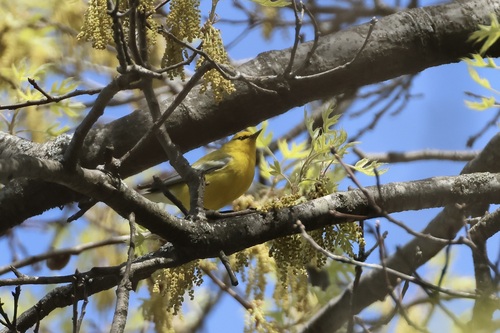
アオバネアメリカムシクイ (Vermivora cyanoptera) アオバネアメリカムシクイ
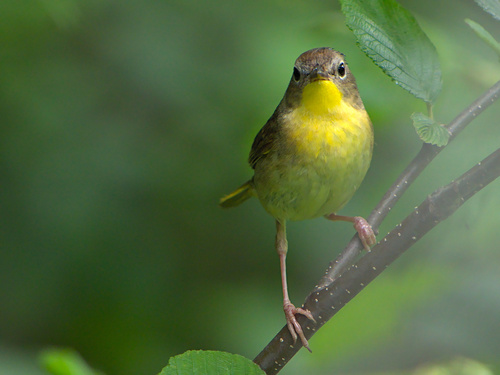
カオグロアメリカムシクイ (Geothlypis trichas) カオグロアメリカムシクイ

メディア

読み込み中…

要点

アオバネアメリカムシクイとカオグロアメリカムシクイを区別する最も信頼できるフィールドマークは、すべての若いアオバネアメリカムシクイを除く青灰色の翼に2つの白い翼帯があることであり、対してカオグロアメリカムシクイは年齢に関係なく翼帯のない均一なオリーブ色の翼を持っています。未熟なアオバネアメリカムシクイは薄いまたはほとんど見えない翼帯を持つことがありますが、黒いマスクは決して示しません。成鳥のオスのカオグロアメリカムシクイは、アオバネアメリカムシクイが決して示さない大胆な黒い顔のマスクを持っているため、2種の中でユニークです。両種は小さな黄色がかったウグイスですが、アオバネアメリカムシクイはわずかにスリムで尖ったくちばしを持ち、全体的により鮮やかな黄色をしています。一方、カオグロアメリカムシクイは丸みを帯びた体形で、重い頭部とオリーブ色の上面を持っています。生息地も役立ちます:アオバネアメリカムシクイは低木のある野原やエッジを好み、カオグロアメリカムシクイはほぼ常に湿地や密集した湿った茂みの中にいます。

識別のコツ

  1. Wing bars: アオバネアメリカムシクイ (成鳥およびほとんどの未熟個体)は青灰色の翼に2つの白い翼帯を示します; カオグロアメリカムシクイは年齢に関係なく翼帯を示しません。これは、視認できるときの最も良いフィールドマークです。
  2. Wing color: アオバネアメリカムシクイは青灰色の翼を持ち、黄色またはオリーブ色の体と対照的です; カオグロアメリカムシクイは平坦なオリーブ色の翼と背中を持ち、上面の他の部分と混ざり合っています。
  3. Facial pattern (adult males): カオグロアメリカムシクイの成鳥オスは顔に大胆な黒いマスクを持ち、その上に白または灰色の縁があります; アオバネアメリカムシクイはマスクを示さず、狭い黒いアイラインのみを持ちます。
  4. Facial pattern (females/immatures): 雌および未熟なアオバネアメリカムシクイは薄いまたは灰色がかったアイラインを持ち、時には見えにくいですが、マスクは決して示しません。雌および未熟なカオグロアメリカムシクイはマスクとアイラインの両方が欠けており、平坦な顔をしています。
  5. Underparts: アオバネアメリカムシクイは喉から尾の下まで明るい黄色(オス)または淡い黄色(雌)で、ストライピングはありません。カオグロアメリカムシクイは黄色の喉と胸を持っていますが、腹部は白または淡い色で、しばしば鋭いコントラストがあります。
  6. Bill shape: アオバネアメリカムシクイは尖った細いくちばしを持っています; カオグロアメリカムシクイのくちばしはわずかに重く、より円錐形ですが、これは微妙です。
  7. Tail and structure: アオバネアメリカムシクイはしばしばよりスリムで長い尾を持ち、より尖った外観をしています; カオグロアメリカムシクイは丸みを帯びており、短い尾と重い頭を持っています。
  8. Juvenile confusion: 未熟なアオバネアメリカムシクイは薄いまたはほとんど見えない翼帯とピンクがかったくちばしを持つことがありますが、黒いマスクや強い顔のコントラストは決して示しません。未熟なカオグロアメリカムシクイは上面が平坦なオリーブ色で、黄色がかった下面を持ち、常に翼帯とマスクが欠けています。
  9. Habitat context: アオバネアメリカムシクイは乾燥した低木のある野原や森林のエッジに見られます; カオグロアメリカムシクイはほぼ常に湿地、湿った草原、または密集した湿った茂みの中または近くにいます。
  10. Behavior: アオバネアメリカムシクイはオープンな場所や中間の高さで採餌しているのが見られることが多いです; カオグロアメリカムシクイは隠れがちで、密集したカバーの中で低く留まり、尾を振ります。
  11. Song: アオバネアメリカムシクイは短い、ブザー音の「ビー・バズ」を歌います; カオグロアメリカムシクイは転がる「ウィッチェティ・ウィッチェティ・ウィッチェティ・ウィッチ」を発します。
  12. Call: アオバネアメリカムシクイの呼び声は鋭いチップ音です; カオグロアメリカムシクイの呼び声は柔らかい「ジップ」です。
  13. Seasonal variation: 両種は渡りを行いますが、アオバネアメリカムシクイは繁殖中に低木のある高地にいる可能性が高く、カオグロアメリカムシクイは渡り中に広く分布していますが、依然として湿った生息地を好みます。
  14. Sex differences: 雌のアオバネアメリカムシクイは鈍い黄色で薄いアイラインを持っています; 雌のカオグロアメリカムシクイは上面がオリーブ色で、下面が黄色がかっており、平坦な顔をしています。
  15. Pitfalls: ハイブリッド(Brewster'sおよびLawrence's Warblers)は混合特徴を示すことがありますが、これらでも通常は何らかの翼帯または顔のパターンの手がかりを保持します。常に最初に翼帯とマスクを確認してください。

大きさ

アオバネアメリカムシクイはわずかに小さくスリムで、長さ約11.4–12.7 cm(4.5–5.0インチ)で、体重は約8.5 g(0.3オンス)です [wikipedia][avonet]。カオグロアメリカムシクイは長さは似ていますが、ややがっしりとした印象で、丸みを帯びた体と重い頭を持っています。両者は小さなウグイスですが、アオバネアメリカムシクイはしばしばより繊細で尖った印象を与え、特にくちばしと尾においてそうです。フィールドでは、サイズだけでは強い区別にはなりませんが、アオバネアメリカムシクイはより流線型で活発に見えることがあり、カオグロアメリカムシクイはよりがっしりとして隠れがちです。

羽色

未熟なアオバネアメリカムシクイはトリッキーです:彼らは上面がオリーブ色で、翼は成鳥に似ていますが、翼帯は薄いかほとんど見えないことがあり、くちばしはピンクがかっています。しかし、若いアオバネアメリカムシクイでも黒い顔のマスクは決して示しません。成鳥のアオバネアメリカムシクイ(特にオス)は、下部と頭部が明るい黄色で、狭い黒いアイライン、2つの白い翼帯を持つ青灰色の翼、下部にはストライピングがありません。雌は鈍い黄色で、アイラインがあまりはっきりせず、冠が淡いですが、依然として翼帯を示します。未熟なカオグロアメリカムシクイは成鳥の雌に似ています:上面がオリーブ色で、黄色がかった喉と胸、白い腹部、翼帯や顔のマスクがありません。成鳥のオスのカオグロアメリカムシクイは、白または灰色の縁がある黒いマスク、オリーブ色の上面、黄色の喉/胸、白い腹部で特徴的です。雌と未熟個体はマスクが欠けており、一般的に鈍いですが、依然として翼帯や鋭いアイラインは示しません。すべての年齢と性別において、カオグロアメリカムシクイは平坦なオリーブ色の翼と尾を持ち、青灰色や帯状ではありません。

行動

アオバネアメリカムシクイはしばしば低木のある野原、ヘッジロー、または森林のエッジで活発に採餌しているのが見られ、低い植生を通って移動したり、オープンな場所に止まったりします。カオグロアメリカムシクイよりも視認性が高く、隠れがちではありません。カオグロアメリカムシクイは典型的な隠れ者で、通常は水の近くのカヤツリグサ、葦、または厚い茂みの中で低く留まります。しばしば尾を振り、素早く飛び跳ねる動きをし、完全にオープンな場所に止まることはほとんどありません。飛行中、アオバネアメリカムシクイはより直接的で敏捷に見えることがあり、カオグロアメリカムシクイはカバーに素早く落ちる可能性が高いです。

生息環境

アオバネアメリカムシクイは低木のある野原、再生中のクリアリング、森林のエッジ、そして水から離れた過成長した牧草地で繁殖します。密集した湿地ではほとんど見られません。カオグロアメリカムシクイは湿った生息地に強く結びついています:湿地、湿った草原、沼地、水の近くの密集した茂みですが、渡り中は乾燥した茂みのある地域にも出現することがあります。カヤツリグサの湿地で小さな黄色のウグイスを見つけた場合、カオグロアメリカムシクイの可能性がはるかに高いです; 乾燥した低木のある野原や森林のエッジでは、アオバネアメリカムシクイの方が良い選択です。

声

アオバネアメリカムシクイの歌は一連のブザー音で、しばしば「ビー・バズ」またはそれに類似したものと表現され、その呼び声は鋭いチップ音です。カオグロアメリカムシクイは大きく、転がる「ウィッチェティ・ウィッチェティ・ウィッチェティ・ウィッチ」を歌い、その呼び声は柔らかい「ジップ」です。両者はブザー音を出すことができますが、カオグロアメリカムシクイの歌はより音楽的で繰り返しが多く、アオバネアメリカムシクイの歌は短く、昆虫のようです。呼び声は異なり、Blue-wingedの方が鋭く金属的で、カオグロアメリカムシクイの方が柔らかいです。

より良い説明を送る

比較と同じ項目を使ってください。文章はすぐに公開されます。

The most reliable field mark to separate Blue-winged Warbler from Common Yellowthroat is the presence of two white wing bars on blue-gray wings in all but the youngest Blue-winged Warblers, versus the uniform olive wings without wing bars in Common Yellowthroat of any age. Immature Blue-winged Warblers may have faint or nearly invisible wing bars, but never show a black mask. Adult male Common Yellowthroat is unique among the two for its bold black facial mask, which Blue-winged Warbler never shows. Both species are small yellowish warblers, but Blue-winged Warbler is slightly slimmer with a pointed bill and a more vibrant yellow overall, while Common Yellowthroat is rounder with a heavier head and olive upperparts. Habitat can help: Blue-winged Warbler prefers shrubby fields and edges, while Common Yellowthroat is almost always in marshes or dense, wet thickets.

  1. Wing bars: Blue-winged Warbler (adult and most immatures) shows two white wing bars on blue-gray wings; Common Yellowthroat never shows wing bars at any age. This is the single best field mark when visible.
  2. Wing color: Blue-winged Warbler has blue-gray wings, contrasting with yellow or olive body; Common Yellowthroat has plain olive wings and back, blending with the rest of the upperparts.
  3. Facial pattern (adult males): Common Yellowthroat adult male has a bold black mask across the face, bordered above by white or gray; Blue-winged Warbler never shows a mask, only a narrow black eye line.
  4. Facial pattern (females/immatures): Female and immature Blue-winged Warbler have a faint or grayish eye line, sometimes hard to see, but never a mask. Female and immature Common Yellowthroat lack both mask and eye line, giving a plain face.
  5. Underparts: Blue-winged Warbler is bright yellow from throat to undertail (male) or paler yellow (female), with no streaking. Common Yellowthroat has yellow throat and chest, but belly is white or pale, often with a sharp contrast.
  6. Bill shape: Blue-winged Warbler has a pointed, fine bill; Common Yellowthroat's bill is slightly heavier and more conical, though this is subtle.
  7. Tail and structure: Blue-winged Warbler often appears more slender and longer-tailed, with a more pointed look; Common Yellowthroat is rounder, with a shorter tail and heavier head.
  8. Juvenile confusion: Immature Blue-winged Warbler may have faint or nearly invisible wing bars and a pinkish bill, but never shows a black mask or strong facial contrast. Immature Common Yellowthroat is plain olive above, yellowish below, and always lacks wing bars and mask.
  9. Habitat context: Blue-winged Warbler is found in dry, shrubby fields and woodland edges; Common Yellowthroat is almost always in or near marshes, wet meadows, or dense, damp thickets.
  10. Behavior: Blue-winged Warbler is more likely to be seen foraging in the open or at mid-levels; Common Yellowthroat is a skulker, staying low in dense cover and flicking its tail.
  11. Song: Blue-winged Warbler sings a short, buzzy "bee-buzz"; Common Yellowthroat gives a rolling "witchety witchety witchety witch."
  12. Call: Blue-winged Warbler's call is a sharp chip; Common Yellowthroat's is a soft "jip."
  13. Seasonal variation: Both species migrate, but Blue-winged Warbler is more likely in shrubby uplands during breeding, while Common Yellowthroat is widespread in migration but still prefers wet habitats.
  14. Sex differences: Female Blue-winged Warbler is duller yellow with a faint eye line; female Common Yellowthroat is olive above, yellowish below, with a plain face.
  15. Pitfalls: Hybrids (Brewster's and Lawrence's Warblers) can show mixed features, but even these usually retain some wing bar or facial pattern clues. Always check for wing bars and mask first.

Blue-winged Warbler is slightly smaller and slimmer, measuring about 11.4–12.7 cm (4.5–5.0 in) in length and weighing around 8.5 g (0.3 oz) [wikipedia][avonet]. Common Yellowthroat is similar in length but appears a bit bulkier, with a rounder body and heavier head. Both are small warblers, but Blue-winged Warbler often looks more delicate and pointed, especially in the bill and tail. In the field, size alone is not a strong separator, but Blue-winged Warbler may appear more streamlined and active, while Common Yellowthroat is chunkier and more skulking.

Juvenile and immature Blue-winged Warblers can be tricky: they are olive above with wings similar to adults, but their wing bars may be faint or nearly invisible, and their bills are pinkish. However, even young Blue-winged Warblers never show a black facial mask. Adult Blue-winged Warblers (especially males) are bright yellow below and on the head, with a narrow black eye line, blue-gray wings with two white wing bars, and no streaking below. Females are duller yellow with a less distinct eye line and paler crown, but still show wing bars. Immature Common Yellowthroats resemble adult females: olive above, yellowish throat and chest, white belly, and no wing bars or facial mask. Adult male Common Yellowthroat is distinctive with its black mask bordered above by white or gray, olive upperparts, yellow throat/chest, and white belly. Females and immatures lack the mask and are generally duller, but still never show wing bars or a sharp eye line. In all ages and sexes, Common Yellowthroat has plain olive wings and tail, never blue-gray or barred.

Blue-winged Warbler is often seen foraging actively in shrubby fields, hedgerows, or woodland edges, frequently moving through low vegetation or perching in the open. It tends to be more visible and less skulking than Common Yellowthroat. Common Yellowthroat is a classic skulker, usually staying low in dense, wet vegetation such as cattails, reeds, or thick brush near water. It often flicks its tail and gives quick, darting movements, rarely perching fully in the open. In flight, Blue-winged Warbler may appear more direct and agile, while Common Yellowthroat is more likely to drop quickly into cover.

Blue-winged Warbler breeds in shrubby fields, regenerating clearings, woodland edges, and overgrown pastures, often away from water. It is rarely found in dense marshes. Common Yellowthroat is strongly tied to wet habitats: marshes, wet meadows, swamps, and dense thickets near water, though it can occur in drier brushy areas during migration. If you find a small yellow warbler in a cattail marsh, Common Yellowthroat is far more likely; in a dry shrubby field or woodland edge, Blue-winged Warbler is the better bet.

Blue-winged Warbler's song is a series of buzzing notes, often described as "bee-buzz" or similar, and its call is a sharp chip. Common Yellowthroat sings a loud, rolling "witchety witchety witchety witch," and its call is a soft "jip." While both can be buzzy, the Common Yellowthroat's song is more musical and repetitive, while Blue-winged Warbler's is shorter and more insect-like. Calls are different: Blue-winged's is sharper and more metallic, Common Yellowthroat's is softer.

変更を破棄しますか?

保存していない編集があります。今離れると失われます。

アオバネアメリカムシクイ · カオグロアメリカムシクイ · 苦手な鳥