

Motmot

Blue-throated Flycatcher vs Hill Blue Flycatcher

Cyornis rubeculoides versus Cyornis whitei

Play a quiz with Blue-throated Flycatcher and Hill Blue Flycatcher
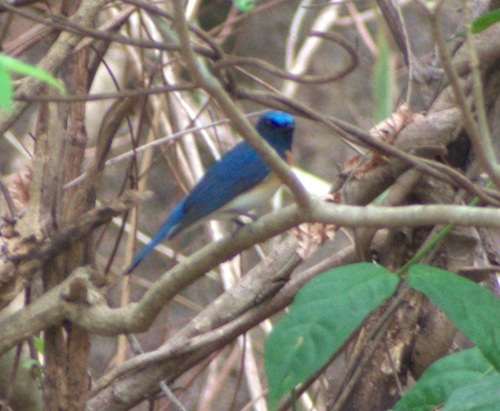
Blue-throated Flycatcher (Cyornis rubeculoides) Blue-throated Flycatcher
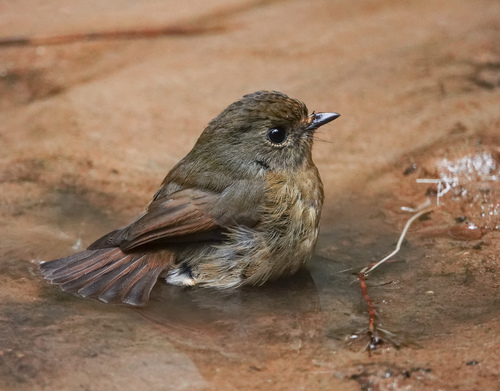
Hill Blue Flycatcher (Cyornis whitei) Hill Blue Flycatcher

Media

Loading…

In short

The most reliable way to separate Blue-throated Flycatcher from Hill Blue Flycatcher is the color of the throat in adult males: Blue-throated shows a distinctly blue throat, while Hill Blue lacks this feature. Both are small, similar-looking flycatchers, but Blue-throated prefers denser forest and is best told by its unique throat coloration. Structural and behavioral differences are subtle, so focus on throat color in good light, especially for adult males. Immature and female birds are much harder to distinguish and may not be safely separated in the field with current information.

Identification tips

  1. Blue throat in adult males: The single best field mark—adult male Blue-throated Flycatcher shows a clear blue throat patch, while Hill Blue Flycatcher does not. Always confirm good light and angle, as shadows can obscure this mark.
  2. Blue upperparts and rufous underparts: Both species share these features, so do not use them alone for separation.
  3. Females and immatures: These are extremely difficult to separate in the field with current information. If the throat is not blue, do not assume Hill Blue Flycatcher—consider age and sex.
  4. Habitat context: If you are in dense, thick forest, Blue-throated is more likely, but both species can occur in similar habitats where their ranges overlap.
  5. Geographic range: Hill Blue Flycatcher is found in southern China, northeastern India, and Southeast Asia. Blue-throated is also found in the region, so range alone is not diagnostic.
  6. No distinctive wing pattern: Neither species is described as having a unique juvenile or immature wing pattern that can be used for separation in flight.
  7. Perched vs. in flight: Both species look similar in flight and perched; focus on throat color when the bird is at rest.
  8. Structural features: No reliable differences in bill shape, tail length, or primary projection are noted in the sources.
  9. Voice: No vocal differences are described in the available notes; do not rely on song or call for separation.
  10. Quiz pitfalls: Most quiz mix-ups occur with non-adult males or birds in poor light. If you cannot see a blue throat, do not guess based on underpart color or behavior alone.
  11. Seasonal variation: No seasonal plumage changes are described that help with separation.
  12. Sexual dimorphism: Only adult males are reliably separable by throat color; females and immatures remain a challenge.
  13. Lighting: Blue throat can be hard to see in shade; always check from multiple angles if possible.
  14. Mixed flocks: Both species may join mixed-species flocks in forest, so do not use flock composition for ID.
  15. Conservation status: Both are listed with the same IUCN status, so rarity is not a useful clue.

Size

Both species are small flycatchers in the same genus, and no reliable size difference is noted in the available sources. Expect similar proportions and overall jizz when perched or in flight.

Plumage

For adult males, Blue-throated Flycatcher stands out with a blue throat patch, while Hill Blue Flycatcher lacks blue on the throat. Both have blue upperparts and rufous underparts, but only Blue-throated shows blue extending onto the throat. For females and immatures, the differences are much less obvious and may not be safely separated in the field without more detailed information. No distinctive age-specific wing or upperwing pattern is mentioned for either species, so focus on throat color when visible. Juvenile and first-winter birds are not described in the notes, so caution is needed with non-adult males.

Behaviour

Both species behave like typical forest flycatchers, often perching upright and sallying for insects. No distinctive behavioral differences are noted in the sources, so do not rely on behavior for separation.

Habitat

Blue-throated Flycatcher tends to favor denser, thicker forest compared to other flycatchers, which may include Hill Blue Flycatcher. Hill Blue Flycatcher is found in southern China, northeastern India, and Southeast Asia, often in hilly or montane forest. While both can overlap in range, Blue-throated may be more tied to dense forest interiors, but habitat alone is not diagnostic where their ranges overlap.

Submit a better description

Use the same sections as the comparison. Your text is published immediately.

The most reliable way to separate Blue-throated Flycatcher from Hill Blue Flycatcher is the color of the throat in adult males: Blue-throated shows a distinctly blue throat, while Hill Blue lacks this feature. Both are small, similar-looking flycatchers, but Blue-throated prefers denser forest and is best told by its unique throat coloration. Structural and behavioral differences are subtle, so focus on throat color in good light, especially for adult males. Immature and female birds are much harder to distinguish and may not be safely separated in the field with current information.

  1. Blue throat in adult males: The single best field mark—adult male Blue-throated Flycatcher shows a clear blue throat patch, while Hill Blue Flycatcher does not. Always confirm good light and angle, as shadows can obscure this mark.
  2. Blue upperparts and rufous underparts: Both species share these features, so do not use them alone for separation.
  3. Females and immatures: These are extremely difficult to separate in the field with current information. If the throat is not blue, do not assume Hill Blue Flycatcher—consider age and sex.
  4. Habitat context: If you are in dense, thick forest, Blue-throated is more likely, but both species can occur in similar habitats where their ranges overlap.
  5. Geographic range: Hill Blue Flycatcher is found in southern China, northeastern India, and Southeast Asia. Blue-throated is also found in the region, so range alone is not diagnostic.
  6. No distinctive wing pattern: Neither species is described as having a unique juvenile or immature wing pattern that can be used for separation in flight.
  7. Perched vs. in flight: Both species look similar in flight and perched; focus on throat color when the bird is at rest.
  8. Structural features: No reliable differences in bill shape, tail length, or primary projection are noted in the sources.
  9. Voice: No vocal differences are described in the available notes; do not rely on song or call for separation.
  10. Quiz pitfalls: Most quiz mix-ups occur with non-adult males or birds in poor light. If you cannot see a blue throat, do not guess based on underpart color or behavior alone.
  11. Seasonal variation: No seasonal plumage changes are described that help with separation.
  12. Sexual dimorphism: Only adult males are reliably separable by throat color; females and immatures remain a challenge.
  13. Lighting: Blue throat can be hard to see in shade; always check from multiple angles if possible.
  14. Mixed flocks: Both species may join mixed-species flocks in forest, so do not use flock composition for ID.
  15. Conservation status: Both are listed with the same IUCN status, so rarity is not a useful clue.

Both species are small flycatchers in the same genus, and no reliable size difference is noted in the available sources. Expect similar proportions and overall jizz when perched or in flight.

For adult males, Blue-throated Flycatcher stands out with a blue throat patch, while Hill Blue Flycatcher lacks blue on the throat. Both have blue upperparts and rufous underparts, but only Blue-throated shows blue extending onto the throat. For females and immatures, the differences are much less obvious and may not be safely separated in the field without more detailed information. No distinctive age-specific wing or upperwing pattern is mentioned for either species, so focus on throat color when visible. Juvenile and first-winter birds are not described in the notes, so caution is needed with non-adult males.

Both species behave like typical forest flycatchers, often perching upright and sallying for insects. No distinctive behavioral differences are noted in the sources, so do not rely on behavior for separation.

Blue-throated Flycatcher tends to favor denser, thicker forest compared to other flycatchers, which may include Hill Blue Flycatcher. Hill Blue Flycatcher is found in southern China, northeastern India, and Southeast Asia, often in hilly or montane forest. While both can overlap in range, Blue-throated may be more tied to dense forest interiors, but habitat alone is not diagnostic where their ranges overlap.

Discard your changes?

You have unsaved edits. If you leave now, those changes will be lost.

Blue-throated Flycatcher · Hill Blue Flycatcher · My Tricky Birds