

Motmot

Blue-throated Flycatcher vs Chinese Blue Flycatcher

Cyornis rubeculoides versus Cyornis glaucicomans

Play a quiz with Blue-throated Flycatcher and Chinese Blue Flycatcher
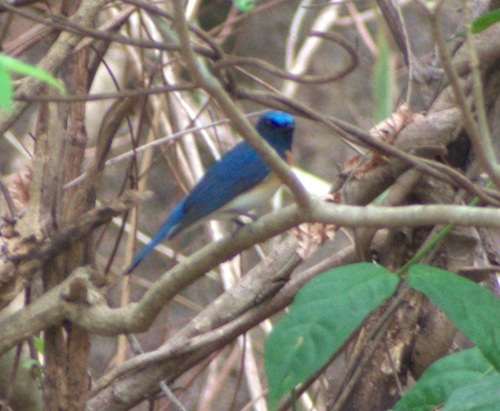
Blue-throated Flycatcher (Cyornis rubeculoides) Blue-throated Flycatcher
Chinese Blue Flycatcher (Cyornis glaucicomans) Chinese Blue Flycatcher

Media

Loading…

In short

The most reliable way to separate Blue-throated Flycatcher from Chinese Blue Flycatcher is by the color of the throat in adult males: Blue-throated shows a distinctly blue throat, while Chinese Blue Flycatcher has a different throat coloration. Both species are small, active flycatchers, and can be very similar in overall shape and size. Immature and female birds are especially challenging to separate, as their plumage differences are subtle and not well described in the available sources. Habitat can sometimes help: Blue-throated Flycatcher prefers denser forests, while Chinese Blue Flycatcher is more likely in southern China and adjacent wintering grounds.

Identification tips

  1. Adult male throat color: Blue-throated Flycatcher males have a distinctly blue throat, which is the single most reliable field mark. If you see a blue throat, it is not Chinese Blue Flycatcher.
  2. Adult male Chinese Blue Flycatcher: Lacks the blue throat; the exact throat color is not specified in the sources, but it will not be blue. This is the main separation from Blue-throated.
  3. Females and immatures: No detailed field marks are given in the sources for separating females or immature birds. Exercise caution and avoid positive identification unless the throat color is clearly visible.
  4. Habitat context: Blue-throated Flycatcher is more likely in dense, thick forest, while Chinese Blue Flycatcher is tied to southern China and its wintering range. Use habitat and range as supporting clues, not primary ID features.
  5. Geographic range: If you are outside mid-southern China or the southern wintering range, Blue-throated is more likely, but be aware that ranges can overlap.
  6. Behavior: Both species are active, sallying flycatchers; behavior is not useful for separation.
  7. Size and structure: Both are similar in size and shape; do not rely on these features for identification.
  8. Flight views: No distinctive juvenile or immature upperwing patterns are described for either species, so flight views of young birds are not diagnostic.
  9. Vocalizations: No distinguishing vocal differences are provided in the sources; do not rely on voice for separation unless you have expert-level experience and additional references.
  10. Quiz pitfalls: Most mix-ups occur with females and immatures, or when the throat is not clearly seen. Always try to confirm the throat color in adult males for a confident ID.
  11. Previous taxonomy: Chinese Blue Flycatcher was formerly considered a subspecies of Blue-throated, which explains their extreme similarity; only the throat color in adult males is a safe field mark.
  12. Do not overinterpret subtle plumage: Without clear, diagnostic marks in the sources, avoid guessing based on slight differences in shade or tone elsewhere on the bird.
  13. Photograph if uncertain: For tricky individuals, especially females and immatures, try to obtain photos for later review or expert consultation.
  14. Consult local checklists: In areas of range overlap, check recent eBird records to see which species is more likely at your location and season, but do not rely solely on probability for ID.
  15. Summary: For confident identification, focus on the blue throat in adult males; all other features are either too similar or not described well enough to be reliable.

Size

Both species are small passerines in the Muscicapidae family, and there is no evidence of a consistent size difference between them in the available sources. Expect similar proportions, bill size, and overall structure in the field.

Plumage

Adult males of Blue-throated Flycatcher can be distinguished by their blue throat, which is the key field mark. Chinese Blue Flycatcher adult males lack this feature and have a different throat color (not specified in the sources, but implied to be non-blue). For females and immatures, the sources do not provide detailed contrasts, so separation is likely to be very difficult or impossible without close, prolonged views or vocalizations. No information is available on distinctive juvenile or immature upperwing patterns for either species, so flight views of young birds are not diagnostic with current knowledge.

Behaviour

Both species behave like typical small flycatchers: active, sallying from perches to catch insects. There are no behavioral differences noted in the sources that would help in field separation.

Habitat

Blue-throated Flycatcher is noted to prefer thicker, denser forest compared to other flycatchers. Chinese Blue Flycatcher is native to mid-southern China and winters further south, but specific habitat preferences are not detailed. If you are in dense forest in the known range of Blue-throated, that supports its identification, but ranges overlap in some areas and habitat alone is not diagnostic.

Submit a better description

Use the same sections as the comparison. Your text is published immediately.

The most reliable way to separate Blue-throated Flycatcher from Chinese Blue Flycatcher is by the color of the throat in adult males: Blue-throated shows a distinctly blue throat, while Chinese Blue Flycatcher has a different throat coloration. Both species are small, active flycatchers, and can be very similar in overall shape and size. Immature and female birds are especially challenging to separate, as their plumage differences are subtle and not well described in the available sources. Habitat can sometimes help: Blue-throated Flycatcher prefers denser forests, while Chinese Blue Flycatcher is more likely in southern China and adjacent wintering grounds.

  1. Adult male throat color: Blue-throated Flycatcher males have a distinctly blue throat, which is the single most reliable field mark. If you see a blue throat, it is not Chinese Blue Flycatcher.
  2. Adult male Chinese Blue Flycatcher: Lacks the blue throat; the exact throat color is not specified in the sources, but it will not be blue. This is the main separation from Blue-throated.
  3. Females and immatures: No detailed field marks are given in the sources for separating females or immature birds. Exercise caution and avoid positive identification unless the throat color is clearly visible.
  4. Habitat context: Blue-throated Flycatcher is more likely in dense, thick forest, while Chinese Blue Flycatcher is tied to southern China and its wintering range. Use habitat and range as supporting clues, not primary ID features.
  5. Geographic range: If you are outside mid-southern China or the southern wintering range, Blue-throated is more likely, but be aware that ranges can overlap.
  6. Behavior: Both species are active, sallying flycatchers; behavior is not useful for separation.
  7. Size and structure: Both are similar in size and shape; do not rely on these features for identification.
  8. Flight views: No distinctive juvenile or immature upperwing patterns are described for either species, so flight views of young birds are not diagnostic.
  9. Vocalizations: No distinguishing vocal differences are provided in the sources; do not rely on voice for separation unless you have expert-level experience and additional references.
  10. Quiz pitfalls: Most mix-ups occur with females and immatures, or when the throat is not clearly seen. Always try to confirm the throat color in adult males for a confident ID.
  11. Previous taxonomy: Chinese Blue Flycatcher was formerly considered a subspecies of Blue-throated, which explains their extreme similarity; only the throat color in adult males is a safe field mark.
  12. Do not overinterpret subtle plumage: Without clear, diagnostic marks in the sources, avoid guessing based on slight differences in shade or tone elsewhere on the bird.
  13. Photograph if uncertain: For tricky individuals, especially females and immatures, try to obtain photos for later review or expert consultation.
  14. Consult local checklists: In areas of range overlap, check recent eBird records to see which species is more likely at your location and season, but do not rely solely on probability for ID.
  15. Summary: For confident identification, focus on the blue throat in adult males; all other features are either too similar or not described well enough to be reliable.

Both species are small passerines in the Muscicapidae family, and there is no evidence of a consistent size difference between them in the available sources. Expect similar proportions, bill size, and overall structure in the field.

Adult males of Blue-throated Flycatcher can be distinguished by their blue throat, which is the key field mark. Chinese Blue Flycatcher adult males lack this feature and have a different throat color (not specified in the sources, but implied to be non-blue). For females and immatures, the sources do not provide detailed contrasts, so separation is likely to be very difficult or impossible without close, prolonged views or vocalizations. No information is available on distinctive juvenile or immature upperwing patterns for either species, so flight views of young birds are not diagnostic with current knowledge.

Both species behave like typical small flycatchers: active, sallying from perches to catch insects. There are no behavioral differences noted in the sources that would help in field separation.

Blue-throated Flycatcher is noted to prefer thicker, denser forest compared to other flycatchers. Chinese Blue Flycatcher is native to mid-southern China and winters further south, but specific habitat preferences are not detailed. If you are in dense forest in the known range of Blue-throated, that supports its identification, but ranges overlap in some areas and habitat alone is not diagnostic.

Discard your changes?

You have unsaved edits. If you leave now, those changes will be lost.

Blue-throated Flycatcher · Chinese Blue Flycatcher · My Tricky Birds