

Blue-rumped Parrot vs Simeulue Parrot
Psittinus cyanurus versus Psittinus abbotti
Play a quiz with Blue-rumped Parrot and Simeulue Parrot
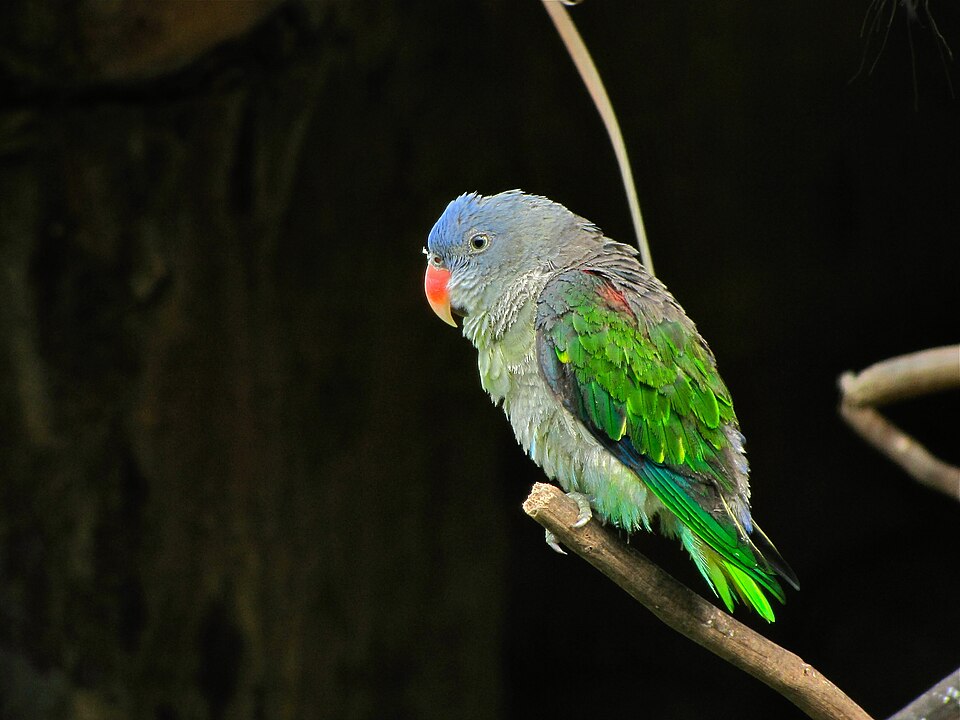 Blue-rumped Parrot
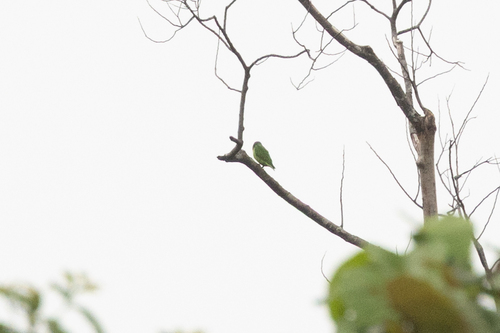 Simeulue Parrot
In short
The most reliable field mark to separate Blue-rumped Parrot from Simeulue Parrot is the presence of a blue rump and black mantle in adult male Blue-rumped, which are both absent in Simeulue. Female Blue-rumped Parrots have a grey-brown head, while female Simeulue Parrots have a green head. Both species are small, stocky green parrots, but Simeulue Parrot is slightly larger and lacks the blue rump and grey mantle of Blue-rumped. These differences are most visible in perched birds or in good flight views of the upperparts; underwing and general green coloration are similar and not diagnostic. Be cautious with immature or distant birds, as their green plumage and structure are very similar.
Identification tips
- Blue rump (adult male Blue-rumped only): Look for a distinct blue patch on the rump in adult male Blue-rumped Parrots; Simeulue Parrot never shows this feature.
- Black mantle (adult male Blue-rumped only): Adult male Blue-rumped has a black mantle (upper back), which is absent in Simeulue Parrot.
- Head color in males: Blue-rumped males have a blue head, while Simeulue males have a blue face but a green crown and no blue on the rump.
- Head color in females: Female Blue-rumped Parrots have a grey-brown head, whereas female Simeulue Parrots have a green head. This is a key mark for separating females.
- Rump color in all plumages: Blue-rumped Parrot (especially males) shows a blue rump; Simeulue Parrot always has a green rump.
- Size: Simeulue Parrot is slightly larger (19 cm vs 18 cm), but this is subtle and unreliable unless birds are side by side.
- Red underwing coverts and reddish shoulder patch: Both species show these features; they do not help with separation.
- Yellowish margins to wing coverts: Present in Blue-rumped Parrot, but not specifically mentioned for Simeulue Parrot; may be subtle and not always visible.
- Bill color (adult male Blue-rumped): Red upper mandible in adult male Blue-rumped Parrot; bill color for Simeulue Parrot is not described, so use with caution.
- Geographic location: If you are not on Simeulue or Lasia islands, you are almost certainly seeing Blue-rumped Parrot. On those islands, expect Simeulue Parrot.
- Sexual dimorphism: Both species are sexually dimorphic, but the specific head and rump colors are the best clues.
- No known flight/wing pattern differences: Both species are similar in flight, with no described differences in upperwing or underwing pattern.
- Immature birds: No clear information; use caution, as immature birds may lack strong head or rump coloration.
- Habitat overlap: Only an issue on Sumatra and nearby islands; otherwise, range is diagnostic.
- Do not rely on green coloration or red underwing: These are shared by both species and not useful for separation.
Size
Simeulue Parrot is slightly larger (about 19 cm) than Blue-rumped Parrot (about 18 cm) [wikipedia]. Both are short-tailed and stocky, so size alone is subtle and not always reliable in the field, especially without direct comparison. No mass data are available for a more precise separation.
Plumage
There are no age-specific upperwing or flight marks described for either species, so separation relies on head and rump coloration, especially in adults.
- Adult males: Blue-rumped Parrot has a blue head and rump, a black mantle (upper back), and a red upper mandible. Simeulue Parrot males have a blue face with a green crown, a black collar, and crucially lack the blue rump and black mantle.
- Adult females: Blue-rumped Parrot females have a grey-brown head, while Simeulue Parrot females have a green head. Both sexes in both species are otherwise bright green with red underwing coverts and a reddish shoulder patch, but these are not useful for separating the two.
- Juveniles/immatures: No specific information is available for immature or juvenile plumages, so assume they resemble duller versions of adults, making separation very challenging without clear head or rump views.
Behaviour
No behavioral differences are described between these species. Both are typical small parrots in structure and movement, and both are likely to be seen in similar postures and flight styles.
Habitat
Blue-rumped Parrot is found across the southern tip of Myanmar, peninsular Thailand, Malaysia, Borneo, Sumatra, and nearby islands, while Simeulue Parrot is restricted to two small islands off Sumatra. If you are not on Simeulue or Lasia islands, you are almost certainly seeing Blue-rumped Parrot. However, within the overlap zone (Sumatra region), range is critical for identification.