

Blue-headed Vireo vs Plumbeous Vireo
Vireo solitarius versus Vireo plumbeus
Play a quiz with Blue-headed Vireo and Plumbeous Vireo
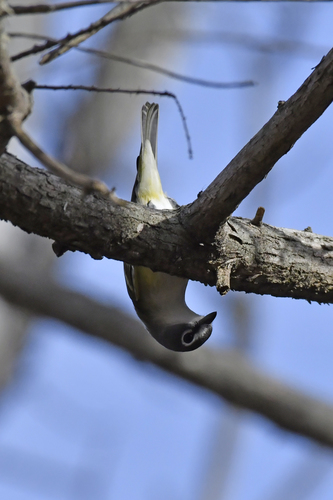 Blue-headed Vireo
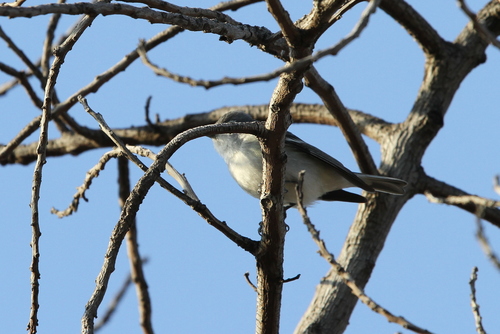 Plumbeous Vireo
In short
The most reliable field mark between Blue-headed Vireo and Plumbeous Vireo is the color of the head and the tone of the wing bars: Blue-headed Vireo shows a deep blue-gray crown and bold yellow wing bars, while Plumbeous Vireo has a neutral gray (sometimes blue-gray) crown and white wing bars. Both species are structurally similar, but Plumbeous Vireo is generally duller and grayer overall, with less yellow on the flanks and wing bars. Juvenile and adult plumages are similar within each species, so age-related differences are subtle and not a major source of confusion. Focus on the combination of head color, wing bar color, and flank/yellow tones for the most reliable separation in the field.
Identification tips
- Head color: Blue-headed Vireo shows a deep blue-gray crown and nape, giving a crisp, contrasting look; Plumbeous Vireo’s crown is neutral gray (sometimes blue-gray in some subspecies), appearing duller and less sharply defined. This is the most reliable mark in good light.
- Wing bars: Blue-headed Vireo has bold yellow wing bars, while Plumbeous Vireo’s are white or whitish. Look for the yellow tone in the wing bars, especially in fresh plumage.
- Flank color: Blue-headed Vireo has distinctly yellowish flanks, visible even at a distance; Plumbeous Vireo’s flanks are mostly whitish or very pale yellow (sometimes sulfur yellow in a few subspecies), but usually much less colorful.
- Upperparts: Blue-headed Vireo is olive-green above, contrasting with the blue-gray head; Plumbeous Vireo is gray above with only a faint olive tinge on the rump or back in some subspecies.
- Spectacles: Both species have white eye-rings and supercilia, but Blue-headed Vireo’s are bolder and more contrasting against the darker head. Plumbeous Vireo’s spectacles are less pronounced.
- Bill: Blue-headed Vireo’s bill is slightly thicker and longer on average, but this is subtle and not always useful in the field.
- Tail pattern: Both species have dark tails with pale edges, but this is not a reliable field mark for separation.
- Juvenile/immature plumage: Both species’ young look like adults, so do not rely on age-related differences.
- Subspecies confusion: Some western Plumbeous Vireo subspecies (e.g., montanus) can show a blue-gray crown and greenish back, approaching Blue-headed Vireo, but still lack the bright yellow wing bars and flanks.
- Habitat/context: If in the east, Blue-headed Vireo is expected; in the interior west, Plumbeous is more likely. However, always check plumage marks, as vagrants occur.
- Voice: Not covered in the provided notes; do not rely on song or call for separation here.
- Sex and season: Both species show little to no sexual dimorphism and do not change much seasonally, so these are not helpful for separation.
- Lighting pitfalls: Poor light can make Blue-headed Vireo look grayer and duller, approaching Plumbeous Vireo; always try to confirm yellow tones in wing bars and flanks.
- Overlap with Cassin’s Vireo: Both species are more easily confused with Cassin’s Vireo, but between these two, focus on the head and wing bar color.
- In-flight views: No distinctive flight marks are described for either species; rely on perched views for best separation.
Size
Both species are very close in size and weight, with Blue-headed Vireo ranging from 126–148 mm in length and Plumbeous Vireo from 124–138 mm. Their weights overlap (Blue-headed: 13–19 g; Plumbeous: 12–20 g), and both have similar wingspans. Any perceived size difference in the field is negligible and not a reliable identification mark.
Plumage
Juvenile and immature Blue-headed Vireos are nearly indistinguishable from adults, so age is not a strong factor in separation. Both species show two wing bars, but Blue-headed Vireo’s are bold and yellow, while Plumbeous Vireo’s are white or whitish. The head of Blue-headed Vireo is a deep blue-gray, contrasting with a white throat and bold white spectacles; Plumbeous Vireo’s crown is neutral gray (sometimes blue-gray in some subspecies), with a white eye-ring and supercilium, but the overall effect is duller and less contrasting. Blue-headed Vireo has olive-green upperparts and yellowish flanks, while Plumbeous Vireo is generally gray above with only a faint olive tinge on the rump and, in some subspecies, very pale yellow or sulfur yellow on the flanks. The underparts of both are whitish, but Blue-headed Vireo’s flanks are more distinctly yellow. Tail and wing patterns are not described as diagnostic for either species at any age.
Behaviour
Both species behave similarly, foraging methodically in mid-level to upper forest strata. There are no behavioral differences noted that would reliably separate them in the field.
Habitat
Blue-headed Vireo prefers large temperate forests with a mix of evergreen and deciduous trees, often in the eastern US and Canada. Plumbeous Vireo is found in the western US and is more associated with open woodlands and montane forests. While their ranges do not overlap much, vagrants and migration can bring them into similar habitats, so context helps but is not definitive.