

Blue Ground Dove vs Ruddy Quail-Dove
Claravis pretiosa versus Geotrygon montana
Play a quiz with Blue Ground Dove and Ruddy Quail-Dove
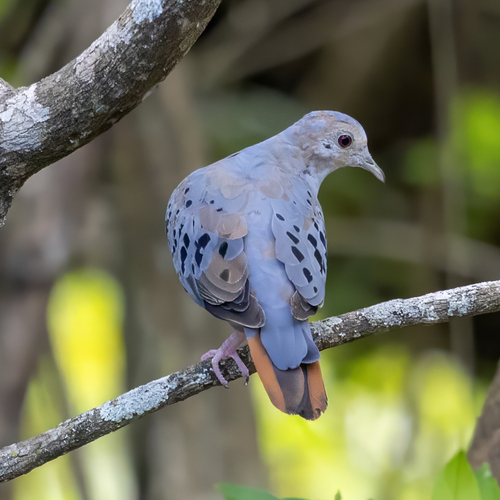 Blue Ground Dove
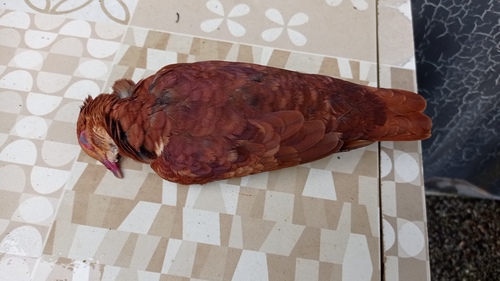 Ruddy Quail-Dove
In short
The most reliable field mark to separate Blue Ground Dove from Ruddy Quail-Dove is the male Blue Ground Dove’s blue-grey plumage and the distinctive black-spotted wing pattern, which is never shown by Ruddy Quail-Dove. Females and immatures of Blue Ground Dove are trickier, but still show chestnut-brown (not blackish) wing spots and a more contrasting, patchy appearance. Ruddy Quail-Dove is overall rust-colored, with a uniform rufous back, wings, and facial mask, lacking strong wing patterning. Size is similar, but Blue Ground Dove is slightly smaller and more compact. Focus on wing markings and overall color tone, especially in flight or when birds are partially obscured.
Identification tips
- Male Blue Ground Dove is blue-grey overall: If you see a small dove with blue-grey upperparts and a pale face, especially with black-spotted wings, it is a male Blue Ground Dove. Ruddy Quail-Dove is never blue-grey.
- Female and immature Blue Ground Dove show chestnut-brown wing spots: Look for chestnut-brown (not blackish) spots or bands in the wings. These are visible in flight and at rest, and are absent in Ruddy Quail-Dove.
- Ruddy Quail-Dove is uniformly rufous: All ages and sexes have a rich, rust-colored back, wings, and facial mask, with only slightly paler brown underparts. No contrasting wing markings.
- Blue Ground Dove has a contrasting, patchy appearance: Even females and immatures show a mix of blue-grey, ruddy brown, and chestnut, often with a paler belly and more contrast between back and rump. Ruddy Quail-Dove is much more uniform in color.
- In flight, Blue Ground Dove shows blackish flight feathers and outer tail: This contrast is especially strong in males, but also present in females and immatures. Ruddy Quail-Dove’s flight feathers are not strongly contrasting.
- Juvenile Blue Ground Dove has ruddy scaling on the back: This can be a pitfall, but the wing spots remain chestnut, not blackish, and the bird still looks patchy compared to the uniform Ruddy Quail-Dove.
- Size and shape: Blue Ground Dove is slightly smaller and more compact, with a shorter tail. Ruddy Quail-Dove is longer-bodied and heavier, but this is subtle and overlaps.
- Leg and eyering color: Blue Ground Dove has flesh-pink legs and a green bare eyering (iris red or yellow), but these are rarely diagnostic in the field.
- Pairs of Blue Ground Dove may show sexual dimorphism: A blue-grey male and a brownish female together is diagnostic for Blue Ground Dove. Ruddy Quail-Dove pairs are both rufous.
- Habitat preference: Blue Ground Dove is more likely in open or edge habitats, while Ruddy Quail-Dove prefers dense forest, but both can overlap.
- Behavior on the ground: Blue Ground Dove may flush more readily and show wing pattern in flight, while Ruddy Quail-Dove is more likely to walk away or freeze.
- No strong vocal differences noted in sources: Do not rely on voice for separation based on current notes.
- Do not confuse female Blue Ground Dove with Ruddy Quail-Dove based on brown tones alone: Focus on wing spot color and overall contrast, not just the presence of rufous or brown.
- If you see a bird with blackish (not chestnut) wing markings, it is not a Blue Ground Dove: This is a key pitfall; Blue Ground Dove never shows blackish wing spots in any age or sex.
- When in doubt, prioritize wing pattern and overall color uniformity: Patchy, spotted, or contrasting = Blue Ground Dove; plain, rich rufous = Ruddy Quail-Dove.
Size
Blue Ground Dove is a small pigeon, averaging about 20 cm in length and 69 g in mass [wikidata]. Ruddy Quail-Dove is similar in length (19–28 cm, though the upper end may be rare in the field) but is typically a bit bulkier and longer-bodied. In direct comparison, Blue Ground Dove appears more compact and shorter-tailed, while Ruddy Quail-Dove may look heavier and longer, especially on the ground. However, size overlap is considerable and not a reliable single field mark.
Plumage
- Juvenile/immature Blue Ground Dove: Resembles adult female but with ruddy scaling on the back. Wing spots are chestnut-brown, not blackish. The back is ruddy brown, rump and tail are chestnut, underparts pale blue-grey.
- Adult male Blue Ground Dove: Blue-grey upperparts, paler grey underparts, grey-white face. Wings have bold black spots or bands, flight feathers and outer tail feathers are blackish. No rufous tones.
- Adult female Blue Ground Dove: Grey-brown head, neck, and breast; pale blue-grey underwings and belly; back ruddy brown, chestnut rump and tail. Wing spots are chestnut-brown.
- Ruddy Quail-Dove (all ages/sexes): Uniformly rust-colored (rufous) back, wings, and facial mask. Lighter brown breast, rump, and undereye stripe. Lacks strong wing patterning—no black or chestnut spots or bands. Overall much more uniform and warm-toned than any Blue Ground Dove.
- Key contrast: Blue Ground Dove (especially males and immatures) always shows some degree of contrasting wing pattern and patchiness, while Ruddy Quail-Dove is plain, rich rufous throughout.
Behaviour
Both species are ground-dwelling and can be seen walking on the forest floor or flying low through undergrowth. Blue Ground Dove often flushes with a burst of rapid wingbeats, showing contrasting wing pattern in flight. Ruddy Quail-Dove tends to move more secretively and may appear heavier and slower when walking. In mixed flocks or pairs, Blue Ground Dove may show a blue-grey and a brown bird together (male and female), while Ruddy Quail-Dove pairs are both rufous.
Habitat
Both species inhabit tropical and subtropical forests, forest edges, and second growth. Blue Ground Dove is often found in more open or disturbed habitats, including clearings and edges, while Ruddy Quail-Dove prefers denser, more humid forest interiors and thick undergrowth. However, there is considerable overlap, and habitat alone is not diagnostic.