

Motmot

Black-headed Gull vs Brown-headed Gull

Chroicocephalus ridibundus versus Chroicocephalus brunnicephalus

Play a quiz with Black-headed Gull and Brown-headed Gull
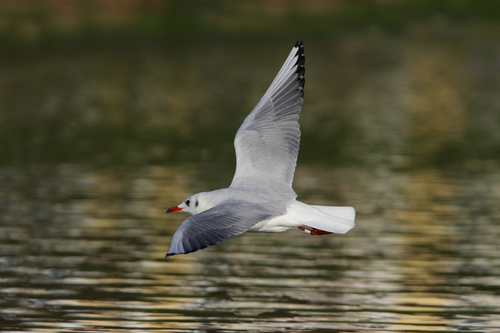
Black-headed Gull (Chroicocephalus ridibundus) Black-headed Gull

Brown-headed Gull (Chroicocephalus brunnicephalus) Brown-headed Gull

Media

Loading…

In short

The most reliable field mark between Black-headed and Brown-headed Gulls is the tone and extent of the hood in breeding plumage: Black-headed Gull shows a darker, chocolate-brown hood, while Brown-headed Gull's is paler and lighter brown. For immatures and birds in flight, focus on the underwing: Black-headed Gull has a white leading edge to the outer wing and a contrasting dark underside to the inner primaries, while Brown-headed Gull's underwing is more uniformly grey with black flight feathers. Both species have red bills and legs, but Brown-headed Gull is slightly larger and shows more extensive white 'mirrors' on the wingtips. Separation is most challenging in non-breeding plumage and among juveniles, where tail and wing pattern details become crucial.

Identification tips

  1. Breeding hood color: In summer, Black-headed Gull shows a darker, chocolate-brown hood, while Brown-headed Gull's is paler brown. This is most reliable in full adult breeding plumage (March–July for Black-headed, similar timing for Brown-headed).
  2. Non-breeding head pattern: In winter, Black-headed Gull loses the hood, leaving two dark spots behind the eye; Brown-headed Gull loses the hood but shows dark vertical streaks on the head. This is subtle and variable.
  3. Juvenile/first-winter upperwing: Black-headed Gull juveniles and first-winters show a brown carpal bar on the inner wing and blackish secondaries; Brown-headed Gull immatures have more extensive dark areas in the wings, but the exact pattern is less well described—look for a more uniformly dark wing in Brown-headed.
  4. Tail band in immatures: Both species' juveniles and first-winters show a black terminal tail band, so this is not diagnostic alone.
  5. Adult underwing in flight: Black-headed Gull adults show a white leading edge to the outer wing and a dark underside to the inner primaries; Brown-headed Gull has a grey underwing with black flight feathers and more extensive white 'mirrors' at the wingtips.
  6. Primary 'mirrors': Brown-headed Gull adults have more conspicuous white 'mirrors' at the tips of the primaries than Black-headed Gull. This is best seen in flight or with good perched wing views.
  7. Bill and leg color: Both species have red bills and legs in adult plumage; this is not a reliable separator.
  8. Size and structure: Brown-headed Gull is slightly larger and may appear bulkier, but overlap is substantial and size is unreliable unless birds are side by side.
  9. Back color: Both species have pale grey backs in adult plumage; this is not a useful field mark for separation.
  10. Habitat and range: If seen in Europe, especially western or northern areas, Black-headed Gull is far more likely. In the Indian subcontinent in winter, Brown-headed Gull is the default. Out-of-range records require careful scrutiny.
  11. Colony behavior: Both species breed colonially on the ground in wetlands or lake islands; this does not help with separation.
  12. Flight jizz: Both show similar flight style, but Black-headed Gull may appear slightly more buoyant and agile; this is not a strong separator.
  13. Seasonal context: Hooded birds outside the March–July window are rare; check for partial hoods in first-summer birds, which can be variable in both species.
  14. Sex differences: No plumage differences between sexes in either species; do not use sex for identification.
  15. Vocalizations: No reliable differences in calls or colony noise are documented in the sources.

Size

Brown-headed Gull is slightly larger than Black-headed Gull, though the difference is subtle and may not be obvious in the field unless the birds are side by side. Black-headed Gull averages around 280.5 g in body mass [wikidata], with a length of 34–39 cm and a wingspan of 100–110 cm [wikipedia]. Brown-headed Gull is described as 'slightly larger,' but precise measurements are not provided in the sources. In mixed flocks, Brown-headed may appear a bit bulkier and longer-winged, but size overlap is significant.

Plumage

Juvenile and first-winter birds of both species show a black terminal tail band and brownish markings on the upperparts. For Black-headed Gull, juveniles have a mottled brown pattern over most of the body and a black tail band; first-winter birds retain a brown carpal bar on the inner wing, blackish secondaries, and the black tail band, with a grey back developing by late summer. Brown-headed Gull immatures also show a black tail band and more extensive dark areas in the wings, but the sources do not specify a carpal bar or the exact patterning. In flight, adult Black-headed Gulls show a white leading edge to the outer wing and a dark underside to the inner primaries, while Brown-headed Gulls have a grey underwing with black flight feathers and more conspicuous white 'mirrors' at the wingtips. In breeding plumage, Black-headed Gull's hood is darker (chocolate-brown), while Brown-headed's is paler; both lose the hood in winter, but Black-headed Gull is left with two dark spots behind the eye, and Brown-headed shows dark vertical streaks. Bill and leg color are red in both, but not reliably separable.

Behaviour

Both species are highly gregarious, especially in winter, forming large flocks for feeding and roosting. Black-headed Gull is noted for both head-bobbing and non-bobbing walking, but this is not mentioned for Brown-headed Gull. Both species are opportunistic feeders, foraging in fields, wetlands, and urban areas. No major behavioral differences are highlighted in the sources.

Habitat

Black-headed Gull breeds widely across Europe and northern Asia, including coastal eastern Canada, and winters further south into milder parts of Europe, North Africa, and southern Asia. Brown-headed Gull breeds on high plateaus of central Asia (Tajikistan to Inner Mongolia) and winters on the coasts and large inland lakes of the Indian subcontinent. Their ranges overlap little, but vagrancy is possible. Both nest in colonies on the ground in reedbeds, marshes, or lake islands, and both are rarely seen far out at sea.

Voice

No diagnostic vocal differences are provided in the sources. Both are described as noisy, especially at colonies.

Submit a better description

Use the same sections as the comparison. Your text is published immediately.

The most reliable field mark between Black-headed and Brown-headed Gulls is the tone and extent of the hood in breeding plumage: Black-headed Gull shows a darker, chocolate-brown hood, while Brown-headed Gull's is paler and lighter brown. For immatures and birds in flight, focus on the underwing: Black-headed Gull has a white leading edge to the outer wing and a contrasting dark underside to the inner primaries, while Brown-headed Gull's underwing is more uniformly grey with black flight feathers. Both species have red bills and legs, but Brown-headed Gull is slightly larger and shows more extensive white 'mirrors' on the wingtips. Separation is most challenging in non-breeding plumage and among juveniles, where tail and wing pattern details become crucial.

  1. Breeding hood color: In summer, Black-headed Gull shows a darker, chocolate-brown hood, while Brown-headed Gull's is paler brown. This is most reliable in full adult breeding plumage (March–July for Black-headed, similar timing for Brown-headed).
  2. Non-breeding head pattern: In winter, Black-headed Gull loses the hood, leaving two dark spots behind the eye; Brown-headed Gull loses the hood but shows dark vertical streaks on the head. This is subtle and variable.
  3. Juvenile/first-winter upperwing: Black-headed Gull juveniles and first-winters show a brown carpal bar on the inner wing and blackish secondaries; Brown-headed Gull immatures have more extensive dark areas in the wings, but the exact pattern is less well described—look for a more uniformly dark wing in Brown-headed.
  4. Tail band in immatures: Both species' juveniles and first-winters show a black terminal tail band, so this is not diagnostic alone.
  5. Adult underwing in flight: Black-headed Gull adults show a white leading edge to the outer wing and a dark underside to the inner primaries; Brown-headed Gull has a grey underwing with black flight feathers and more extensive white 'mirrors' at the wingtips.
  6. Primary 'mirrors': Brown-headed Gull adults have more conspicuous white 'mirrors' at the tips of the primaries than Black-headed Gull. This is best seen in flight or with good perched wing views.
  7. Bill and leg color: Both species have red bills and legs in adult plumage; this is not a reliable separator.
  8. Size and structure: Brown-headed Gull is slightly larger and may appear bulkier, but overlap is substantial and size is unreliable unless birds are side by side.
  9. Back color: Both species have pale grey backs in adult plumage; this is not a useful field mark for separation.
  10. Habitat and range: If seen in Europe, especially western or northern areas, Black-headed Gull is far more likely. In the Indian subcontinent in winter, Brown-headed Gull is the default. Out-of-range records require careful scrutiny.
  11. Colony behavior: Both species breed colonially on the ground in wetlands or lake islands; this does not help with separation.
  12. Flight jizz: Both show similar flight style, but Black-headed Gull may appear slightly more buoyant and agile; this is not a strong separator.
  13. Seasonal context: Hooded birds outside the March–July window are rare; check for partial hoods in first-summer birds, which can be variable in both species.
  14. Sex differences: No plumage differences between sexes in either species; do not use sex for identification.
  15. Vocalizations: No reliable differences in calls or colony noise are documented in the sources.

Brown-headed Gull is slightly larger than Black-headed Gull, though the difference is subtle and may not be obvious in the field unless the birds are side by side. Black-headed Gull averages around 280.5 g in body mass [wikidata], with a length of 34–39 cm and a wingspan of 100–110 cm [wikipedia]. Brown-headed Gull is described as 'slightly larger,' but precise measurements are not provided in the sources. In mixed flocks, Brown-headed may appear a bit bulkier and longer-winged, but size overlap is significant.

Juvenile and first-winter birds of both species show a black terminal tail band and brownish markings on the upperparts. For Black-headed Gull, juveniles have a mottled brown pattern over most of the body and a black tail band; first-winter birds retain a brown carpal bar on the inner wing, blackish secondaries, and the black tail band, with a grey back developing by late summer. Brown-headed Gull immatures also show a black tail band and more extensive dark areas in the wings, but the sources do not specify a carpal bar or the exact patterning. In flight, adult Black-headed Gulls show a white leading edge to the outer wing and a dark underside to the inner primaries, while Brown-headed Gulls have a grey underwing with black flight feathers and more conspicuous white 'mirrors' at the wingtips. In breeding plumage, Black-headed Gull's hood is darker (chocolate-brown), while Brown-headed's is paler; both lose the hood in winter, but Black-headed Gull is left with two dark spots behind the eye, and Brown-headed shows dark vertical streaks. Bill and leg color are red in both, but not reliably separable.

Both species are highly gregarious, especially in winter, forming large flocks for feeding and roosting. Black-headed Gull is noted for both head-bobbing and non-bobbing walking, but this is not mentioned for Brown-headed Gull. Both species are opportunistic feeders, foraging in fields, wetlands, and urban areas. No major behavioral differences are highlighted in the sources.

Black-headed Gull breeds widely across Europe and northern Asia, including coastal eastern Canada, and winters further south into milder parts of Europe, North Africa, and southern Asia. Brown-headed Gull breeds on high plateaus of central Asia (Tajikistan to Inner Mongolia) and winters on the coasts and large inland lakes of the Indian subcontinent. Their ranges overlap little, but vagrancy is possible. Both nest in colonies on the ground in reedbeds, marshes, or lake islands, and both are rarely seen far out at sea.

No diagnostic vocal differences are provided in the sources. Both are described as noisy, especially at colonies.

Discard your changes?

You have unsaved edits. If you leave now, those changes will be lost.

Black-headed Gull · Brown-headed Gull · My Tricky Birds