

Black Harrier vs African Crested Flycatcher
Circus maurus versus Trochocercus cyanomelas
Play a quiz with Black Harrier and African Crested Flycatcher
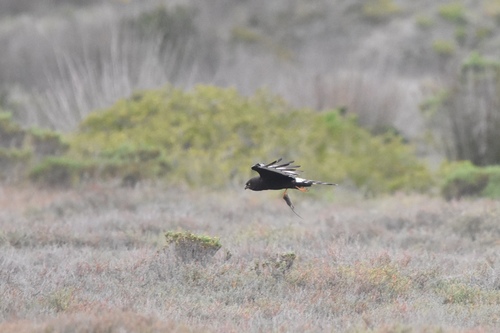 Black Harrier
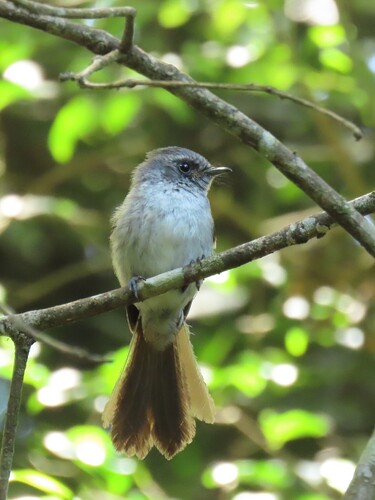 African Crested Flycatcher
In short
The most reliable way to separate Black Harrier from African Crested Flycatcher is by overall size and structure: Black Harrier is a large, slim raptor with long wings and tail, while African Crested Flycatcher is a tiny, delicate songbird. In flight, Black Harrier shows a striking white rump and contrasting black-and-white wing pattern, especially obvious in adults and older juveniles, whereas the flycatcher never shows this. Perched, Black Harrier appears all black (adults), while the flycatcher is much smaller, with a more varied plumage and a noticeable crest. Even at a distance, the difference in jizz, flight style, and habitat use is dramatic.
Identification tips
- Size is the quickest check: Black Harrier is a large raptor, easily ten times heavier than the flycatcher. If the bird looks hawk-sized or larger, it's not a flycatcher.
- Flight pattern: Black Harrier glides and quarters low over open ground; African Crested Flycatcher flits and sallies in forest, never gliding or soaring.
- White rump in flight (all ages, Black Harrier): Look for a bold white rump and white on the flight feathers when the bird is airborne. African Crested Flycatcher never shows this.
- All-black plumage when perched (adult Black Harrier): If you see a bird that appears entirely black when perched, it's an adult Black Harrier. The flycatcher is never all black.
- Juvenile Black Harrier: Buff underparts with heavy breast spotting, but still with harrier structure and white rump; flycatcher juveniles are not described as having this pattern.
- Crest (African Crested Flycatcher): Only the flycatcher has a noticeable crest, often raised. Black Harrier never shows a crest.
- Bill shape: Black Harrier has a hooked raptor bill; African Crested Flycatcher has a fine, straight insectivore bill.
- Tail shape: Harrier has a long, straight-edged tail; flycatcher may show a slightly rounded or graduated tail, often flicked or fanned.
- Habitat context: In dense forest or woodland, expect flycatcher; in open country, expect harrier.
- Behavior on perch: Harrier perches upright, often on posts or exposed branches; flycatcher is more active, often flicking tail and crest.
- Sex differences: Both species have similar plumage between sexes; don't rely on sex for ID.
- Vocalization: Not diagnostic with current notes; neither species' call is described here.
- Confusion risk: At great distance, a perched Black Harrier could be mistaken for a large, dark bird, but the size and structure should quickly clarify. Flycatcher is never likely to be confused for a raptor up close.
- Seasonal movement: Black Harrier is migratory and may be seen in a variety of open habitats depending on season; flycatcher is resident in forested areas.
- Plumage pitfalls: Even juvenile Black Harrier, with buff and spots, is much larger and structurally different from the flycatcher. No age or sex of flycatcher is solid black or shows a white rump.
Size
Black Harrier is vastly larger, with a wingspan of 105–115 cm and a body length of 44–50 cm [wikipedia], typical of a medium-sized raptor. African Crested Flycatcher is a tiny passerine, weighing only about 10.2 grams [wikidata] (no length given, but Monarchidae are small). The harrier will appear hawk- or crow-sized, while the flycatcher is sparrow-sized or smaller. There is no overlap in mass or wingspan.
Plumage
- Juvenile/immature Black Harrier: Buff underparts with heavy spotting on the breast, but still with the characteristic white rump and black wings in flight. No age of African Crested Flycatcher ever shows this combination.
- Adult Black Harrier: All black when perched, but in flight, white rump and white on flight feathers are diagnostic. Both sexes look similar.
- African Crested Flycatcher: Never all black; has a blue-mantled or grayish upperpart, paler underparts, and a distinct crest. No white rump or black-and-white wing pattern at any age.
- Key contrast: Only Black Harrier (all ages) shows a white rump and bold black-and-white pattern in flight; African Crested Flycatcher is always much paler and patterned, never solid black.
Behaviour
Black Harrier hunts by flying low over open ground, gliding and quartering fields or fynbos, typical of harriers. It may perch on posts but is rarely found in dense cover. African Crested Flycatcher is an active, flitting insectivore, often seen sallying from perches in forest or woodland, and uses its crest and tail for display. Their flight is quick and fluttery, not gliding or soaring. The harrier's flight is slow and buoyant, while the flycatcher is restless and agile.
Habitat
Black Harrier is found in open habitats—coastal plains, montane areas, and sometimes agricultural fields, but avoids dense forest [wikipedia]. African Crested Flycatcher is restricted to subtropical or tropical dry and moist forests, and lowland woodland [wikipedia]. If seen in closed forest or dense woodland, the bird is almost certainly the flycatcher; in open grassland, fynbos, or farmland, the harrier is far more likely.
Black Harrier · African Crested Flycatcher · My Tricky Birds