

Black Harrier vs African Crested Flycatcher
Circus maurus contro Trochocercus cyanomelas
Fai un quiz con Black Harrier e African Crested Flycatcher
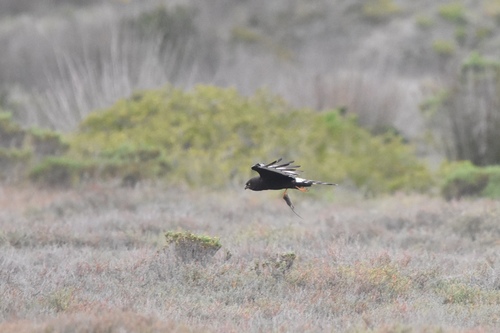 Black Harrier
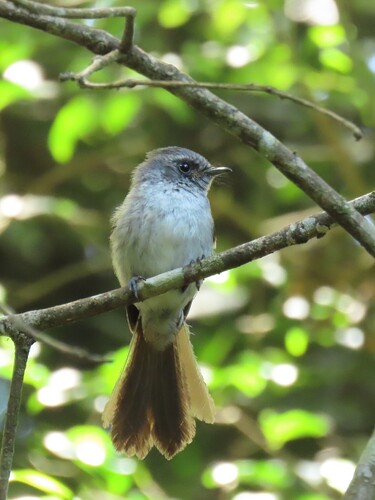 African Crested Flycatcher
In breve
Il modo più affidabile per separare il Black Harrier dall'African Crested Flycatcher è attraverso le dimensioni e la struttura complessive: il Black Harrier è un grande rapace snello con lunghe ali e coda, mentre l'African Crested Flycatcher è un piccolo e delicato uccello canoro. In volo, il Black Harrier mostra un sorprendente sottocoda bianco e un contrastante motivo di ali bianco e nero, particolarmente evidente negli adulti e nei giovani più grandi, mentre il flycatcher non mostra mai questo. In posizione perpendicolare, il Black Harrier appare completamente nero (adulti), mentre il flycatcher è molto più piccolo, con un piumaggio più variegato e una cresta evidente. Anche a distanza, la differenza nel comportamento, nello stile di volo e nell'uso dell'habitat è drammatica.
Consigli di identificazione
- La dimensione è il controllo più veloce: il Black Harrier è un grande rapace, facilmente dieci volte più pesante del flycatcher. Se l'uccello sembra delle dimensioni di un falco o più grande, non è un flycatcher.
- Motivo di volo: il Black Harrier plana e si muove a bassa quota sopra il terreno aperto; l'African Crested Flycatcher si muove e salta nel bosco, senza mai planare o librarsi.
- Sottocoda bianco in volo (tutte le età, Black Harrier): Cerca un audace sottocoda bianco e bianco sulle piume da volo quando l'uccello è in volo. L'African Crested Flycatcher non mostra mai questo.
- Piumaggio completamente nero quando è in posizione (adulto Black Harrier): Se vedi un uccello che appare completamente nero quando è in posizione, è un adulto Black Harrier. Il flycatcher non è mai completamente nero.
- Giovane Black Harrier: Parti inferiori color sabbia con pesanti macchie sul petto, ma ancora con la struttura del harrier e sottocoda bianco; i giovani del flycatcher non sono descritti come aventi questo motivo.
- Cresta (African Crested Flycatcher): Solo il flycatcher ha una cresta evidente, spesso sollevata. Il Black Harrier non mostra mai una cresta.
- Forma del becco: il Black Harrier ha un becco ricurvo da rapace; l'African Crested Flycatcher ha un becco fine e dritto da insetti.
- Forma della coda: il harrier ha una coda lunga e con bordi dritti; il flycatcher può mostrare una coda leggermente arrotondata o graduata, spesso scossa o aperta.
- Contesto dell'habitat: In una foresta densa o in un bosco, aspettati il flycatcher; in un paese aperto, aspettati il harrier.
- Comportamento in posizione: il harrier si posiziona eretto, spesso su pali o rami esposti; il flycatcher è più attivo, spesso scotendo la coda e la cresta.
- Differenze sessuali: Entrambe le specie hanno un piumaggio simile tra i sessi; non fare affidamento sul sesso per l'identificazione.
- Vocalizzazione: Non diagnostica con le note attuali; il richiamo di nessuna delle due specie è descritto qui.
- Rischio di confusione: A grande distanza, un Black Harrier in posizione potrebbe essere scambiato per un grande uccello scuro, ma le dimensioni e la struttura dovrebbero chiarire rapidamente. Il flycatcher non è mai probabile che venga confuso con un rapace da vicino.
- Movimento stagionale: il Black Harrier è migratorio e può essere visto in una varietà di habitat aperti a seconda della stagione; il flycatcher è residente in aree boschive.
- Trappole del piumaggio: Anche il giovane Black Harrier, con color sabbia e macchie, è molto più grande e strutturalmente diverso dal flycatcher. Nessuna età o sesso del flycatcher è completamente nero o mostra un sottocoda bianco.
Taglia
Il Black Harrier è enormemente più grande, con un'apertura alare di 105–115 cm e una lunghezza del corpo di 44–50 cm [wikipedia], tipico di un rapace di dimensioni medie. L'African Crested Flycatcher è un piccolo passeriforme, che pesa solo circa 10,2 grammi [wikidata] (nessuna lunghezza fornita, ma i Monarchidae sono piccoli). Il harrier apparirà delle dimensioni di un falco o di un corvo, mentre il flycatcher è delle dimensioni di un passero o più piccolo. Non c'è sovrapposizione in massa o apertura alare.
Piumaggio
- Giovane/immaturo Black Harrier: Parti inferiori color sabbia con pesanti macchie sul petto, ma ancora con il caratteristico sottocoda bianco e ali nere in volo. Nessuna età dell'African Crested Flycatcher mostra mai questa combinazione.
- Adulto Black Harrier: Completamente nero quando è in posizione, ma in volo, il sottocoda bianco e il bianco sulle piume da volo sono diagnostici. Entrambi i sessi sembrano simili.
- African Crested Flycatcher: Mai completamente nero; ha una parte superiore blu o grigia, parti inferiori più chiare e una cresta distinta. Nessun sottocoda bianco o motivo di ali bianco e nero a qualsiasi età.
- Contrasto chiave: Solo il Black Harrier (tutte le età) mostra un sottocoda bianco e un audace motivo bianco e nero in volo; l'African Crested Flycatcher è sempre molto più chiaro e con motivi, mai completamente nero.
Comportamento
Il Black Harrier caccia volando basso sopra il terreno aperto, planando e muovendosi nei campi o nel fynbos, tipico dei harrier. Può posarsi su pali ma è raramente trovato in copertura densa. L'African Crested Flycatcher è un attivo insettiere, spesso visto saltare da posatoi in foresta o bosco, e usa la sua cresta e coda per la display. Il loro volo è veloce e frenetico, non planante o librante. Il volo del harrier è lento e galleggiante, mentre il flycatcher è irrequieto e agile.
Habitat
Il Black Harrier si trova in habitat aperti—pianure costiere, aree montane e talvolta campi agricoli, ma evita le foreste dense [wikipedia]. L'African Crested Flycatcher è limitato a foreste secche e umide subtropicali o tropicali, e boschi di pianura [wikipedia]. Se visto in una foresta chiusa o in un bosco denso, l'uccello è quasi certamente il flycatcher; in praterie aperte, fynbos o terreni agricoli, il harrier è molto più probabile.
Black Harrier · African Crested Flycatcher · I miei uccelli difficili