

Black-faced Apalis vs Kungwe Apalis
Apalis personata versus Apalis argentea
Play a quiz with Black-faced Apalis and Kungwe Apalis
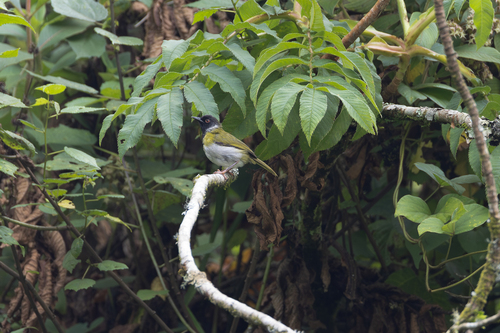 Black-faced Apalis
 Kungwe Apalis
In short
The most reliable way to separate Black-faced Apalis from Kungwe Apalis in the field is by range and subtle plumage differences, as both are small, active forest warblers with similar structure. Black-faced Apalis is native to the Albertine Rift montane forests, while Kungwe Apalis is found in Burundi, eastern DRC, Rwanda, and Tanzania. There are no detailed age-specific wing or flight pattern differences documented between these two species, so focus on facial and throat patterning and locality. Both species are slim, active insectivores, and confusion is most likely where their ranges approach or overlap.
Identification tips
- Facial Mask (Adults): Black-faced Apalis has a bold, dark facial mask that is diagnostic in adults. Kungwe Apalis lacks this strong black mask, showing a paler or differently marked face. This is the single most important field mark for adults.
- Throat and Face Pattern: Kungwe Apalis, as a former Buff-throated Apalis subspecies, may show a buffy or pale throat, without the sharply defined black mask of Black-faced Apalis. Always check for the extent and clarity of dark facial markings.
- Range: If you are in the Albertine Rift montane forests, Black-faced Apalis is expected. In Burundi, eastern DRC, Rwanda, or Tanzania, especially outside the Rift, Kungwe Apalis is the likely species. Use range as a primary filter.
- Juvenile/Immature Birds: No detailed information is available for age-specific plumages, so be cautious with young birds. In the absence of a clear black mask, consider locality and subtle facial pattern.
- Size and Structure: Both species are very small, slim warblers with similar proportions. Do not rely on size or shape for separation.
- Behavior: Both are active, often in pairs or small groups, foraging in the canopy or midstory. Behavior is not a separator.
- Habitat: Both prefer forested habitats, but Black-faced Apalis is tied to montane forests of the Albertine Rift, while Kungwe Apalis occurs in a broader area including lowland and montane forests of eastern Central Africa.
- Vocalizations: No distinctive vocal differences are documented in the available notes. Do not rely on song or call for separation unless you have local expertise.
- Pitfalls: Immature birds or those seen poorly may lack obvious facial marks. In these cases, rely on range and subtle pattern, but be honest about uncertainty.
- Sexual Dimorphism: No information is available on sex differences in plumage for either species; assume both sexes are similar in field marks.
- Context: If you are birding in a region where both species could occur, take extra care with facial pattern and consider photographic documentation for later review.
- Checklist Use: If reporting to eBird or similar platforms, always note the facial mask and locality, and flag uncertain records for review.
- Comparison with Buff-throated Apalis: Kungwe Apalis was formerly treated as a subspecies of Buff-throated Apalis, so older field guides may lump or confuse these taxa. Double-check current taxonomy and range maps.
- When in Doubt: If the facial mask is not clearly visible and the location is ambiguous, it may not be possible to confidently separate these two species in the field.
Size
Black-faced Apalis has a documented body mass of 11.0 g [wikidata], indicating a very small, light bird. There is no direct measurement for Kungwe Apalis, but as a closely related Apalis, it is expected to be very similar in size and structure. In the field, size is not a reliable separator between these two species.
Plumage
There are no detailed notes on age-specific wing or flight pattern differences for either species, so separation relies on adult plumage and facial pattern. Black-faced Apalis (Mountain Masked Apalis) is named for its distinctive black face, which is a key field mark in adults. Kungwe Apalis, previously considered a subspecies of Buff-throated Apalis, lacks the strong black facial mask and instead shows a more muted or differently patterned face and throat. Juvenile and immature plumages are not described in the available notes, so caution is needed with non-adult birds. In all ages, focus on the presence or absence of a bold black facial mask.
Behaviour
Both species are active, arboreal insectivores typical of the Apalis genus, often foraging in pairs or small groups in the forest canopy or midstory. Their movements, feeding style, and general 'jizz' are very similar and not useful for separation.
Habitat
Habitat and range are important for separation. Black-faced Apalis is restricted to the Albertine Rift montane forests, while Kungwe Apalis is found in Burundi, eastern DRC, Rwanda, and Tanzania, typically in similar forested habitats. If you are outside the Albertine Rift, especially in eastern Tanzania or Burundi, Kungwe Apalis is far more likely. Both species prefer forested environments, so context is most useful at the regional scale.