

Black-browed Albatross vs European Storm-Petrel
Thalassarche melanophris versus Hydrobates pelagicus
Play a quiz with Black-browed Albatross and European Storm-Petrel
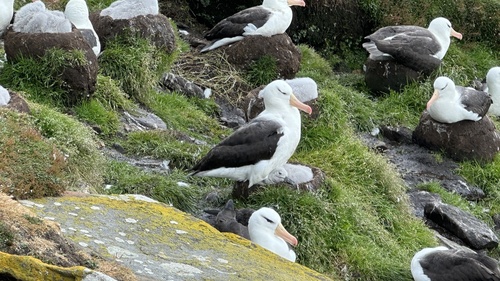 Black-browed Albatross
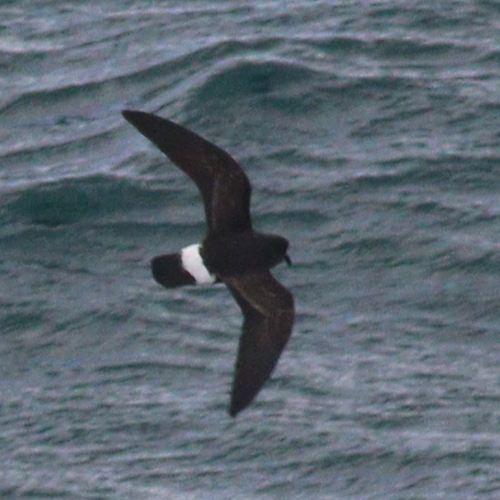 European Storm-Petrel
In short
The most reliable field mark is size: Black-browed Albatross is a massive seabird with a 2+ meter wingspan, while European Storm-Petrel is tiny, barely the size of a swallow. In flight, Black-browed Albatross shows broad white underwings with thick black margins (all ages), a white head, and a strong dark eyebrow; European Storm-Petrel is all dark with a bright white rump and a white bar on the underwing, fluttering with bat-like flight. Juvenile Black-browed Albatrosses have dark bills and darker underwings, but are still huge and structurally different. Even at great distance, the albatross’s long wings and gliding flight contrast with the petrel’s quick, fluttering, low-to-water movements. Mistaking one for the other is only possible in the most extreme conditions, such as distant silhouettes or severe size misjudgment.
Identification tips
- Size is the ultimate separator: Black-browed Albatross is gigantic, with a wingspan over 2 meters; European Storm-Petrel is tiny, barely larger than a swallow. If you can see both at once, the difference is overwhelming.
- Flight style: Albatrosses soar and glide with long, stiff wings, rarely flapping; storm-petrels flutter rapidly, interspersed with short glides, often close to the water. If the bird is soaring high above the waves, it is not a storm-petrel.
- Underwing pattern (all ages): Black-browed Albatross shows a white underwing with broad, irregular black margins; European Storm-Petrel has a dark underwing with a broad white bar. The albatross’s underwing is mostly white, the petrel’s mostly dark.
- Head and bill: Albatross has a white head with a strong dark eyebrow and a large, orange or horn-colored bill (juveniles have a dark bill); storm-petrel has an all-black head with a tiny, black bill and no facial pattern.
- Rump and tail: Storm-petrel has a bright white rump extending to the sides of the tail base, visible in all ages and plumages; albatross has a white rump but it is not as contrasting, and the tail is wedge-shaped, not square.
- Upperwing in juveniles: Juvenile storm-petrels may show a narrow white bar on the upperwing; juvenile albatrosses have dark upperwings with a grey head and collar, but never a white wing bar.
- Bill color: Adult albatrosses have a yellow-orange bill with a darker tip; storm-petrels always have a small, black bill. Juvenile albatrosses have a horn-colored bill with a dark tip.
- Plumage wear: Storm-petrel plumage fades to dark brown with wear, but the white rump and underwing bar remain; albatrosses do not show this fading.
- Tail shape: Storm-petrel’s tail is square; albatross’s tail is wedge-shaped and fanned in display.
- Legs and feet: Storm-petrel’s legs are not visible in flight and do not project beyond the tail; albatross’s legs are proportionally much shorter and not visible in flight.
- Behavior on water: Storm-petrels often patter on the water with their feet while feeding; albatrosses land heavily and float high on the water.
- Habitat context: If seen near a northern European island colony, storm-petrel is likely; albatross is a rare vagrant in the North Atlantic and usually in southern oceans.
- Vocalizations: Albatrosses bray and cackle at colonies; storm-petrels give soft, nocturnal calls at colonies but are silent at sea. Calls are not similar.
- Sex and age differences: Neither species shows strong sex differences in the field; juvenile marks are more relevant for albatross (darker bill, grey collar) and storm-petrel (upperwing bar).
- Pitfalls: At extreme distance, a storm-petrel may appear as a dark dot with a white rump, but never shows the size, shape, or flight style of an albatross. Juvenile albatrosses are never all-dark and always much larger than any petrel.
Size
Black-browed Albatross is enormous: 80–95 cm long, 200–240 cm wingspan, and 2.9–4.7 kg in weight [wikipedia][avonet]. European Storm-Petrel is minute by comparison: 14–18 cm long, 36–39 cm wingspan, and 20–38 g in weight [wikipedia][avonet]. Even at a distance, the albatross is more than five times the length and has a wingspan over six times greater than the petrel. The difference is so extreme that confusion is only possible with severe scale misjudgment or in extremely poor viewing conditions.
Plumage
- Juveniles/immatures:
- Black-browed Albatross juveniles have a dark horn-colored bill with a dark tip, a grey head and collar, and dark underwings. The underwing still shows broad black margins against a white base, a key mark at all ages. The dark eyebrow is present, though less crisp in young birds.
- European Storm-Petrel juveniles (fresh plumage) are all black except for a white rump and a narrow white bar on the upperwing. The white underwing bar is present in all ages. Plumage wears to dark brown, but the rump and underwing bar remain visible.
- Adults:
- Black-browed Albatross adults have a white head, strong dark eyebrow, orange bill with a darker tip, and a dark grey saddle and upperwings. The underwing is white with a broad, irregular black margin. The white rump and underparts contrast with the dark upperparts.
- European Storm-Petrel adults are all black with a white rump extending to the tail sides and a broad white underwing bar. The tail is square. No bill or head pattern; the bill is small and black.
- Key contrast: Albatross always shows a white underwing with thick black edges; storm-petrel is all dark above, with a white rump and a white underwing bar, never any strong head pattern or bill color.
Behaviour
Black-browed Albatrosses soar and glide with long, stiff wings, rarely flapping except in strong winds, and can cover vast distances with little effort. They are often seen high above the waves or circling colonies, and on land, they walk with a waddling gait. European Storm-Petrels have a weak, fluttering, bat-like flight, often pattering on the water surface with their feet while feeding. They rarely soar and are usually seen close to the water, sometimes settling on the sea. On land, they walk slowly, plantigrade, and use their wings for balance. The albatross’s flight is powerful and majestic; the petrel’s is quick, erratic, and close to the waves.
Habitat
Black-browed Albatross breeds on steep slopes or cliffs, sometimes flat coastal grassland, mostly in the Southern Ocean but rarely as a vagrant in the North Atlantic. At sea, they are pelagic, ranging over open oceans. European Storm-Petrel breeds in crevices or burrows on islands off northern Europe, including the UK, Ireland, and Iceland. At sea, they are strictly pelagic, rarely seen near land except at colonies. Both are oceanic, but the albatross is usually in southern waters, while the storm-petrel is a northern breeder. Seeing both together is only possible in rare vagrancy situations.
Voice
Black-browed Albatrosses are noisy at colonies, braying and cackling harshly, especially during territorial or courtship displays. European Storm-Petrel gives nocturnal flight calls during display chases at colonies, but is generally silent at sea. Their calls are not similar and are unlikely to cause confusion in the field.
Black-browed Albatross · European Storm-Petrel · My Tricky Birds