

Black-billed Nightingale-Thrush vs Orange-billed Nightingale-Thrush
Catharus gracilirostris versus Catharus aurantiirostris
Play a quiz with Black-billed Nightingale-Thrush and Orange-billed Nightingale-Thrush
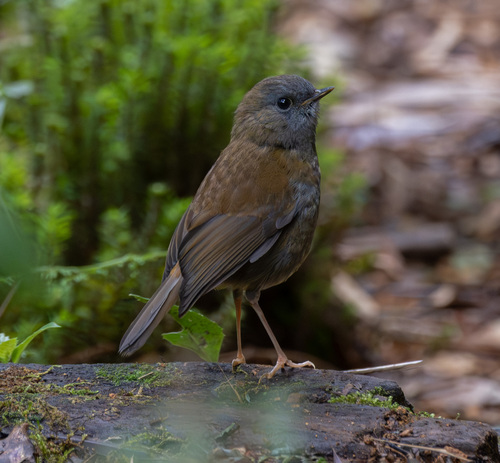 Black-billed Nightingale-Thrush
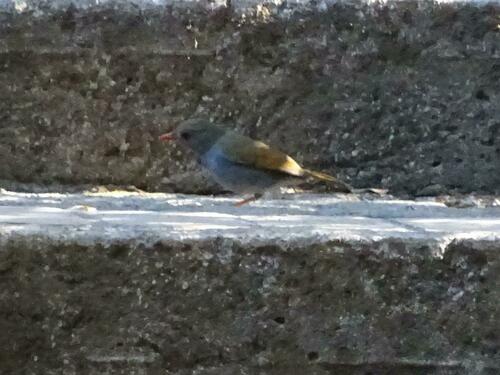 Orange-billed Nightingale-Thrush
In short
The most reliable field mark between Black-billed and Orange-billed Nightingale-Thrushes is the bill color: Black-billed always shows a black bill, while Orange-billed's is bright orange. This difference is visible at all ages and seasons, even in poor light. Adult and juvenile plumages also differ in the amount of gray and rufous, especially on the face and upperparts, but beware that some subspecies of both can show more rufous or gray than the typical forms. Juveniles are best separated by bill color and underpart patterning. Both species are similar in size and shape, but Orange-billed is slightly heavier and longer. Habitat overlap is possible in Costa Rica and western Panama, but Black-billed is restricted to high-elevation forests, while Orange-billed is more widespread and variable in elevation.
Identification tips
- Bill color is the single most reliable field mark: Black-billed Nightingale-Thrush always has a black bill; Orange-billed always has a bright orange bill. This works for all ages and sexes.
- Leg color: Black-billed has dark gray to blackish legs and feet; Orange-billed has brownish-orange to orange-red legs. This is visible in good light but can be subtle in shade.
- Face and crown color (adults): Black-billed shows a slate-gray forecrown and face, contrasting with olive-brown upperparts. Orange-billed has a grayish-brown face, often with a thin orange eye-ring, and a rufous-tinged crown and nape.
- Upperparts: Black-billed is olive-brown above with little to no rufous except in some Panamanian subspecies (which are still less rufous than Orange-billed). Orange-billed is more uniformly olive-brown to rufous above, with the rufous strongest on the wings and tail.
- Underparts: Black-billed has slate-gray underparts with a whitish throat and belly center, plus an olivaceous breast band. Orange-billed is paler below, with a whitish throat and pale gray underparts that darken slightly toward the belly, but never as dark or slate-gray as Black-billed.
- Juvenile plumage: Black-billed juveniles are sooty gray with olive tones and some spotting on the breast; Orange-billed juveniles are brown with heavy buff mottling and lack the grayish cast. Bill color remains diagnostic.
- Subspecies variation: Some Black-billed subspecies (in Panama) show more reddish-brown upperparts, but never a bright orange bill or legs. Some Orange-billed subspecies are grayer or less rufous, but always have an orange bill.
- Size: Orange-billed is slightly larger and heavier, but this is rarely useful unless birds are side by side.
- Habitat and elevation: If in high-elevation forest (above 2,200 m) in Costa Rica or western Panama, Black-billed is much more likely. Orange-billed is more likely at lower elevations or in disturbed/edge habitats.
- Behavior: Both forage on the ground in dense cover, but Orange-billed may follow army ants (rare for Black-billed).
- Eye-ring: Orange-billed often shows a thin orange eye-ring, which is absent or much less distinct in Black-billed.
- Breast band: Black-billed shows an olivaceous breast band; Orange-billed lacks a distinct band, with a more uniform pale gray underpart.
- Legs and feet: Black-billed's legs are always dark gray to blackish, while Orange-billed's are brownish-orange to orange-red.
- Overlap zone caution: In western Panama and Costa Rica, both species can occur near each other, especially in transitional zones. Always check bill and leg color first.
- Season and sex: Both species are sexually monomorphic and do not show strong seasonal plumage changes, so these marks are reliable year-round.
Size
Orange-billed Nightingale-Thrush is slightly larger and heavier (27 g average) than Black-billed (21 g), and also marginally longer (15.5–17 cm vs. 15 cm). In the field, this difference is subtle and rarely diagnostic unless birds are side by side. Both are small, slim thrushes with similar proportions.
Plumage
-
Juveniles: Black-billed juveniles are sooty gray with olive tones above, a dusky face and throat, and some spotting on the breast and upper belly. Orange-billed juveniles are mostly brown with heavy buff flecking and mottling, lacking the sooty gray tones of Black-billed. Bill color is already distinctive at this age (black vs. orange).
-
Adults: Black-billed adults have a slate-gray forecrown and face, olive-brown upperparts, wings, and tail, and a dark olivaceous band across the breast. Underparts are mostly slate-gray with a whitish throat and belly center. Orange-billed adults are olive-brown with a rufous wash (especially on crown, nape, back, wings, and tail), a grayish-brown face with a thin orange eye-ring, and pale gray underparts that darken from the throat downward. Subspecies of both can show more or less rufous or gray, but Black-billed never shows a strong orange bill or legs.
-
Key contrast: Bill color is always diagnostic. Orange-billed's underparts are paler and less gray than Black-billed's, and its upperparts are more rufous, especially on the wings and tail.
Behaviour
Both species forage on or near the ground in dense vegetation, flipping leaf litter for insects and other invertebrates. Orange-billed Nightingale-Thrush is known to follow army ant swarms in some areas (e.g., Trinidad), a behavior not noted for Black-billed. Both build bulky cup nests in dense shrubs or low trees. Flight and foraging behavior are similar, with both tending to stay low and within cover.
Habitat
Black-billed Nightingale-Thrush is restricted to high-elevation montane forests, elfin forests, and paramo in Costa Rica and western Panama, typically from 1,800 m to above timberline (often above 2,200 m). It can be found in pastures and gardens near forest at these elevations. Orange-billed Nightingale-Thrush has a much broader range, from northern Mexico through Central America into northern South America, and occurs at a wider range of elevations (including lowlands and foothills). In Costa Rica and western Panama, Orange-billed can overlap with Black-billed, but is generally found at lower elevations and in more varied habitats, including secondary forest and edge.
Black-billed Nightingale-Thrush · Orange-billed Nightingale-Thrush · My Tricky Birds