

Motmot

Black-bellied Whistling-Duck vs Fulvous Whistling-Duck

Dendrocygna autumnalis versus Dendrocygna bicolor

Play a quiz with Black-bellied Whistling-Duck and Fulvous Whistling-Duck
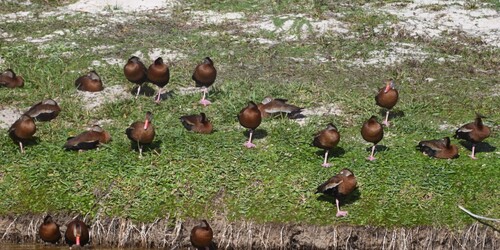
Black-bellied Whistling-Duck (Dendrocygna autumnalis) Black-bellied Whistling-Duck
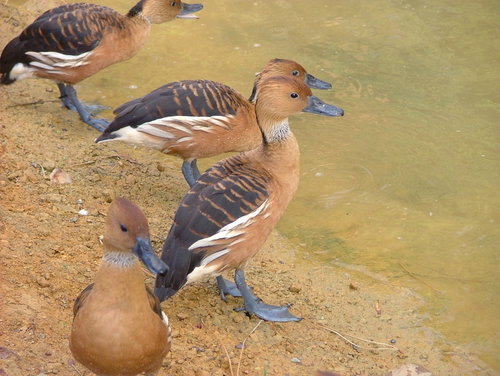
Fulvous Whistling-Duck (Dendrocygna bicolor) Fulvous Whistling-Duck

Media

Loading…

In short

The most reliable field mark to separate Black-bellied Whistling-Duck from Fulvous Whistling-Duck is the presence of a bold white wing patch in flight on Black-bellied, which Fulvous never shows. When perched, look for the Black-bellied’s black belly and tail, pale gray face, and pink bill, versus the Fulvous’s all-rich buffy body, dark back, and gray bill. Both are long-legged, upright ducks with similar size and structure, but subtle differences in bill color, head pattern, and wing markings are key. Juvenile and adult plumages are similar in both species, but the white wing patch (Black-bellied) and white rump crescent (Fulvous) are age-independent and diagnostic in flight.

Identification tips

  1. White wing patch in flight (all ages): Black-bellied Whistling-Duck shows a bold white patch on the upperwing (secondaries) in flight, absent in Fulvous. This is the single most reliable field mark.
  2. No white in wing (all ages): Fulvous Whistling-Duck has plain brown upperwings in flight, with no white at all. If you see a whistling duck in flight with no white in the wing, Fulvous is likely.
  3. White rump crescent (all ages): Fulvous shows a distinctive white crescent across the rump in flight, contrasting with the black tail. Black-bellied lacks this feature.
  4. Belly and tail color (all ages): Black-bellied has a black belly and tail, easily visible when perched or swimming. Fulvous has a buffy belly and a black tail, but the belly never appears black.
  5. Bill color (adults): Black-bellied has a long, pink bill; Fulvous has a long, gray bill. This is best seen at close range.
  6. Head and face pattern (adults): Black-bellied has a pale gray face and upper neck with a thin white eye-ring, contrasting with the chestnut back of the neck and cap. Fulvous is more uniform buffy brown, with a dark stripe down the nape and no gray face.
  7. Flank stripes (adults): Both have whitish flanks, but in Black-bellied it is a thin, sometimes indistinct stripe; in Fulvous, the white on the flanks is broader and more obvious.
  8. Juvenile differences: Juvenile Black-bellied has a gray bill and less contrast on the belly; juvenile Fulvous is paler below and duller, especially on the flanks, but these differences are subtle and not always reliable.
  9. Leg color: Both species have long legs, but Black-bellied’s are pinkish, Fulvous’s are gray. This can be hard to see unless the bird is standing.
  10. Perching/nesting behavior: Black-bellied often perches in trees and nests in cavities or boxes; Fulvous prefers dense vegetation or sometimes tree holes, but this is not always visible in the field.
  11. Overall color impression: Black-bellied looks more contrasting, with a gray face, chestnut back, and black belly; Fulvous is more evenly buffy brown with a darker back.
  12. Vocalizations: Both species whistle, but calls are not reliably separable in the field without experience.
  13. Habitat and range: Both occur together in much of their North American range; do not rely on habitat or location alone for separation.
  14. Size: Both are similar in size and structure; do not use size as a primary field mark.
  15. Pitfalls: Immature birds can be confusing, especially at a distance or in poor light. Always prioritize the wing pattern in flight and bill/head color at rest.

Size

Both species are similar in size and structure, with Black-bellied Whistling-Duck averaging slightly heavier (831 g vs. 682 g) and marginally longer (47–56 cm vs. 45–53 cm). Wingspans overlap (Black-bellied: 76–94 cm; Fulvous: 85–93 cm). In the field, size is not a reliable separator between these two, as both appear as medium-large, long-legged ducks.

Plumage

The most important difference is in the wing pattern when the birds are in flight: Black-bellied Whistling-Duck of all ages shows a prominent white patch on the upperwing (formed by the secondaries), which is visible in flight and sometimes at rest, while Fulvous Whistling-Duck has uniformly brown upperwings with no white. On the ground, Black-bellied shows a black belly and tail, a chestnut back and neck, gray face and upper neck, and a pink bill. Fulvous Whistling-Duck is overall a rich buffy brown, with a darker back, a dark stripe down the nape, and a gray bill and legs. Both have white on the flanks, but in Black-bellied this is less obvious and more of a thin stripe, while in Fulvous it is a more extensive whitish band. In flight, Fulvous shows a white crescent on the rump and a black tail, but never a white wing patch. Juveniles of both are duller, with Black-bellied juveniles having a gray bill and less contrast on the belly, while Fulvous juveniles are paler below and duller overall, especially on the flanks.

Behaviour

Both species often feed in wetlands and can be seen foraging by day or night. Black-bellied Whistling-Ducks often perch in trees or nest in cavities, sometimes using nest boxes or buildings, while Fulvous Whistling-Ducks tend to nest among dense vegetation or occasionally in tree holes. Both are social and may be seen in flocks, but their behavior is not a strong field separator.

Habitat

Both species overlap broadly in range and habitat, especially in the southern U.S., Mexico, and Central/South America. Both favor wetlands with abundant vegetation, including lakes, marshes, and flooded fields. Fulvous Whistling-Duck is more widespread globally, also occurring in Africa and Asia, but in North America, habitat preference is not a reliable separator.

Voice

Both are noisy, giving clear whistling calls both in flight and on the ground. The Fulvous Whistling-Duck’s call is described as a clear, whistling 'kee-wee-ooo', while Black-bellied Whistling-Duck also gives a whistling call, but vocal differences are subtle and not usually diagnostic in the field.

Submit a better description

Use the same sections as the comparison. Your text is published immediately.

The most reliable field mark to separate Black-bellied Whistling-Duck from Fulvous Whistling-Duck is the presence of a bold white wing patch in flight on Black-bellied, which Fulvous never shows. When perched, look for the Black-bellied’s black belly and tail, pale gray face, and pink bill, versus the Fulvous’s all-rich buffy body, dark back, and gray bill. Both are long-legged, upright ducks with similar size and structure, but subtle differences in bill color, head pattern, and wing markings are key. Juvenile and adult plumages are similar in both species, but the white wing patch (Black-bellied) and white rump crescent (Fulvous) are age-independent and diagnostic in flight.

  1. White wing patch in flight (all ages): Black-bellied Whistling-Duck shows a bold white patch on the upperwing (secondaries) in flight, absent in Fulvous. This is the single most reliable field mark.
  2. No white in wing (all ages): Fulvous Whistling-Duck has plain brown upperwings in flight, with no white at all. If you see a whistling duck in flight with no white in the wing, Fulvous is likely.
  3. White rump crescent (all ages): Fulvous shows a distinctive white crescent across the rump in flight, contrasting with the black tail. Black-bellied lacks this feature.
  4. Belly and tail color (all ages): Black-bellied has a black belly and tail, easily visible when perched or swimming. Fulvous has a buffy belly and a black tail, but the belly never appears black.
  5. Bill color (adults): Black-bellied has a long, pink bill; Fulvous has a long, gray bill. This is best seen at close range.
  6. Head and face pattern (adults): Black-bellied has a pale gray face and upper neck with a thin white eye-ring, contrasting with the chestnut back of the neck and cap. Fulvous is more uniform buffy brown, with a dark stripe down the nape and no gray face.
  7. Flank stripes (adults): Both have whitish flanks, but in Black-bellied it is a thin, sometimes indistinct stripe; in Fulvous, the white on the flanks is broader and more obvious.
  8. Juvenile differences: Juvenile Black-bellied has a gray bill and less contrast on the belly; juvenile Fulvous is paler below and duller, especially on the flanks, but these differences are subtle and not always reliable.
  9. Leg color: Both species have long legs, but Black-bellied’s are pinkish, Fulvous’s are gray. This can be hard to see unless the bird is standing.
  10. Perching/nesting behavior: Black-bellied often perches in trees and nests in cavities or boxes; Fulvous prefers dense vegetation or sometimes tree holes, but this is not always visible in the field.
  11. Overall color impression: Black-bellied looks more contrasting, with a gray face, chestnut back, and black belly; Fulvous is more evenly buffy brown with a darker back.
  12. Vocalizations: Both species whistle, but calls are not reliably separable in the field without experience.
  13. Habitat and range: Both occur together in much of their North American range; do not rely on habitat or location alone for separation.
  14. Size: Both are similar in size and structure; do not use size as a primary field mark.
  15. Pitfalls: Immature birds can be confusing, especially at a distance or in poor light. Always prioritize the wing pattern in flight and bill/head color at rest.

Both species are similar in size and structure, with Black-bellied Whistling-Duck averaging slightly heavier (831 g vs. 682 g) and marginally longer (47–56 cm vs. 45–53 cm). Wingspans overlap (Black-bellied: 76–94 cm; Fulvous: 85–93 cm). In the field, size is not a reliable separator between these two, as both appear as medium-large, long-legged ducks.

The most important difference is in the wing pattern when the birds are in flight: Black-bellied Whistling-Duck of all ages shows a prominent white patch on the upperwing (formed by the secondaries), which is visible in flight and sometimes at rest, while Fulvous Whistling-Duck has uniformly brown upperwings with no white. On the ground, Black-bellied shows a black belly and tail, a chestnut back and neck, gray face and upper neck, and a pink bill. Fulvous Whistling-Duck is overall a rich buffy brown, with a darker back, a dark stripe down the nape, and a gray bill and legs. Both have white on the flanks, but in Black-bellied this is less obvious and more of a thin stripe, while in Fulvous it is a more extensive whitish band. In flight, Fulvous shows a white crescent on the rump and a black tail, but never a white wing patch. Juveniles of both are duller, with Black-bellied juveniles having a gray bill and less contrast on the belly, while Fulvous juveniles are paler below and duller overall, especially on the flanks.

Both species often feed in wetlands and can be seen foraging by day or night. Black-bellied Whistling-Ducks often perch in trees or nest in cavities, sometimes using nest boxes or buildings, while Fulvous Whistling-Ducks tend to nest among dense vegetation or occasionally in tree holes. Both are social and may be seen in flocks, but their behavior is not a strong field separator.

Both species overlap broadly in range and habitat, especially in the southern U.S., Mexico, and Central/South America. Both favor wetlands with abundant vegetation, including lakes, marshes, and flooded fields. Fulvous Whistling-Duck is more widespread globally, also occurring in Africa and Asia, but in North America, habitat preference is not a reliable separator.

Both are noisy, giving clear whistling calls both in flight and on the ground. The Fulvous Whistling-Duck’s call is described as a clear, whistling 'kee-wee-ooo', while Black-bellied Whistling-Duck also gives a whistling call, but vocal differences are subtle and not usually diagnostic in the field.

Discard your changes?

You have unsaved edits. If you leave now, those changes will be lost.

Black-bellied Whistling-Duck · Fulvous Whistling-Duck · My Tricky Birds