

Zwartbuikfluiteend vs Rosse fluiteend
Dendrocygna autumnalis versus Dendrocygna bicolor
Speel een quiz met Zwartbuikfluiteend en Rosse fluiteend
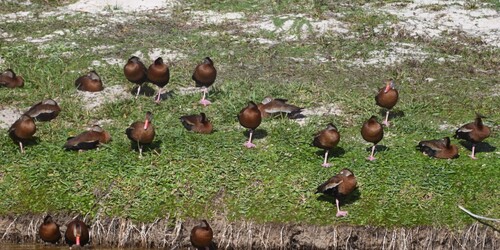 Zwartbuikfluiteend
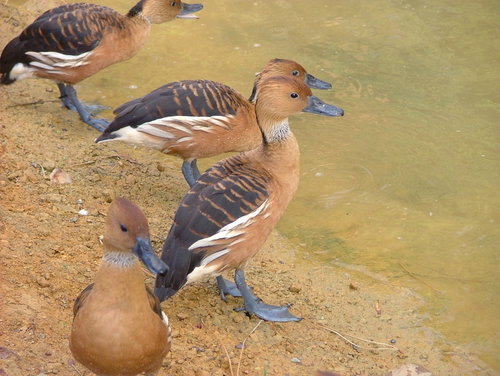 Rosse fluiteend
Kort gezegd
Het meest betrouwbare veldkenmerk om Zwartbuikfluiteend van Rosse fluiteend te scheiden, is de aanwezigheid van een gedurfde witte vleugelvlek in de vlucht bij Zwartbuik, die Rosse nooit vertoont. Wanneer ze zitten, let op de zwarte buik en staart van de Zwartbuik, het bleekgrijze gezicht en de roze snavel, in tegenstelling tot het rijk buffy lichaam, de donkere rug en de grijze snavel van de Rosse. Beide zijn langbenige, rechtopstaande eenden met een vergelijkbare grootte en structuur, maar subtiele verschillen in snavelkleur, koppatroon en vleugelmarkeringen zijn cruciaal. De juveniele en volwassen verenkleed zijn vergelijkbaar bij beide soorten, maar de witte vleugelvlek (Zwartbuik) en de witte staartcrescent (Rosse) zijn leeftijdsonafhankelijk en diagnostisch in de vlucht.
Herkenningstips
- Witte vleugelvlek in de vlucht (alle leeftijden): Zwartbuikfluiteend toont een gedurfde witte vlek op de bovenvleugel (secundair) in de vlucht, afwezig bij Rosse. Dit is het enige meest betrouwbare veldkenmerk.
- Geen wit in de vleugel (alle leeftijden): Rosse fluiteend heeft effen bruine bovenvleugels in de vlucht, zonder wit. Als je een fluiteend in de vlucht ziet zonder wit in de vleugel, is het waarschijnlijk Rosse.
- Witte staartcrescent (alle leeftijden): Rosse toont een kenmerkende witte crescent over de staart in de vlucht, in contrast met de zwarte staart. Zwartbuik mist deze eigenschap.
- Buik- en staartkleur (alle leeftijden): Zwartbuik heeft een zwarte buik en staart, gemakkelijk zichtbaar wanneer hij zit of zwemt. Rosse heeft een buffy buik en een zwarte staart, maar de buik lijkt nooit zwart.
- Snavelkleur (volwassenen): Zwartbuik heeft een lange, roze snavel; Rosse heeft een lange, grijze snavel. Dit is het beste te zien van dichtbij.
- Kop- en gezichtspatroon (volwassenen): Zwartbuik heeft een bleekgrijs gezicht en bovenste nek met een dunne witte oogring, in contrast met de kastanjebruine rug van de nek en pet. Rosse is meer uniform buffy bruin, met een donkere streep op de nek en geen grijs gezicht.
- Flankstrepen (volwassenen): Beide hebben witachtige flanken, maar bij Zwartbuik is het een dunne, soms onduidelijke streep; bij Rosse is het wit op de flanken breder en duidelijker.
- Juveniele verschillen: Juveniele Zwartbuik heeft een grijze snavel en minder contrast op de buik; juvenile Rosse is lichter onder en doffer, vooral op de flanken, maar deze verschillen zijn subtiel en niet altijd betrouwbaar.
- Pootkleur: Beide soorten hebben lange poten, maar de poten van Zwartbuik zijn rozeachtig, die van Rosse zijn grijs. Dit kan moeilijk te zien zijn, tenzij de vogel staat.
- Zit- en nestgedrag: Zwartbuik zit vaak in bomen en nestelt in holtes of dozen; Rosse geeft de voorkeur aan dichte vegetatie of soms boomholtes, maar dit is niet altijd zichtbaar in het veld.
- Algemene kleurindruk: Zwartbuik ziet er contrasterender uit, met een grijs gezicht, kastanjebruine rug en zwarte buik; Rosse is gelijkmatiger buffy bruin met een donkere rug.
- Vocalisaties: Beide soorten fluiten, maar de roep is niet betrouwbaar te scheiden in het veld zonder ervaring.
- Habitat en verspreiding: Beide komen samen voor in een groot deel van hun Noord-Amerikaanse verspreiding; vertrouw niet alleen op habitat of locatie voor scheiding.
- Grootte: Beide zijn vergelijkbaar in grootte en structuur; gebruik grootte niet als primair veldkenmerk.
- Valkuilen: Onvolwassen vogels kunnen verwarrend zijn, vooral op afstand of bij slecht licht. Geef altijd prioriteit aan het vleugelpatroon in de vlucht en de snavel/kopkleur in rust.
Grootte
Beide soorten zijn vergelijkbaar in grootte en structuur, waarbij Zwartbuikfluiteend gemiddeld iets zwaarder is (831 g vs. 682 g) en marginaal langer (47–56 cm vs. 45–53 cm). De vleugelspanwijdte overlapt (Zwartbuik: 76–94 cm; Rosse: 85–93 cm). In het veld is grootte geen betrouwbare scheider tussen deze twee, aangezien beide verschijnen als middelgrote, langbenige eenden.
Verenkleed
Het belangrijkste verschil is in het vleugelpatroon wanneer de vogels in de vlucht zijn: Zwartbuikfluiteend van alle leeftijden toont een prominente witte vlek op de bovenvleugel (gevormd door de secundair), die zichtbaar is in de vlucht en soms in rust, terwijl Rosse fluiteend uniform bruine bovenvleugels heeft zonder wit. Op de grond toont Zwartbuik een zwarte buik en staart, een kastanjebruine rug en nek, een grijs gezicht en bovenste nek, en een roze snavel. Rosse fluiteend is over het algemeen een rijke buffy bruin, met een donkere rug, een donkere streep op de nek, en een grijze snavel en poten. Beide hebben wit op de flanken, maar bij Zwartbuik is dit minder duidelijk en meer een dunne streep, terwijl het bij Rosse een meer uitgebreide witachtige band is. In de vlucht toont Rosse een witte crescent op de staart en een zwarte staart, maar nooit een witte vleugelvlek. Juvenielen van beide zijn doffer, met juvenile Zwartbuik die een grijze snavel heeft en minder contrast op de buik, terwijl juvenile Rosse lichter onder en doffer is, vooral op de flanken.
Gedrag
Beide soorten voeden zich vaak in wetlands en kunnen overdag of 's nachts worden gezien terwijl ze foerageren. Zwartbuikfluiteenden zitten vaak in bomen of nestelen in holtes, soms gebruikmakend van nestkasten of gebouwen, terwijl Rosse fluiteenden de neiging hebben om te nestelen tussen dichte vegetatie of af en toe in boomholtes. Beide zijn sociaal en kunnen in groepen worden gezien, maar hun gedrag is geen sterke veldscheider.
Habitat
Beide soorten overlappen breed in verspreiding en habitat, vooral in het zuiden van de VS, Mexico en Midden/Zuid-Amerika. Beide geven de voorkeur aan wetlands met overvloedige vegetatie, waaronder meren, moerassen en overstroomde velden. Rosse fluiteend is wereldwijd wijdverspreid, ook voorkomend in Afrika en Azië, maar in Noord-Amerika is de voorkeur voor habitat geen betrouwbare scheider.
Geluid
Beide zijn luidruchtig en geven duidelijke fluitgeluiden zowel in de vlucht als op de grond. De roep van de Rosse fluiteend wordt beschreven als een duidelijke, fluitende 'kee-wee-ooo', terwijl Zwartbuikfluiteend ook een fluitende roep geeft, maar de vocale verschillen zijn subtiel en meestal niet diagnostisch in het veld.