

Dendrocigna beccorosso vs Dendrocigna fulva
Dendrocygna autumnalis contro Dendrocygna bicolor
Fai un quiz con Dendrocigna beccorosso e Dendrocigna fulva
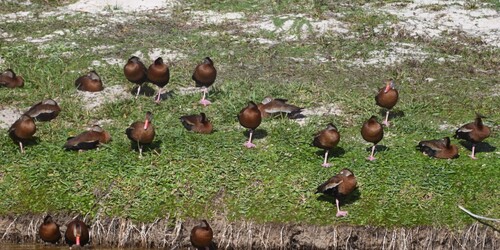 Dendrocigna beccorosso
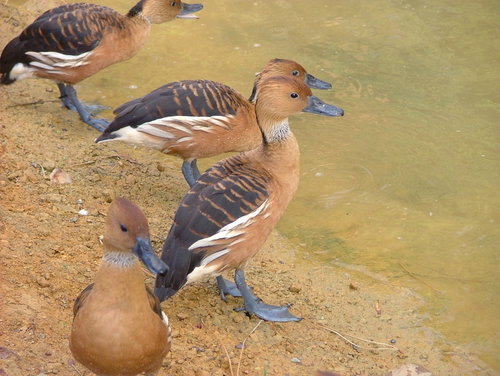 Dendrocigna fulva
In breve
Il segno di campo più affidabile per separare Dendrocigna beccorosso da Dendrocigna fulva è la presenza di una vistosa macchia bianca sulle ali in volo su Dendrocigna beccorosso, che Dendrocigna fulva non mostra mai. Quando sono posati, cerca il ventre e la coda neri di Dendrocigna beccorosso, il volto grigio chiaro e il becco rosa, rispetto al corpo di Dendrocigna fulva, tutto di un ricco color sabbia, la schiena scura e il becco grigio. Entrambi sono anatre lunghe e diritte con dimensioni e struttura simili, ma le sottili differenze nel colore del becco, nel motivo della testa e nelle marcature delle ali sono fondamentali. Le piume giovanili e adulte sono simili in entrambe le specie, ma la macchia bianca sulle ali (Dendrocigna beccorosso) e il crescente bianco sulla coda (Dendrocigna fulva) sono indipendenti dall'età e diagnostici in volo.
Consigli di identificazione
- Macchia bianca sulle ali in volo (tutte le età): Dendrocigna beccorosso mostra una vistosa macchia bianca sulla parte superiore dell'ala (secondarie) in volo, assente in Dendrocigna fulva. Questo è il segno di campo più affidabile.
- Nessun bianco nell'ala (tutte le età): Dendrocigna fulva ha ali superiori di un marrone uniforme in volo, senza bianco. Se vedi un'anatra fischiante in volo senza bianco nell'ala, è probabile che sia Dendrocigna fulva.
- Crescente bianco sulla coda (tutte le età): Dendrocigna fulva mostra un distintivo crescente bianco sulla coda in volo, in contrasto con la coda nera. Dendrocigna beccorosso non ha questa caratteristica.
- Colore del ventre e della coda (tutte le età): Dendrocigna beccorosso ha un ventre e una coda neri, facilmente visibili quando è posato o nuota. Dendrocigna fulva ha un ventre color sabbia e una coda nera, ma il ventre non appare mai nero.
- Colore del becco (adulti): Dendrocigna beccorosso ha un lungo becco rosa; Dendrocigna fulva ha un lungo becco grigio. Questo è meglio visibile da vicino.
- Motivo della testa e del volto (adulti): Dendrocigna beccorosso ha un volto grigio chiaro e un collo superiore con un sottile anello oculare bianco, in contrasto con la schiena castana del collo e del cappello. Dendrocigna fulva è di un marrone sabbia più uniforme, con una striscia scura lungo la nuca e senza volto grigio.
- Strisce laterali (adulti): Entrambi hanno fianchi bianchi, ma in Dendrocigna beccorosso è una striscia sottile, a volte indistinta; in Dendrocigna fulva, il bianco sui fianchi è più ampio e più evidente.
- Differenze giovanili: Il giovanile di Dendrocigna beccorosso ha un becco grigio e meno contrasto sul ventre; il giovanile di Dendrocigna fulva è più chiaro sotto e più opaco, specialmente sui fianchi, ma queste differenze sono sottili e non sempre affidabili.
- Colore delle gambe: Entrambe le specie hanno gambe lunghe, ma quelle di Dendrocigna beccorosso sono rossastre, quelle di Dendrocigna fulva sono grigie. Questo può essere difficile da vedere a meno che l'uccello non sia in piedi.
- Comportamento di posarsi/nidificare: Dendrocigna beccorosso spesso si posa sugli alberi e nidifica in cavità o scatole; Dendrocigna fulva preferisce vegetazione densa o a volte buchi negli alberi, ma questo non è sempre visibile sul campo.
- Impressione complessiva del colore: Dendrocigna beccorosso appare più contrastante, con un volto grigio, una schiena castana e un ventre nero; Dendrocigna fulva è di un marrone sabbia più uniforme con una schiena più scura.
- Vocalizzazioni: Entrambe le specie fischiano, ma i richiami non sono separabili in modo affidabile sul campo senza esperienza.
- Habitat e distribuzione: Entrambi si trovano insieme in gran parte della loro distribuzione nordamericana; non fare affidamento solo su habitat o posizione per la separazione.
- Dimensioni: Entrambi sono simili in dimensioni e struttura; non utilizzare le dimensioni come segno di campo primario.
- Trappole: Gli uccelli immaturi possono essere confusi, specialmente a distanza o in scarsa luce. Dai sempre priorità al motivo delle ali in volo e al colore del becco/della testa a riposo.
Taglia
Entrambe le specie sono simili in dimensioni e struttura, con Dendrocigna beccorosso che pesa mediamente leggermente di più (831 g contro 682 g) e marginalmente più lungo (47–56 cm contro 45–53 cm). Le aperture alari si sovrappongono (Dendrocigna beccorosso: 76–94 cm; Dendrocigna fulva: 85–93 cm). Sul campo, le dimensioni non sono un separatore affidabile tra questi due, poiché entrambi appaiono come anatre di dimensioni medie-grandi e lunghe gambe.
Piumaggio
La differenza più importante è nel motivo delle ali quando gli uccelli sono in volo: Dendrocigna beccorosso di tutte le età mostra una prominente macchia bianca sulla parte superiore dell'ala (formata dalle secondarie), che è visibile in volo e talvolta a riposo, mentre Dendrocigna fulva ha ali superiori uniformemente marroni senza bianco. A terra, Dendrocigna beccorosso mostra un ventre e una coda neri, una schiena e un collo castani, un volto grigio e un collo superiore, e un becco rosa. Dendrocigna fulva è complessivamente di un ricco marrone sabbia, con una schiena più scura, una striscia scura lungo la nuca e un becco e gambe grigie. Entrambi hanno bianco sui fianchi, ma in Dendrocigna beccorosso questo è meno ovvio e più di una sottile striscia, mentre in Dendrocigna fulva è una banda bianca più estesa. In volo, Dendrocigna fulva mostra un crescente bianco sulla coda e una coda nera, ma mai una macchia bianca sulle ali. I giovanili di entrambi sono più opachi, con i giovanili di Dendrocigna beccorosso che hanno un becco grigio e meno contrasto sul ventre, mentre i giovanili di Dendrocigna fulva sono più chiari sotto e più opachi nel complesso, specialmente sui fianchi.
Comportamento
Entrambe le specie si nutrono spesso in zone umide e possono essere viste cercando cibo di giorno o di notte. Dendrocigna beccorosso spesso si posa sugli alberi o nidifica in cavità, a volte utilizzando scatole nido o edifici, mentre Dendrocigna fulva tende a nidificare tra vegetazione densa o occasionalmente in buchi negli alberi. Entrambi sono sociali e possono essere visti in gruppi, ma il loro comportamento non è un forte separatore sul campo.
Habitat
Entrambe le specie si sovrappongono ampiamente in distribuzione e habitat, specialmente nel sud degli Stati Uniti, in Messico e in America Centrale/Sud. Entrambi preferiscono zone umide con abbondante vegetazione, inclusi laghi, paludi e campi allagati. Dendrocigna fulva è più diffusa a livello globale, presente anche in Africa e Asia, ma in Nord America, la preferenza per l'habitat non è un separatore affidabile.
Voce
Entrambi sono rumorosi, emettendo richiami chiari sia in volo che a terra. Il richiamo di Dendrocigna fulva è descritto come un chiaro fischio 'kee-wee-ooo', mentre Dendrocigna beccorosso emette anch'esso un richiamo fischiante, ma le differenze vocali sono sottili e di solito non diagnostiche sul campo.
Dendrocigna beccorosso · Dendrocigna fulva · I miei uccelli difficili