

Motmot

Bimaculated Lark vs White-winged Lark

Melanocorypha bimaculata versus Alauda leucoptera

Play a quiz with Bimaculated Lark and White-winged Lark
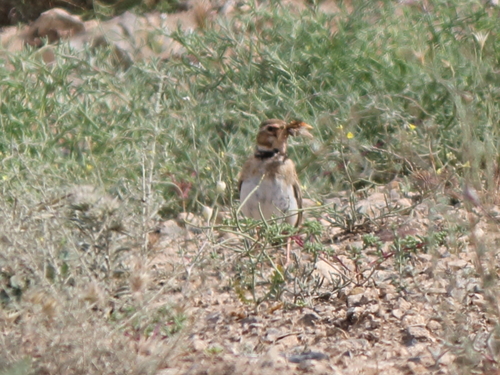
Bimaculated Lark (Melanocorypha bimaculata) Bimaculated Lark
White-winged Lark (Alauda leucoptera) White-winged Lark

Media

Loading…

In short

The most reliable way to separate Bimaculated Lark from White-winged Lark is by their contrasting wing patterns in flight: White-winged Lark flashes bold white wing patches and black outer flight feathers, while Bimaculated Lark shows plain grey-brown underwings with no white. Bimaculated Lark also has a short tail with a white tip but lacks white tail edges, whereas White-winged Lark’s tail pattern is less emphasized but its wings are unmistakable. Structurally, Bimaculated Lark is heavier and broader-winged, while White-winged Lark is slightly smaller and more slender. Both species occur in open steppe, but their ranges overlap mainly in Central Asia, and White-winged Lark is more migratory. Voice is not a strong separator in the field, but White-winged Lark’s song is more melodious.

Identification tips

  1. Wing pattern in flight is the single most reliable field mark: White-winged Lark always shows bold white wing patches with black outer flight feathers and chestnut elsewhere; Bimaculated Lark has plain grey-brown underwings with no white. This works for all ages and both sexes.
  2. Tail pattern: Bimaculated Lark has a short tail with a white tip but no white edges. White-winged Lark’s tail pattern is less distinctive, but the lack of white edges on Bimaculated can help rule out similar species.
  3. Bulk and structure: Bimaculated Lark is heavier and broader-winged, appearing bulkier on the ground and in flight. White-winged Lark is slightly smaller, lighter, and more slender.
  4. Head pattern: Adult male White-winged Lark has a chestnut crown, but this is subtle and not always visible. Both species have streaked upperparts and pale underparts; do not rely on subtle head markings alone.
  5. Perched birds are harder: If the bird is not in flight, look for the overall bulk (Bimaculated) versus a more slender, upright stance (White-winged). Wing pattern may be partially visible if the wings are drooped or spread.
  6. Flock behavior: In winter, White-winged Lark often forms large, mobile flocks, while Bimaculated Lark is less likely to do so.
  7. Range and season: If in western Turkey or further west, Bimaculated is more likely; in Kazakhstan, southwestern Russia, or as a winter vagrant in Ukraine/Iran, White-winged Lark is possible.
  8. Habitat overlap: Both occur in open steppe, so habitat is not diagnostic where ranges overlap.
  9. Bill and jizz: No strong differences noted, but Bimaculated may appear heavier-billed due to overall bulk.
  10. Voice: Only use as a last resort; White-winged Lark’s song is more melodious, but field separation by voice is difficult.
  11. Juvenile/immature birds: The wing pattern difference holds for all ages; even young White-winged Larks show the white wing panels.
  12. Confusion with other larks: Both species can be confused with Calandra Lark or other Melanocorypha, but the white wing of White-winged Lark is unique in the region.
  13. Flight style: White-winged Lark often shows a more bounding, agile flight, with the white wing patches flashing; Bimaculated Lark’s flight is more direct and less showy.
  14. Tail length: Bimaculated Lark’s tail is short and blunt; White-winged Lark’s tail is not especially diagnostic.
  15. When in doubt, wait for flight views: If you cannot see the wing pattern, try to flush the bird gently or wait for it to take off—this will usually resolve the identification.

Size

Bimaculated Lark is the heavier of the two, with an average adult mass of 54 g [wikidata], compared to White-winged Lark’s typical mass of about 44 g [wikipedia]. White-winged Lark is described as 17–19 cm long with a 35 cm wingspan, making it robust but still lighter than Bimaculated. In the field, Bimaculated Lark may appear bulkier and broader-winged, while White-winged Lark is more slender and agile. Size alone is not always diagnostic, but in direct comparison, Bimaculated Lark is the larger, heavier bird.

Plumage

The most diagnostic difference is in the wing pattern visible in flight. White-winged Lark of all ages shows striking white wing patches: the inner flight feathers are white, the outer ones black, and the rest of the wing is chestnut, creating a bold, unmistakable contrast [wikipedia]. This is visible even in immatures and is the key field mark. Bimaculated Lark, by contrast, has short, broad wings that are plain grey-brown below, lacking any white patches or strong contrast. Its tail is short with a white tip but no white edges, which separates it from some relatives but not from White-winged Lark. On the ground, White-winged Lark has a chestnut crown (adult male), dark-streaked grey upperparts, and whitish underparts; Bimaculated Lark is generally plainer. These plumage differences are most evident in flight and less so when perched, but the wing pattern is always the best separator.

Behaviour

White-winged Lark is gregarious in winter, often seen in flocks, and is partially migratory, moving considerable distances outside the breeding season. Bimaculated Lark is less migratory and tends to be more localized. In flight, White-winged Lark’s striking wing pattern is usually visible as it flies with rapid, bounding movements. Bimaculated Lark’s flight is more direct and less showy due to its plain wings. Both species forage on the ground in open steppe, but White-winged Lark may be more restless and mobile, especially in winter.

Habitat

Both species favor dry, open steppe and plains, often with sparse vegetation. Bimaculated Lark is found from Turkey east into Central Asia, while White-winged Lark breeds from southwestern Russia through Kazakhstan to western China and winters farther southwest. Their ranges overlap in central Asia, but White-winged Lark is more likely to be encountered as a migrant or winter visitor in southern Ukraine and northern Iran. Habitat alone is not a strong separator where both occur, but White-winged Lark may be found in larger, more mobile flocks outside the breeding season.

Voice

White-winged Lark’s song is described as a more melodious version of the Eurasian Skylark’s, but there is little detail on Bimaculated Lark’s song in the provided notes. Voice is not a reliable separator in the field, especially for non-experts, and should not be relied upon unless the song is clearly heard and compared.

Submit a better description

Use the same sections as the comparison. Your text is published immediately.

The most reliable way to separate Bimaculated Lark from White-winged Lark is by their contrasting wing patterns in flight: White-winged Lark flashes bold white wing patches and black outer flight feathers, while Bimaculated Lark shows plain grey-brown underwings with no white. Bimaculated Lark also has a short tail with a white tip but lacks white tail edges, whereas White-winged Lark’s tail pattern is less emphasized but its wings are unmistakable. Structurally, Bimaculated Lark is heavier and broader-winged, while White-winged Lark is slightly smaller and more slender. Both species occur in open steppe, but their ranges overlap mainly in Central Asia, and White-winged Lark is more migratory. Voice is not a strong separator in the field, but White-winged Lark’s song is more melodious.

  1. Wing pattern in flight is the single most reliable field mark: White-winged Lark always shows bold white wing patches with black outer flight feathers and chestnut elsewhere; Bimaculated Lark has plain grey-brown underwings with no white. This works for all ages and both sexes.
  2. Tail pattern: Bimaculated Lark has a short tail with a white tip but no white edges. White-winged Lark’s tail pattern is less distinctive, but the lack of white edges on Bimaculated can help rule out similar species.
  3. Bulk and structure: Bimaculated Lark is heavier and broader-winged, appearing bulkier on the ground and in flight. White-winged Lark is slightly smaller, lighter, and more slender.
  4. Head pattern: Adult male White-winged Lark has a chestnut crown, but this is subtle and not always visible. Both species have streaked upperparts and pale underparts; do not rely on subtle head markings alone.
  5. Perched birds are harder: If the bird is not in flight, look for the overall bulk (Bimaculated) versus a more slender, upright stance (White-winged). Wing pattern may be partially visible if the wings are drooped or spread.
  6. Flock behavior: In winter, White-winged Lark often forms large, mobile flocks, while Bimaculated Lark is less likely to do so.
  7. Range and season: If in western Turkey or further west, Bimaculated is more likely; in Kazakhstan, southwestern Russia, or as a winter vagrant in Ukraine/Iran, White-winged Lark is possible.
  8. Habitat overlap: Both occur in open steppe, so habitat is not diagnostic where ranges overlap.
  9. Bill and jizz: No strong differences noted, but Bimaculated may appear heavier-billed due to overall bulk.
  10. Voice: Only use as a last resort; White-winged Lark’s song is more melodious, but field separation by voice is difficult.
  11. Juvenile/immature birds: The wing pattern difference holds for all ages; even young White-winged Larks show the white wing panels.
  12. Confusion with other larks: Both species can be confused with Calandra Lark or other Melanocorypha, but the white wing of White-winged Lark is unique in the region.
  13. Flight style: White-winged Lark often shows a more bounding, agile flight, with the white wing patches flashing; Bimaculated Lark’s flight is more direct and less showy.
  14. Tail length: Bimaculated Lark’s tail is short and blunt; White-winged Lark’s tail is not especially diagnostic.
  15. When in doubt, wait for flight views: If you cannot see the wing pattern, try to flush the bird gently or wait for it to take off—this will usually resolve the identification.

Bimaculated Lark is the heavier of the two, with an average adult mass of 54 g [wikidata], compared to White-winged Lark’s typical mass of about 44 g [wikipedia]. White-winged Lark is described as 17–19 cm long with a 35 cm wingspan, making it robust but still lighter than Bimaculated. In the field, Bimaculated Lark may appear bulkier and broader-winged, while White-winged Lark is more slender and agile. Size alone is not always diagnostic, but in direct comparison, Bimaculated Lark is the larger, heavier bird.

The most diagnostic difference is in the wing pattern visible in flight. White-winged Lark of all ages shows striking white wing patches: the inner flight feathers are white, the outer ones black, and the rest of the wing is chestnut, creating a bold, unmistakable contrast [wikipedia]. This is visible even in immatures and is the key field mark. Bimaculated Lark, by contrast, has short, broad wings that are plain grey-brown below, lacking any white patches or strong contrast. Its tail is short with a white tip but no white edges, which separates it from some relatives but not from White-winged Lark. On the ground, White-winged Lark has a chestnut crown (adult male), dark-streaked grey upperparts, and whitish underparts; Bimaculated Lark is generally plainer. These plumage differences are most evident in flight and less so when perched, but the wing pattern is always the best separator.

White-winged Lark is gregarious in winter, often seen in flocks, and is partially migratory, moving considerable distances outside the breeding season. Bimaculated Lark is less migratory and tends to be more localized. In flight, White-winged Lark’s striking wing pattern is usually visible as it flies with rapid, bounding movements. Bimaculated Lark’s flight is more direct and less showy due to its plain wings. Both species forage on the ground in open steppe, but White-winged Lark may be more restless and mobile, especially in winter.

Both species favor dry, open steppe and plains, often with sparse vegetation. Bimaculated Lark is found from Turkey east into Central Asia, while White-winged Lark breeds from southwestern Russia through Kazakhstan to western China and winters farther southwest. Their ranges overlap in central Asia, but White-winged Lark is more likely to be encountered as a migrant or winter visitor in southern Ukraine and northern Iran. Habitat alone is not a strong separator where both occur, but White-winged Lark may be found in larger, more mobile flocks outside the breeding season.

White-winged Lark’s song is described as a more melodious version of the Eurasian Skylark’s, but there is little detail on Bimaculated Lark’s song in the provided notes. Voice is not a reliable separator in the field, especially for non-experts, and should not be relied upon unless the song is clearly heard and compared.

Discard your changes?

You have unsaved edits. If you leave now, those changes will be lost.

Bimaculated Lark · White-winged Lark · My Tricky Birds