

Bicknell's Thrush vs Wood Thrush
Catharus bicknelli versus Hylocichla mustelina
Play a quiz with Bicknell's Thrush and Wood Thrush
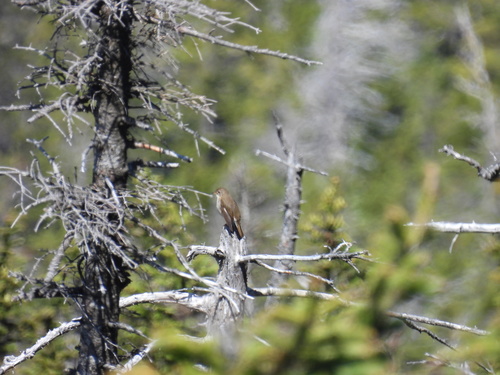 Bicknell's Thrush
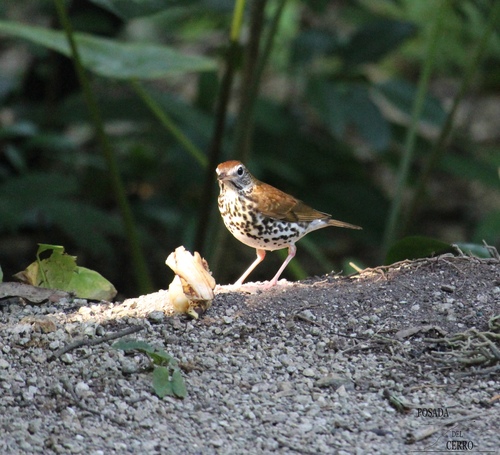 Wood Thrush
In short
The most reliable way to separate Bicknell's Thrush from Wood Thrush is by overall size and the boldness of the breast spotting: Wood Thrush is distinctly larger and shows heavy, well-defined dark spots on a white breast, while Bicknell's Thrush is smaller and slimmer with a more muted, buff-washed breast and finer, less contrasting spots. Juvenile Wood Thrushes also show extra spotting on the back and wing coverts, a feature never present in Bicknell's. Structurally, Wood Thrush has a bulkier build and a more robust bill. Habitat can also help: Bicknell's is a high-elevation specialist, while Wood Thrush is found in lowland and mid-elevation broadleaf forests. Voice and behavior further reinforce the distinction, but size and breast pattern are the most immediate field marks.
Identification tips
- Size is a major clue: Wood Thrush is much larger and bulkier than Bicknell's Thrush. If the bird looks as large as an American Robin, it's a Wood Thrush; if it's noticeably smaller and slimmer, consider Bicknell's.
- Breast spotting: Wood Thrush shows bold, sharply defined dark spots on a bright white breast, sides, and flanks. Bicknell's Thrush has a buff-washed, off-white breast with fine, blurry, and less contrasting dusky spots that fade toward the sides.
- Juvenile marks: Juvenile Wood Thrushes have extra spots on the back, neck, and wing coverts—never seen in Bicknell's. This is diagnostic in late summer and early fall.
- Crown and nape color: Wood Thrush has a rich cinnamon-brown crown and nape, contrasting with the duller brown back. Bicknell's is more uniformly olive-brown above, with only a subtle chestnut tinge to the tail.
- Facial pattern: Wood Thrush has a bold, white eye ring and plain face. Bicknell's has a faint gray eye ring and grayish cheeks, but this is subtle and often hard to see.
- Bill structure: Wood Thrush's bill is stouter and more robust. Bicknell's has a slimmer bill, with the lower mandible mostly yellow except for a dark tip.
- Leg color: Both have pink legs, so this is not useful for separation.
- Habitat context: If you are in a high-elevation, stunted conifer forest in the Northeast, Bicknell's is possible. In lowland or mid-elevation broadleaf forests, especially with rich leaf litter, Wood Thrush is expected.
- Behavior: Wood Thrush is often seen hopping on the ground, flipping leaves, and foraging in the open. Bicknell's is more secretive and tends to stay in dense cover.
- Flight impression: Wood Thrush looks heavy and direct in flight, while Bicknell's is more agile and slim.
- Vocalizations: Both have flute-like songs, but Wood Thrush's is richer and more melodious. Song alone is not always diagnostic without experience.
- Range: Bicknell's is very localized and rare, breeding only in the Northeast's high mountains. Wood Thrush is widespread in the East.
- Season: Bicknell's is present only during the breeding season in its limited range. Wood Thrush is a common migrant and breeder in much of eastern North America.
- Sympatry: The two species rarely overlap in breeding habitat; confusion is most likely on migration or in winter, but even then, size and breast pattern are reliable.
- Pitfalls: Do not rely on leg color or general brownness; focus on size, breast spotting, and habitat for the most consistent separation.
Size
Wood Thrush is significantly larger than Bicknell's Thrush. Wood Thrush measures 18–21.5 cm in length and weighs 48–72 g, with a wingspan of 30–40 cm. In contrast, Bicknell's Thrush is 17–17.5 cm long and weighs 26–30 g. Even at a distance, Wood Thrush appears bulkier and more robust, while Bicknell's is smaller and slimmer. This size gap is one of the most consistent and reliable differences in the field, especially when both species are seen in the same region or habitat.
Plumage
- Juvenile/immature birds: Juvenile Wood Thrushes have additional bold spots on the back, neck, and wing coverts, which are never present in Bicknell's Thrush of any age. This is a strong separation mark in late summer and early fall.
- Adults: Wood Thrush adults have a rich cinnamon-brown crown and nape, with the back, wings, and tail a duller brown. The underparts are white with large, sharply defined dark brown spots on the breast, sides, and flanks. Bicknell's Thrush adults are olive-brown to brownish above, with a chestnut-tinged tail (less obvious in worn plumage), and the underparts are off-white with a buffy wash and fine, diffuse dusky spots that fade toward the sides and lower breast. The overall effect is that Wood Thrush looks much more boldly spotted and contrasting, while Bicknell's is more muted and blended.
- Facial features: Both have pale eye rings, but Wood Thrush's is whiter and more obvious. Bicknell's has gray cheeks and a faint gray eye ring. The bill of Bicknell's is two-thirds yellow on the lower mandible with a dark tip, while Wood Thrush's bill is stouter and less distinctly patterned.
Behaviour
Wood Thrush is often seen foraging on the forest floor, flipping leaves for insects, and may hop in leaf litter under dense canopy. It is primarily solitary but can join mixed-species flocks in winter. Bicknell's Thrush is less likely to be seen on the ground and is more secretive, often staying in dense, high-elevation coniferous thickets. In flight, Wood Thrush appears bulkier and more direct, while Bicknell's is slimmer and more agile.
Habitat
Bicknell's Thrush is highly localized, breeding almost exclusively on coniferous mountaintops and disturbed high-elevation habitats in northeastern North America. It is rarely found outside these specialized habitats. Wood Thrush, by contrast, is widespread in lowland and mid-elevation deciduous or mixed forests across eastern North America, often in moist, mature woodlands with a dense understory. If you are in a lowland broadleaf forest, Wood Thrush is far more likely; if on a windswept mountaintop with stunted spruce or fir, Bicknell's is the expected thrush.
Voice
Both species have beautiful, flute-like songs, but Wood Thrush's song is widely considered the most beautiful in North America, with a clear, ethereal, and rhythmic quality. Bicknell's Thrush sings a jumbled series of flute-like notes ending on a higher pitch, but the distinction is subtle and not always reliable in the field. Calls are less helpful for separation.