

Bianchi's Warbler vs Alström's Warbler
Phylloscopus valentini versus Phylloscopus soror
Play a quiz with Bianchi's Warbler and Alström's Warbler
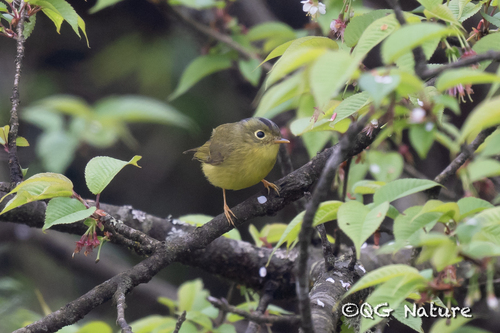 Bianchi's Warbler
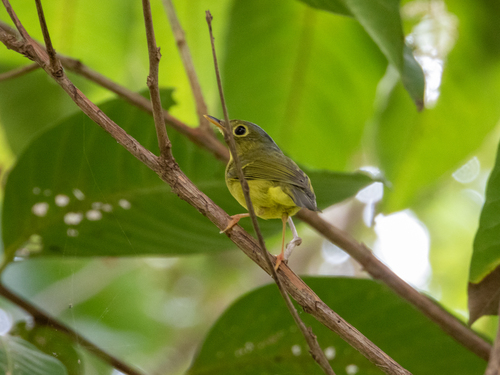 Alström's Warbler
In short
The most reliable field mark between Bianchi's Warbler and Alström's Warbler is the combination of Alström's distinct yellow eye-ring (sometimes diffused above the eye), vibrant yellowish-green underparts, and a larger bill with a shorter tail. Bianchi's lacks the pronounced yellow eye-ring and has less vibrant underparts. Both species are small Phylloscopus warblers with overlapping ranges in China and Southeast Asia, and both can be confused with similar species, but careful attention to facial pattern, underpart color, and structure helps separate them. Juvenile and immature-specific wing patterns are not described in the available sources, so focus on adult plumage and structure.
Identification tips
- Yellow eye-ring (Alström's only): Look for a distinct yellow eye-ring, sometimes diffused above the eye, on Alström's Warbler. Bianchi's lacks this feature. This is most reliable in good light and close views.
- Underpart color: Alström's has a vibrant yellowish-green underside, which is noticeably brighter than the more subdued underparts of Bianchi's. Use this mark when the bird is well-lit or seen from below.
- Facial contrast: The green around the eyes and the yellow eye-ring give Alström's a more striking facial pattern. Bianchi's face is plainer and less marked.
- Crown and forehead: Alström's shows a greyish-black crown that fades on the forehead, adding contrast to the head. Bianchi's crown is not described as contrasting, so expect a more uniform head.
- Bill size: Alström's has a noticeably larger bill than Bianchi's. This is subtle but can be seen in side-by-side comparisons or with experience.
- Tail length and pattern: Alström's has a shorter tail and more distinct white outer tail feather lining. Watch for this in birds that flick or fan their tails or in flight.
- Wing and back pattern: Alström's wings and back have a grey crown with black stripes, which may appear as subtle streaking. Bianchi's is not described as streaked or striped.
- Sex differences (Alström's): Female Alström's are slightly smaller than males, but this is not a practical field mark unless birds are together.
- Age/immature plumages: No distinctive juvenile or first-winter wing or flight marks are described for either species, so do not rely on upperwing pattern for separation.
- Habitat and range: Both species can occur in the same areas and habitats, so do not use location alone to separate them, except that Alström's is a breeder only in China and a winter visitor further south.
- Seasonal context: If seen in China during the breeding season (May–June), Alström's is more likely, but Bianchi's is also present in the region. In winter, both may overlap in Southeast Asia.
- Confusion with other species: Both can be mistaken for Martens's, Gray-crowned, and White-speckled Warblers. Always check for the yellow eye-ring and underpart color before ruling out Bianchi's.
- No vocal differences described: Do not rely on song or call for separation based on current sources.
- Overall impression: Alström's gives a brighter, more contrasting impression with its yellow eye-ring and underparts, while Bianchi's is plainer and less vividly marked.
Size
Alström's Warbler is 11–12 cm in length, with females slightly smaller than males. No direct measurements are given for Bianchi's Warbler, but both species are similar in overall size as typical small leaf warblers. Alström's is noted to have a larger bill and a shorter tail compared to similar warblers, which may help in direct comparison with Bianchi's.
Plumage
- Adults (all seasons): Alström's Warbler shows a greyish-black crown fading on the forehead, green around the eyes, a distinct yellow eye-ring (sometimes diffused above the eye), and a vibrant yellowish-green underside. The wings and back have a grey crown with black stripes. Bianchi's Warbler lacks a detailed plumage description in the sources, but is implied to be less vibrant below and without the prominent yellow eye-ring.
- Juvenile/immature/first-winter: No specific upperwing or age-related flight marks are described for either species in the available sources.
- Tail: Alström's has a more distinct white lining in the outer tail feathers, which may be visible in good views or in flight, and a shorter tail overall.
- Facial pattern: Alström's facial contrast is enhanced by the yellow eye-ring and green around the eyes; Bianchi's is more subdued.
Behaviour
No behavioral differences are described between these two species in the available sources. Both are typical active Phylloscopus warblers, likely foraging in foliage and difficult to separate by behavior alone.
Habitat
Both species overlap in range and habitat, occurring in China, Laos, Myanmar, and Vietnam. Alström's breeds only in China and winters further south, while Bianchi's is resident or at least present year-round in parts of its range. Both favor temperate forests and similar wooded habitats, so habitat alone is not diagnostic.