

Bearded Vulture vs Egyptian Vulture
Gypaetus barbatus versus Neophron percnopterus
Play a quiz with Bearded Vulture and Egyptian Vulture
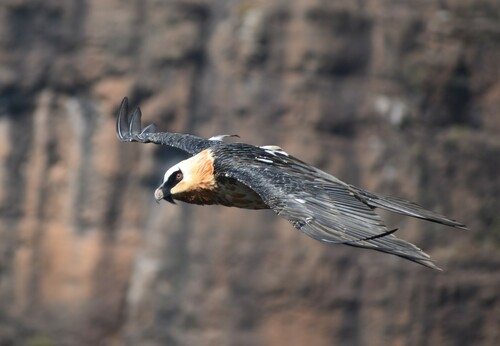 Bearded Vulture
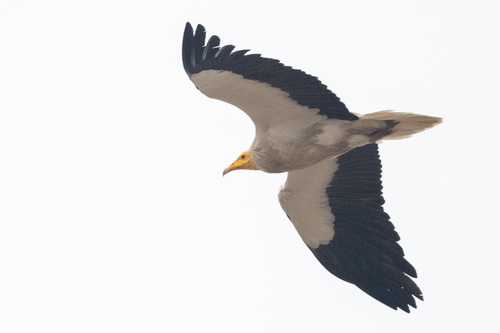 Egyptian Vulture
In short
The most reliable field mark between Bearded Vulture and Egyptian Vulture is size and structure: Bearded Vulture is enormous, with a long, narrow wing shape and a very long, wedge-shaped tail, while Egyptian Vulture is much smaller, with pointed wings and a shorter wedge-shaped tail. Juvenile plumages differ: young Bearded Vultures are dark black-brown overall, whereas juvenile Egyptian Vultures are chocolate brown with black and white patches. In flight, Bearded Vulture appears falcon-like but much bulkier, while Egyptian Vulture is more compact and white-bodied with black flight feathers. Both species may show rusty or orange staining from soil, but their overall proportions and flight jizz are unmistakably different.
Identification tips
- Size is the first check: Bearded Vulture is over twice the mass of Egyptian Vulture and has a much longer wingspan; if the bird looks eagle- or condor-sized, it's Bearded.
- Tail shape and length: Bearded Vulture's tail is extremely long and wedge-shaped, longer than the width of its wing, and obvious in flight. Egyptian Vulture's tail is also wedge-shaped but much shorter and less prominent.
- Wing shape: Bearded Vulture has long, narrow wings reminiscent of a giant falcon, while Egyptian Vulture's wings are more pointed, with the third primary longest, and appear less elongated.
- Flight jizz: Bearded Vulture soars with a heavy, powerful, and direct flight, often high above cliffs; Egyptian Vulture is lighter, more buoyant, and often seen circling in thermals.
- Juvenile plumage: Young Bearded Vultures are nearly all dark, lacking pale or white areas, while juvenile Egyptian Vultures are brown with black and white patches, showing more contrast.
- Adult head pattern: Bearded Vulture adults have a creamy forehead, black mask, and distinctive black 'beard' of bristles under the chin. Egyptian Vulture adults have a bare yellow face, no beard, and a white head (unless stained by soil).
- Body color: Adult Bearded Vultures are generally dark grey above with variable orange/rust on the underparts and head; Egyptian Vultures are white-bodied with black flight feathers, but may appear rusty or brownish from soil.
- Bill structure: Bearded Vulture has a large, powerful bill suited for breaking bones; Egyptian Vulture's bill is slender, long, and hooked at the tip, with a yellow or pale base in adults.
- Facial skin: Egyptian Vulture shows yellow bare skin down to the throat; Bearded Vulture has feathered face except for the black mask and beard.
- Leg color: Egyptian Vulture adults have pink legs; Bearded Vulture's leg color is not distinctive in the field.
- Ground behavior: Bearded Vulture appears heavy and waddling on the ground; Egyptian Vulture is more upright and active.
- Habitat context: Bearded Vulture is almost always in remote, high mountain areas; Egyptian Vulture is more likely near human activity or in open country.
- Cosmetic coloration: Both species may appear orange or rusty from soil, so do not rely on this alone for identification.
- Sex differences: Both species show little sexual dimorphism in plumage; only size may differ slightly, but not enough to confuse the two.
- Vocalizations: Neither species is likely to be identified by voice in the field; calls are rare and not diagnostic for separation.
Size
Bearded Vulture is dramatically larger, averaging 5544 g (over 5.5 kg), with a wingspan up to 2.83 m. Egyptian Vulture averages only 1977 g (about 2 kg) and is much more compact. Even at a distance, Bearded Vulture's size is closer to an eagle or condor, while Egyptian Vulture is smaller than most other Old World vultures. Females of both species are slightly larger than males, but the difference is minor compared to the gulf between species.
Plumage
- Juveniles: Young Bearded Vultures are dark black-brown all over with a grey-brown breast, lacking the white or pale areas of adults. They gradually become paler over several years, only reaching full adult plumage at 5–7 years. Juvenile Egyptian Vultures are chocolate brown with black and white patches, already showing some contrast, and also take about five years to reach adult plumage.
- Adults: Adult Bearded Vultures have a creamy forehead, dark mask, and black beard, with variable orange or rust staining on the head, breast, and legs (from mud or dust-bathing). Their upperparts are grey-blue to grey-black, and the tail and wings are dark grey. Adult Egyptian Vultures are white with black flight feathers, but wild birds often appear rusty or brownish due to soil staining. The bill is slender and long, with yellow unfeathered facial skin. The tail is wedge-shaped but shorter than Bearded Vulture's. Both species show cosmetic coloration, but Bearded Vulture is always darker and bulkier, with a more pronounced mask and beard.
Behaviour
Bearded Vulture is specialized for bone-eating, often seen carrying large bones aloft and dropping them onto rocks to break them open. Its flight is powerful and direct, with long, narrow wings and a distinctive wedge-shaped tail, often gliding or soaring at high altitudes. Egyptian Vulture is a more general scavenger, often seen soaring in thermals during the day, with a lighter, more agile flight. On the ground, Bearded Vulture has a waddling gait and appears heavy, while Egyptian Vulture is more upright and active. Both may be seen at carcasses, but Bearded Vulture usually ignores meat in favor of bones.
Habitat
Both species favor mountainous or open landscapes, but Bearded Vulture is more strictly associated with high mountains, cliffs, and rugged terrain, often above the treeline. Egyptian Vulture is more adaptable, found from mountains to open plains, farmland, and near human settlements, especially in southern Europe, North Africa, and South Asia. Egyptian Vulture is more likely to be seen near villages or rubbish dumps, while Bearded Vulture is rarely found far from remote, rocky areas.
Voice
Bearded Vulture is mostly silent, except for shrill whistles during breeding displays and a falcon-like 'cheek-acheek' call near the nest. Egyptian Vulture's vocalizations are not described in the provided notes, but neither species is particularly vocal or likely to be identified by sound in the field.