

Motmot

Bearded Vulture vs Black Vulture

Gypaetus barbatus versus Aegypius monachus

Play a quiz with Bearded Vulture and Black Vulture
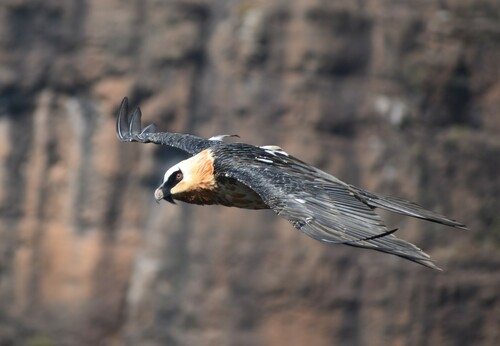
Bearded Vulture (Gypaetus barbatus) Bearded Vulture
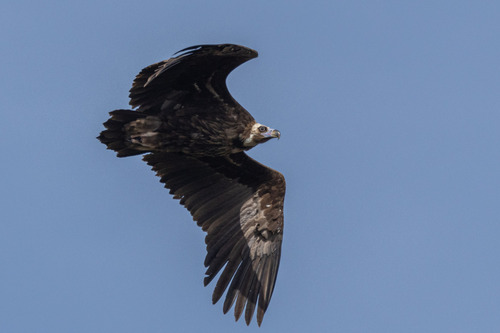
Black Vulture (Aegypius monachus) Black Vulture

Media

Loading…

In short

The most reliable way to separate Bearded Vulture from Black Vulture is by overall structure and flight silhouette: Bearded Vulture has long, narrow, almost falcon-like wings and a long, wedge-shaped tail, while Black Vulture is bulkier with very broad, 'barn door' wings and a shorter, more rounded tail. Immature Bearded Vultures are dark but still show the distinctive tail and wing shape, whereas Black Vultures of all ages appear uniformly dark with a pale head and massive bill. If you see a huge vulture with a long, diamond-shaped tail and narrow wings, it's a Bearded; if the wings are broad and the bird looks hulking with a pale, downy head, it's a Black Vulture. Both are enormous, but Black Vulture is heavier and bulkier, especially when perched.

Identification tips

  1. Tail shape in flight: Bearded Vulture always shows a long, wedge- or diamond-shaped tail, much longer than the tail of Black Vulture, whose tail is shorter and more rounded. This is the single most reliable field mark at any age.
  2. Wing shape: Bearded Vulture has long, narrow wings (almost falcon-like), while Black Vulture has very broad, rectangular wings ('barn door' effect). In flight, Bearded looks slender and elegant; Black looks massive and blocky.
  3. Head and bill: Bearded Vulture has a small, pale, creamy forehead and a black eye-stripe with a distinct 'beard' of bristles under the chin. Black Vulture has a pale, downy head and neck (bluish-grey skin), with a huge, heavy bill and brown eyes. The bill of Black Vulture is much more prominent and powerful-looking.
  4. Plumage color (adult): Adult Bearded Vulture is rusty-orange or cream on the head, breast, and legs (from mud-staining), with grey-blue to grey-black upperparts. Black Vulture is uniformly dark brown to blackish, with a paler head but no orange or rust tones.
  5. Plumage color (immature/juvenile): Immature Bearded Vulture is dark overall but still shows the long tail and narrow wings. Immature Black Vulture is sepia-brown above, paler below, with a pale, downy head and massive bill. Both can appear dark at a distance, but the structure is different.
  6. Flight style: Bearded Vulture soars with agility, often gliding and banking with little effort, while Black Vulture is slower, with heavy, deep wingbeats and a ponderous feel.
  7. Perched posture: Bearded Vulture appears long-necked and slender, sometimes hunched, with a small head. Black Vulture is bulkier, with a thick neck and a massive, heavy bill.
  8. Behavior: Only Bearded Vulture is seen carrying and dropping bones from height to crack them open. Black Vulture does not exhibit this behavior.
  9. Habitat context: Bearded Vulture is more likely in mountainous or alpine terrain, while Black Vulture is found in a wider range of open habitats, including steppe and woodland edges.
  10. Relative size: Both are huge, but Black Vulture is noticeably heavier and bulkier, especially when seen side-by-side or perched.
  11. Head pattern: Bearded Vulture's black eye-stripe and 'beard' are unique and visible at close range; Black Vulture's head is pale and downy with no strong facial markings.
  12. Tail vs. wing width: On Bearded Vulture, the tail is longer than the width of the wing; on Black Vulture, the tail is shorter than the wing width.
  13. Color of legs and cere: Black Vulture has pale blue-grey legs and a purplish cere; Bearded Vulture's leg color is less distinctive in the field.
  14. Voice: Not a reliable field mark; both are generally silent.
  15. Pitfalls: Distant or backlit views can make both species appear uniformly dark; always prioritize structure (tail and wing shape) over color.

Size

Bearded Vulture is large (body mass ~5.5 kg [avonet]), but Black Vulture is even bigger and bulkier, with females reaching up to 12.5 kg and wingspans up to 3.1 m [wikipedia]. Bearded Vulture is long and slender, with a wingspan of 2.3–2.8 m and a body length up to 1.25 m, while Black Vulture is more massive, with a wingspan of 2.5–3.1 m and a slightly longer body (up to 1.2 m). In the field, Black Vulture appears heavier and more imposing, while Bearded Vulture looks longer and more streamlined.

Plumage

Juvenile and immature Bearded Vultures are dark black-brown overall with a grey-brown breast, gradually acquiring the adult's pale head and rusty/orange underparts over several years. The key is that even young Bearded Vultures retain the long, wedge-shaped tail and narrow wings, setting them apart from Black Vulture of any age. Adult Bearded Vultures have a pale, creamy forehead, black eye-stripe, and a black 'beard' under the chin, with variable orange or rust on the head, breast, and legs (from cosmetic staining). Black Vultures (all ages) are very dark brown to blackish overall, with adults showing a pale, downy head and neck, brown eyes, and a massive blue-grey bill. Immatures are sepia-brown above with a paler underside and grey down on the head. In flight, Black Vulture looks uniformly dark with broad wings and a short, rounded tail; Bearded Vulture has a more contrasting head pattern and a long, diamond-shaped tail.

Behaviour

Bearded Vulture often soars with wings held flat or slightly arched, showing long, narrow wings and a distinctive wedge-shaped tail. Its flight is agile and falcon-like for a bird of its size. On the ground, it has a waddling gait. Black Vulture is slower and heavier in flight, with deep, heavy flaps and broad wings held straight or slightly arched. Its silhouette is blocky and massive, and it appears more ponderous both in the air and on the ground. Bearded Vulture is famous for dropping bones from height to crack them, a behavior not seen in Black Vulture.

Habitat

Both species are scavengers, but Bearded Vulture is more specialized, often found in mountainous regions where it can find bones to feed on. Black Vulture is more widespread across temperate Eurasia and is less tied to high mountains, often found in open country, steppe, and woodland edges. In areas of overlap, context may help: Bearded Vulture is more likely in rugged alpine or subalpine terrain.

Voice

Both species are generally silent. Bearded Vulture may give shrill whistles during breeding displays and a falcon-like 'cheek-acheek' call near the nest, but these are rarely heard in the field. No distinctive field vocalizations are noted for Black Vulture.

Submit a better description

Use the same sections as the comparison. Your text is published immediately.

The most reliable way to separate Bearded Vulture from Black Vulture is by overall structure and flight silhouette: Bearded Vulture has long, narrow, almost falcon-like wings and a long, wedge-shaped tail, while Black Vulture is bulkier with very broad, 'barn door' wings and a shorter, more rounded tail. Immature Bearded Vultures are dark but still show the distinctive tail and wing shape, whereas Black Vultures of all ages appear uniformly dark with a pale head and massive bill. If you see a huge vulture with a long, diamond-shaped tail and narrow wings, it's a Bearded; if the wings are broad and the bird looks hulking with a pale, downy head, it's a Black Vulture. Both are enormous, but Black Vulture is heavier and bulkier, especially when perched.

  1. Tail shape in flight: Bearded Vulture always shows a long, wedge- or diamond-shaped tail, much longer than the tail of Black Vulture, whose tail is shorter and more rounded. This is the single most reliable field mark at any age.
  2. Wing shape: Bearded Vulture has long, narrow wings (almost falcon-like), while Black Vulture has very broad, rectangular wings ('barn door' effect). In flight, Bearded looks slender and elegant; Black looks massive and blocky.
  3. Head and bill: Bearded Vulture has a small, pale, creamy forehead and a black eye-stripe with a distinct 'beard' of bristles under the chin. Black Vulture has a pale, downy head and neck (bluish-grey skin), with a huge, heavy bill and brown eyes. The bill of Black Vulture is much more prominent and powerful-looking.
  4. Plumage color (adult): Adult Bearded Vulture is rusty-orange or cream on the head, breast, and legs (from mud-staining), with grey-blue to grey-black upperparts. Black Vulture is uniformly dark brown to blackish, with a paler head but no orange or rust tones.
  5. Plumage color (immature/juvenile): Immature Bearded Vulture is dark overall but still shows the long tail and narrow wings. Immature Black Vulture is sepia-brown above, paler below, with a pale, downy head and massive bill. Both can appear dark at a distance, but the structure is different.
  6. Flight style: Bearded Vulture soars with agility, often gliding and banking with little effort, while Black Vulture is slower, with heavy, deep wingbeats and a ponderous feel.
  7. Perched posture: Bearded Vulture appears long-necked and slender, sometimes hunched, with a small head. Black Vulture is bulkier, with a thick neck and a massive, heavy bill.
  8. Behavior: Only Bearded Vulture is seen carrying and dropping bones from height to crack them open. Black Vulture does not exhibit this behavior.
  9. Habitat context: Bearded Vulture is more likely in mountainous or alpine terrain, while Black Vulture is found in a wider range of open habitats, including steppe and woodland edges.
  10. Relative size: Both are huge, but Black Vulture is noticeably heavier and bulkier, especially when seen side-by-side or perched.
  11. Head pattern: Bearded Vulture's black eye-stripe and 'beard' are unique and visible at close range; Black Vulture's head is pale and downy with no strong facial markings.
  12. Tail vs. wing width: On Bearded Vulture, the tail is longer than the width of the wing; on Black Vulture, the tail is shorter than the wing width.
  13. Color of legs and cere: Black Vulture has pale blue-grey legs and a purplish cere; Bearded Vulture's leg color is less distinctive in the field.
  14. Voice: Not a reliable field mark; both are generally silent.
  15. Pitfalls: Distant or backlit views can make both species appear uniformly dark; always prioritize structure (tail and wing shape) over color.

Bearded Vulture is large (body mass ~5.5 kg [avonet]), but Black Vulture is even bigger and bulkier, with females reaching up to 12.5 kg and wingspans up to 3.1 m [wikipedia]. Bearded Vulture is long and slender, with a wingspan of 2.3–2.8 m and a body length up to 1.25 m, while Black Vulture is more massive, with a wingspan of 2.5–3.1 m and a slightly longer body (up to 1.2 m). In the field, Black Vulture appears heavier and more imposing, while Bearded Vulture looks longer and more streamlined.

Juvenile and immature Bearded Vultures are dark black-brown overall with a grey-brown breast, gradually acquiring the adult's pale head and rusty/orange underparts over several years. The key is that even young Bearded Vultures retain the long, wedge-shaped tail and narrow wings, setting them apart from Black Vulture of any age. Adult Bearded Vultures have a pale, creamy forehead, black eye-stripe, and a black 'beard' under the chin, with variable orange or rust on the head, breast, and legs (from cosmetic staining). Black Vultures (all ages) are very dark brown to blackish overall, with adults showing a pale, downy head and neck, brown eyes, and a massive blue-grey bill. Immatures are sepia-brown above with a paler underside and grey down on the head. In flight, Black Vulture looks uniformly dark with broad wings and a short, rounded tail; Bearded Vulture has a more contrasting head pattern and a long, diamond-shaped tail.

Bearded Vulture often soars with wings held flat or slightly arched, showing long, narrow wings and a distinctive wedge-shaped tail. Its flight is agile and falcon-like for a bird of its size. On the ground, it has a waddling gait. Black Vulture is slower and heavier in flight, with deep, heavy flaps and broad wings held straight or slightly arched. Its silhouette is blocky and massive, and it appears more ponderous both in the air and on the ground. Bearded Vulture is famous for dropping bones from height to crack them, a behavior not seen in Black Vulture.

Both species are scavengers, but Bearded Vulture is more specialized, often found in mountainous regions where it can find bones to feed on. Black Vulture is more widespread across temperate Eurasia and is less tied to high mountains, often found in open country, steppe, and woodland edges. In areas of overlap, context may help: Bearded Vulture is more likely in rugged alpine or subalpine terrain.

Both species are generally silent. Bearded Vulture may give shrill whistles during breeding displays and a falcon-like 'cheek-acheek' call near the nest, but these are rarely heard in the field. No distinctive field vocalizations are noted for Black Vulture.

Discard your changes?

You have unsaved edits. If you leave now, those changes will be lost.

Bearded Vulture · Black Vulture · My Tricky Birds