

Gipeto vs Avvoltoio monaco
Gypaetus barbatus contro Aegypius monachus
Fai un quiz con Gipeto e Avvoltoio monaco
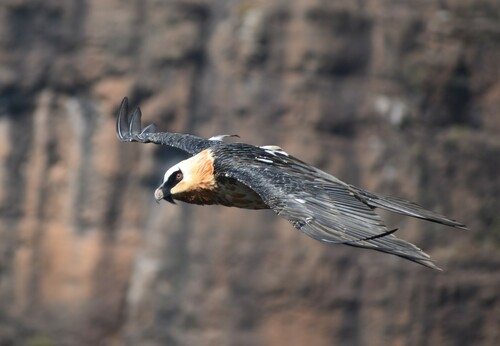 Gipeto
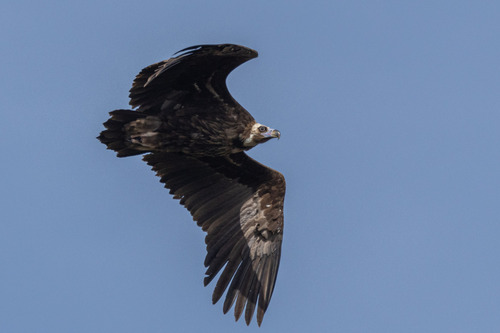 Avvoltoio monaco
In breve
Il modo più affidabile per separare il Gipeto dall'Avvoltoio monaco è attraverso la struttura generale e il profilo di volo: il Gipeto ha ali lunghe, strette, quasi simili a quelle di un falco e una lunga coda a forma di cuneo, mentre l'Avvoltoio monaco è più massiccio con ali molto larghe, a 'porta di fienile' e una coda più corta e arrotondata. I Gipeti immaturi sono scuri ma mostrano ancora la distintiva forma della coda e delle ali, mentre gli Avvoltoi monaci di tutte le età appaiono uniformemente scuri con una testa pallida e un becco massiccio. Se vedi un enorme avvoltoio con una lunga coda a forma di diamante e ali strette, è un Gipeto; se le ali sono larghe e l'uccello appare massiccio con una testa pallida e lanosa, è un Avvoltoio monaco. Entrambi sono enormi, ma l'Avvoltoio monaco è più pesante e massiccio, specialmente quando è posato.
Consigli di identificazione
- Forma della coda in volo: Il Gipeto mostra sempre una lunga coda a forma di cuneo o diamante, molto più lunga della coda dell'Avvoltoio monaco, la cui coda è più corta e arrotondata. Questo è il segno di campo più affidabile a qualsiasi età.
- Forma dell'ala: Il Gipeto ha ali lunghe e strette (quasi simili a quelle di un falco), mentre l'Avvoltoio monaco ha ali molto larghe e rettangolari (effetto 'porta di fienile'). In volo, il Gipeto appare snodato ed elegante; l'Avvoltoio appare massiccio e squadrato.
- Testa e becco: Il Gipeto ha una piccola fronte pallida e cremosa e una striscia nera sugli occhi con una distintiva 'barba' di setole sotto il mento. L'Avvoltoio monaco ha una testa e un collo pallidi e lanosi (pelle blu-grigia), con un enorme becco pesante e occhi marroni. Il becco dell'Avvoltoio monaco è molto più prominente e potente.
- Colore del piumaggio (adulto): L'adulto Gipeto è di colore arancio ruggine o crema sulla testa, sul petto e sulle gambe (a causa delle macchie di fango), con parti superiori grigio-bluastre a grigio-nerastre. L'Avvoltoio monaco è uniformemente marrone scuro a nerastro, con una testa più chiara ma senza toni arancioni o rugginosi.
- Colore del piumaggio (immaturo/giovanile): Il Gipeto immaturo è scuro nel complesso ma mostra ancora la lunga coda e le ali strette. L'Avvoltoio monaco immaturo è marrone seppia sopra, più chiaro sotto, con una testa pallida e lanosa e un becco massiccio. Entrambi possono apparire scuri a distanza, ma la struttura è diversa.
- Stile di volo: Il Gipeto vola con agilità, spesso planando e virando con poco sforzo, mentre l'Avvoltoio monaco è più lento, con battiti d'ala pesanti e profondi e una sensazione ponderosa.
- Postura posata: Il Gipeto appare con il collo lungo e snodato, a volte curvo, con una testa piccola. L'Avvoltoio monaco è più massiccio, con un collo spesso e un becco massiccio e pesante.
- Comportamento: Solo il Gipeto è visto portare e far cadere ossa dall'alto per romperle. L'Avvoltoio monaco non mostra questo comportamento.
- Contesto dell'habitat: Il Gipeto è più probabile trovarlo in terreni montuosi o alpini, mentre l'Avvoltoio monaco si trova in una gamma più ampia di habitat aperti, inclusi steppa e margini boschivi.
- Dimensione relativa: Entrambi sono enormi, ma l'Avvoltoio monaco è visibilmente più pesante e massiccio, specialmente quando visti fianco a fianco o posati.
- Motivo della testa: La striscia nera sugli occhi e la 'barba' del Gipeto sono uniche e visibili da vicino; la testa dell'Avvoltoio monaco è pallida e lanosa senza forti segni facciali.
- Larghezza della coda rispetto a quella dell'ala: Sul Gipeto, la coda è più lunga della larghezza dell'ala; sull'Avvoltoio monaco, la coda è più corta della larghezza dell'ala.
- Colore delle gambe e del cerchio: L'Avvoltoio monaco ha gambe di un pallido blu-grigio e un cerchio purpureo; il colore delle gambe del Gipeto è meno distintivo sul campo.
- Voce: Non è un segno di campo affidabile; entrambi sono generalmente silenziosi.
- Trappole: Viste distanti o retroilluminate possono far apparire entrambe le specie uniformemente scure; dare sempre priorità alla struttura (forma della coda e delle ali) rispetto al colore.
Taglia
Il Gipeto è grande (massa corporea ~5.5 kg [avonet]), ma l'Avvoltoio monaco è ancora più grande e massiccio, con le femmine che raggiungono fino a 12.5 kg e aperture alari fino a 3.1 m [wikipedia]. Il Gipeto è lungo e snodato, con un'apertura alare di 2.3–2.8 m e una lunghezza corporea fino a 1.25 m, mentre l'Avvoltoio monaco è più massiccio, con un'apertura alare di 2.5–3.1 m e un corpo leggermente più lungo (fino a 1.2 m). Sul campo, l'Avvoltoio monaco appare più pesante e imponente, mentre il Gipeto appare più lungo e più aerodinamico.
Piumaggio
I Gipeti giovanili e immaturi sono di un nero-marrone scuro nel complesso con un petto grigio-marrone, acquisendo gradualmente la testa pallida e le parti inferiori rugginose/arancioni dell'adulto nel corso di diversi anni. La chiave è che anche i giovani Gipeti mantengono la lunga coda a forma di cuneo e le ali strette, distinguendoli dall'Avvoltoio monaco di qualsiasi età. I Gipeti adulti hanno una fronte pallida e cremosa, una striscia nera sugli occhi e una 'barba' nera sotto il mento, con variabili arancioni o rugginosi sulla testa, sul petto e sulle gambe (a causa delle macchie cosmetiche). Gli Avvoltoi monaci (di tutte le età) sono molto scuri, marrone a nerastro nel complesso, con gli adulti che mostrano una testa e un collo pallidi e lanosi, occhi marroni e un enorme becco blu-grigio. Gli immaturi sono marrone seppia sopra con un ventre più chiaro e un piumaggio grigio sulla testa. In volo, l'Avvoltoio monaco appare uniformemente scuro con ali larghe e una coda corta e arrotondata; il Gipeto ha un motivo della testa più contrastante e una lunga coda a forma di diamante.
Comportamento
Il Gipeto spesso vola con le ali tenute piatte o leggermente arcuate, mostrando ali lunghe e strette e una distintiva coda a forma di cuneo. Il suo volo è agile e simile a quello di un falco per un uccello delle sue dimensioni. A terra, ha un passo ondeggiante. L'Avvoltoio monaco è più lento e pesante in volo, con battiti profondi e pesanti e ali larghe tenute dritte o leggermente arcuate. La sua silhouette è squadrata e massiccia, e appare più ponderosa sia in aria che a terra. Il Gipeto è famoso per far cadere ossa dall'alto per romperle, un comportamento non osservato nell'Avvoltoio monaco.
Habitat
Entrambe le specie sono spazzine, ma il Gipeto è più specializzato, spesso trovato in regioni montuose dove può trovare ossa da mangiare. L'Avvoltoio monaco è più diffuso in Eurasia temperata ed è meno legato alle alte montagne, spesso trovato in campi aperti, steppa e margini boschivi. Nelle aree di sovrapposizione, il contesto può aiutare: il Gipeto è più probabile trovarlo in terreni alpini o subalpini accidentati.
Voce
Entrambe le specie sono generalmente silenziose. Il Gipeto può emettere fischi acuti durante le esibizioni di corteggiamento e un richiamo simile a 'cheek-acheek' vicino al nido, ma questi suoni sono raramente uditi sul campo. Non sono state notate vocalizzazioni distintive per l'Avvoltoio monaco.