

Australian Raven vs Little Raven
Corvus coronoides versus Corvus mellori
Play a quiz with Australian Raven and Little Raven
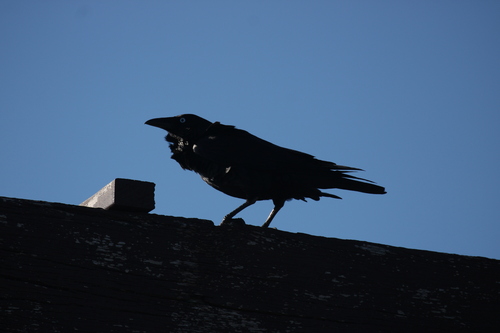 Australian Raven
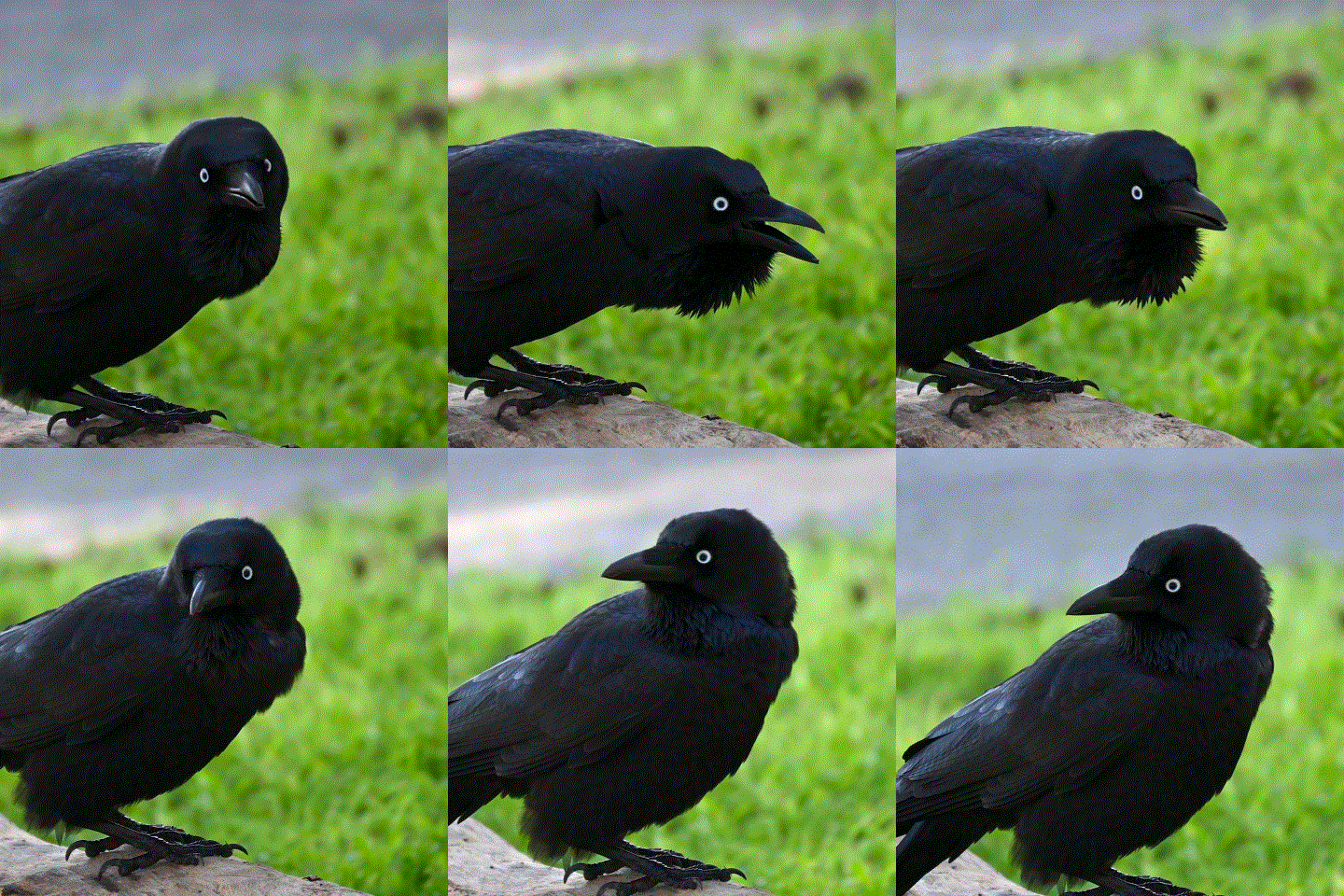 Little Raven
In short
The most reliable field mark between Australian Raven and Little Raven is the throat hackles: adult Australian Ravens show long, shaggy, rounded hackles that are often flared when calling, giving a 'bearded' look, while Little Ravens have shorter, less conspicuous hackles. Juveniles of both species lack hackles, making separation trickier. Both are all-black with white irises as adults, but Australian Raven is heavier-set and glossier, with a longer, heavier bill and a slightly wedge-shaped tail. In the field, differences are subtle and often require close, prolonged views—especially for immatures.
Identification tips
- Throat hackles (adults only): Australian Raven has long, shaggy, rounded hackles that are often flared when calling, giving a 'bearded' look. Little Raven's hackles are shorter and less conspicuous. This is the most reliable field mark for adults, especially when birds are vocalizing.
- Juvenile/immature birds: Both species' juveniles lack hackles and have similar soft, brownish, ruffled plumage and a pinkish gape. Separation at this age is extremely difficult and often not possible in the field.
- Bill structure: Australian Raven has a longer, heavier, and slightly hooked bill that is proportionally longer than the head. Little Raven's bill is shorter and less deep. This is subtle and requires good views.
- Gloss and sheen: Australian Raven is glossier, with a blue-purple to blue-green sheen, especially on the upperparts and ear coverts. Little Raven is less glossy, but this is variable with light and not always reliable.
- Tail shape: Australian Raven's tail is slightly wedge-shaped or rounded, while Little Raven's is more square-tipped. This difference is subtle and best seen in flight or when the tail is fanned.
- Bare skin under bill: Australian Raven has a bare patch of skin under and beside the bill, but this is very hard to see in the field and not a practical mark for most observers.
- Eye color by age: Both species' adults have white irises. Juveniles and immatures transition from blue-grey to brown to hazel with a blue rim as they age. Eye color is not useful for separating these two species, but can help age the bird.
- Vocalizations: Australian Raven's call is slower and more drawn-out, while Little Raven's is more rapid and harsh. If you hear a long, mournful 'aah-aah-aah-aaaaah,' suspect Australian Raven; if the call is a rapid 'kar-kar-kar-karrr,' suspect Little Raven. Use with caution, as calls can overlap.
- Wing flicking when calling: Both species may flick or stretch their wings when calling, so this behavior does not reliably separate them.
- Habitat and context: In Melbourne and much of southeastern Australia, Little Raven is more likely, especially in flocks or urban areas. In Sydney, Canberra, and more open or rural areas, Australian Raven is more likely. However, both can occur together, so use context only as a supporting clue.
- Group size: Little Raven is more likely to be seen in flocks or loose colonies, especially outside breeding season. Australian Raven is more solitary or in pairs, but may also be seen in small groups.
- Feeding behavior: Little Raven feeds more on insects and is often seen foraging communally on the ground. Australian Raven is more omnivorous and less communal in feeding.
- Nest placement: Little Raven often nests lower in trees or in loose colonies, especially where both species overlap. Australian Raven nests higher and is more territorial, but nest location is rarely visible to field observers.
- Size and bulk: Australian Raven is heavier and bulkier, with a broader chest, but size overlap is significant and not reliable unless birds are side by side.
- Feather bases: Both species have grey feather bases (unlike crows), but this is only visible if feathers are ruffled by wind and is not a practical field mark.
Size
Australian Raven is consistently larger and heavier (average 630 g) than Little Raven (average 541 g), but their lengths overlap (Australian Raven 46–53 cm, Little Raven 48–50 cm). The Australian Raven is bulkier, with a broader chest and heavier bill, but these differences are difficult to judge unless birds are side by side. Size alone is rarely diagnostic in the field.
Plumage
Juvenile and immature birds of both species are very similar: both are all-black, lack throat hackles, and have brownish, softer, more ruffled plumage with a possible pinkish gape and blue-grey to brown irises. Adults differ mainly in the throat: Australian Raven has long, rounded, shaggy hackles that are especially obvious when calling, while Little Raven's hackles are shorter and less noticeable. Both species have glossy black upperparts with a blue-purple or greenish sheen, but Australian Raven's gloss is more pronounced. The base of the feathers is grey in both, but this is rarely visible in the field. Bill and bare skin details (such as the bare patch under the bill in Australian Raven) are subtle and not usually visible at a distance.
Behaviour
Australian Raven tends to be solitary or in pairs, often seen perched prominently or foraging alone or in small groups. Little Raven is more likely to be seen in flocks, especially outside the breeding season, and often nests in loose colonies. Both species feed on the ground, but Little Raven has a stronger preference for insects and communal foraging. Both can be seen in urban areas, but Little Raven is more likely to be abundant in cities like Melbourne, while Australian Raven dominates in places like Sydney and Canberra.
Habitat
Both species occur in southeastern Australia and overlap in many habitats. Australian Raven is more widespread and can be found in a variety of open and wooded habitats, including urban fringes (especially in Sydney and Canberra). Little Raven is more common in southeastern Australia, especially in and around Melbourne, and adapts well to urban environments. In areas where both occur, Little Raven may nest lower or in looser colonies, while Australian Raven is more territorial.
Voice
Both species have harsh, guttural calls, but Australian Raven's call is a slow, drawn-out 'aah-aah-aah-aaaaah' with a mournful quality, while Little Raven's call is a more rapid, harsh 'kar-kar-kar-karrr' or 'ark-ark-ark-arrk,' sometimes with a drawn-out ending. Both can stretch or flick their wings when calling, but this is not unique to either species. Vocal mimicry is rare in the wild for both.