

Australian Hobby vs Black-browed Triller
Falco longipennis versus Lalage atrovirens
Play a quiz with Australian Hobby and Black-browed Triller
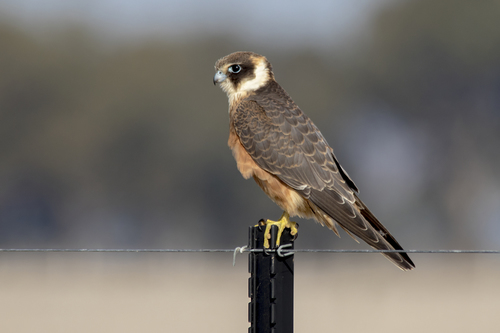 Australian Hobby
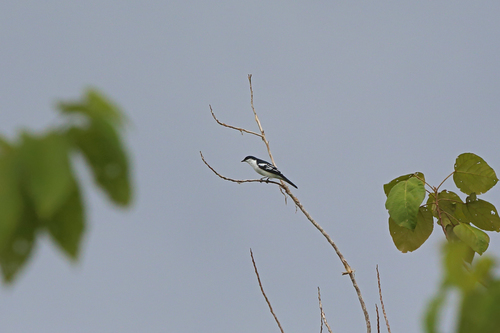 Black-browed Triller
In short
The most reliable way to separate Australian Hobby from Black-browed Triller is by overall structure and flight style: the hobby is a slender, long-winged falcon with rapid, flickering wingbeats and agile, low flight, while the triller is a small, perching songbird with typical passerine proportions and undramatic flight. Hobbies show a striking black cap and mask with variable underparts, often rufous or blue-grey and streaked, and have a hooked bill; trillers lack these raptor features and are much smaller. If seen in flight, the hobby’s long, pointed wings and fast, zig-zagging movements are diagnostic, while the triller’s flight is typical of small forest birds. Size difference is extreme: the hobby is over seven times heavier. Habitat can help, but structure and flight are the quickest field checks.
Identification tips
- Size and structure: The hobby is much larger and heavier, with a long, pointed-winged raptor shape; the triller is a small, slim songbird. Even at a distance, this is often the first and most reliable clue.
- Bill shape: Hobbies have a strong, hooked bill typical of falcons; trillers have a small, straight, insect-eating bill like other passerines.
- Head pattern: Look for the hobby’s bold black cap and mask with a whitish forehead and half-collar—never shown by triller.
- Underparts: Hobby underparts are blue-grey or rufous and always streaked darker; triller is not described as streaked or rufous and lacks the falcon’s pattern.
- Wings and flight: Hobby wings are long, thin, and pointed, with flight characterized by rapid flickering beats, low fast passes, and agile zig-zags. Triller has short, rounded wings and undramatic, direct flight typical of small perching birds.
- Tail: Hobby may fan its tail when hovering; triller’s tail is typical of a small songbird and not used in raptor-like maneuvers.
- Feet and cere: Hobby has dull yellow feet and a pale yellowish-grey cere; triller’s feet and cere are not described but are not raptor-like.
- Perched posture: Hobbies perch upright and alert, often on exposed branches or poles; trillers perch more horizontally, blending into foliage.
- Behavior: Hobbies are solitary, aggressive, and may attack other raptors; trillers are more likely to be seen in pairs or small groups, foraging quietly.
- Vocalizations: Hobby gives harsh, rapid chattering calls and squeaky ticking; triller, as a songbird, would give softer, more melodic calls (not described in sources).
- Habitat: In open country, farmland, or urban areas, hobby is likely; in dense lowland forest or mangroves in New Guinea, triller is possible.
- Flight jizz: If you see a bird stooping, soaring, or hovering, it is a hobby; triller never performs these raptor behaviors.
- Juvenile confusion: No distinctive juvenile upperwing or flight pattern marks are described for either species, but even young hobbies retain raptor structure and face pattern.
- Sex and age variation: Hobby plumage varies with sex and age (darker in humid areas, lighter in dry), but always shows raptor structure and face; triller does not approach this variation.
- Pitfalls: At a great distance, a hobby might appear smaller than expected, or a triller larger if seen close, but the structural and behavioral differences are always present if observed carefully.
Size
Australian Hobby is dramatically larger and heavier (246 g vs 33 g) than Black-browed Triller. The hobby is a medium-sized falcon with a wingspan of 66–87 cm and length of 30–35.5 cm, while the triller is a small, slim songbird. Even at a distance, the hobby’s size and raptor build stand out against the much smaller, more delicate triller.
Plumage
No age-specific upperwing or flight pattern marks are described for either species, but overall plumage and head pattern are very different. The Australian Hobby (adult and immature) shows a black cap and mask, whitish forehead, and a half-collar, with underparts that can be blue-grey or rufous and streaked darker. Its cere is pale yellowish grey, eye ring pale blue, and feet dull yellow. Plumage varies with age, sex, and region, but the raptor face pattern is always present. The Black-browed Triller, by contrast, lacks any raptor facial markings, has a typical perching bird bill, and is not described as streaked or masked; it is a plain, small forest bird. No triller plumage features could be confused for the hobby’s bold head pattern or streaked underparts.
Behaviour
Australian Hobby is a solitary, aggressive falcon, often seen hunting with rapid, flickering wingbeats, gliding on long, pointed wings, and performing low, fast, zig-zagging flights over open ground or between trees. It may hover briefly with fanned tail and is capable of dramatic stoops at prey or other raptors. The Black-browed Triller behaves like a typical small passerine: perching in trees, moving through foliage, and flying short distances with undramatic, direct flight. It does not soar, hover, or stoop.
Habitat
Australian Hobby occurs throughout Australia and into Indonesia and New Guinea, often in open country, woodland, and near water, but can be seen in a wide range of habitats, including urban areas. Black-browed Triller is restricted to northern New Guinea and is found in subtropical or tropical moist lowland forests and mangroves. If you are in dense lowland forest or mangroves in New Guinea, triller is possible; in open country or urban areas, hobby is far more likely.
Voice
Australian Hobby gives a rapid, peevish chatter (Kee-Kee-Kee-Kee-Kee) when bringing prey or alarmed, and a squeaky chittering/ticking in social or food contexts. Juveniles give a chittering whine when begging. Calls are similar to, but higher-pitched than, male Peregrine Falcon. No vocalizations are described for Black-browed Triller in the sources, but as a perching songbird, its calls would be very different from the hobby's harsh, raptor-like chattering.