

Auckland Islands Shag vs Campbell Islands Shag
Leucocarbo colensoi versus Leucocarbo campbelli
Play a quiz with Auckland Islands Shag and Campbell Islands Shag
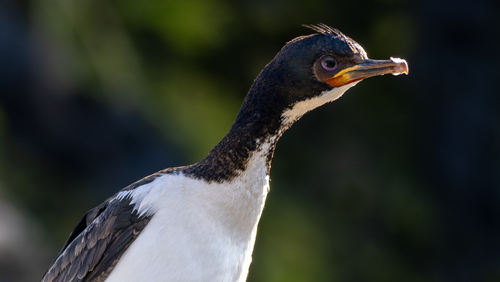 Auckland Islands Shag
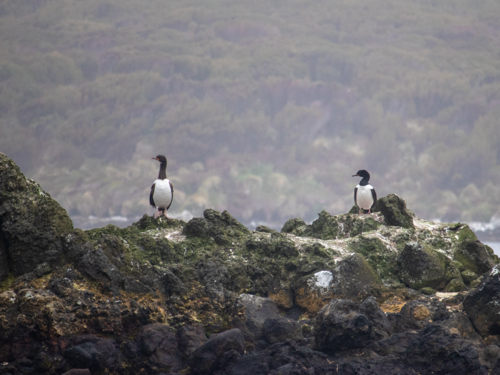 Campbell Islands Shag
In short
The most reliable way to separate Auckland Islands Shag from Campbell Islands Shag is by location: Auckland Islands Shag is strictly limited to the Auckland Islands, while Campbell Islands Shag is found only on Campbell Island and nearby islets. In the field, both are striking black-and-white cormorants, but Campbell Islands Shag adults show a white chin, underparts, and wing patches, plus pink feet and a distinctive breeding crest and facial coloration. Juveniles and non-breeding Campbell Islands Shags are browner and duller than adults, but detailed age-specific flight marks are not described for either species. Structural differences are subtle, but Campbell Islands Shag is slightly larger and has a unique head shape and bill suited for shellfish foraging. If you’re not on the correct island, you’re not seeing the species in question.
Identification tips
- Location is decisive: Auckland Islands Shag only occurs on the Auckland Islands; Campbell Islands Shag is only on Campbell Island and nearby islets. If you are not on the right island, you are not seeing the other species. This is the single most reliable field mark.
- Adult plumage—Campbell Islands Shag: Look for a white chin, underparts, and prominent white wing patches on a black background. The black areas have a metallic greenish-blue sheen. This is most obvious in breeding adults.
- Breeding season features (Campbell Islands Shag): In the breeding season, adults develop a head crest, a yellow line above the bill, and colorful facial skin and throat pouch (purple to orange). These marks are absent or much duller in non-breeding birds and not described for Auckland Islands Shag.
- Feet color (Campbell Islands Shag): Pink feet are a useful field mark in Campbell Islands Shag, especially when perched or preening.
- Bill and head shape: Campbell Islands Shag has a unique, looped head profile and a long, slightly hooked bill, adapted for shellfish foraging. Auckland Islands Shag’s bill and head are less distinctive, but this difference may be subtle in the field.
- Juvenile and non-breeding birds: Juvenile and non-breeding Campbell Islands Shags are browner overall with duller bare parts. No specific juvenile or immature plumage or wing pattern is described for Auckland Islands Shag, so separation at this age is difficult without location.
- Flocking and foraging behavior: Campbell Islands Shag often forages in large, coordinated flocks, flying low with heads below their bodies and diving together. Auckland Islands Shag is more sedentary and is not noted for such flocking.
- Plumage pitfalls: Both species are black-and-white cormorants and can appear similar at a distance or in poor light. When plumage marks are unclear, rely on location and flocking behavior.
- Size: Campbell Islands Shag is slightly larger and heavier, but this is not a reliable field mark unless birds are side by side.
- Habitat context: Both species use rocky coasts and open seas, but only on their respective islands. Habitat alone is not diagnostic unless you know your island.
- No known vocal differences: There are no published differences in voice or calls between these two species.
- Seasonal effects: Breeding features (crest, facial color) are only present in Campbell Islands Shag during the breeding season (November–February). Outside this period, adults and immatures may be harder to separate by plumage.
- No flight pattern differences described: There are no published differences in juvenile or immature wing pattern or flight silhouette between these species. Use other marks or location.
- Check for pink feet and white chin (Campbell Islands Shag): These are visible when birds are perched or preening and are not described for Auckland Islands Shag.
- If in doubt, check the island: When all else fails, your location is the best clue—these species do not overlap.
Size
Campbell Islands Shag is a medium-sized cormorant, about 63 cm in length with a 105 cm wingspan and weighing 1.6–2 kg [wikipedia]. No direct measurements are given for Auckland Islands Shag, but both belong to the same genus and are likely similar in size, with Campbell Islands Shag possibly being a bit bulkier. In practice, size alone is not a reliable separator without direct comparison.
Plumage
Adult Campbell Islands Shag is distinctive with its black-and-white plumage: white chin, underparts, and wing patches, contrasted with a black head, throat, and neck. The black feathers have a metallic greenish-blue sheen, and in breeding season, adults sport a head crest, a yellow line above the bill, and colorful facial skin (purple to orange). Juveniles and non-breeding birds are browner overall, with duller bare parts. Auckland Islands Shag is also black-and-white but lacks detailed published descriptions of unique plumage features or age-specific wing patterns that would allow separation in flight or at a distance. No diagnostic juvenile or immature upperwing marks are described for either species, so field separation relies on adult plumage and context.
Behaviour
Campbell Islands Shag is noted for its flock foraging behavior, often seen in groups of 30–100, flying low with heads below their bodies, and performing coordinated diving maneuvers. They spend considerable time underwater and surface scattered. Auckland Islands Shag is described as more sedentary, with no mention of such large, coordinated foraging flocks. Both species are coastal and marine, but Campbell Islands Shag’s flocking and foraging style may be a subtle behavioral clue.
Habitat
Auckland Islands Shag is endemic to the Auckland Islands archipelago and is not found elsewhere. Campbell Islands Shag is restricted to Campbell Island and its immediate coastal islets. Both species are strictly island endemics and do not overlap in range. Their habitats are similar—rocky coasts and open seas—but the islands are separated by hundreds of kilometers. If you know your location, you know your bird.
Auckland Islands Shag · Campbell Islands Shag · My Tricky Birds