

Arabian Scops Owl vs Principe Scops Owl
Otus pamelae versus Otus bikegila
Play a quiz with Arabian Scops Owl and Principe Scops Owl
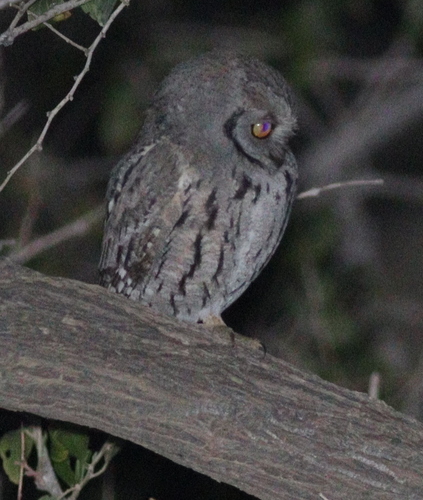 Arabian Scops Owl
 Principe Scops Owl
In short
The most reliable way to separate Arabian Scops Owl from Principe Scops Owl is by location: Arabian Scops Owl is only found in the Arabian Peninsula (Saudi Arabia, Oman, Yemen), while Principe Scops Owl is restricted to Príncipe Island in the Gulf of Guinea. In the field, both are small scops owls with similar structure, and there are no published age-specific wing or plumage marks to distinguish them in flight or at rest. If you encounter a small Otus owl outside these ranges, identification will be highly uncertain. Vocalizations may help, as Principe Scops Owl was first detected by its unique call, but details are lacking. In practice, range and context are the most decisive clues.
Identification tips
- Range is the most decisive clue: Arabian Scops Owl is only found in Saudi Arabia, Oman, and Yemen; Principe Scops Owl is only on Príncipe Island. If you are outside these areas, reconsider your identification.
- No age-specific wing or flight marks are published: Both species lack described juvenile or immature upperwing patterns that would allow separation in flight or at rest.
- Structure is similar: Both are small, compact Otus owls with no distinctive differences in bill, wing, or tail shape reported.
- Plumage is cryptic and similar: Expect brownish or greyish mottled plumage in both, with no known unique marks for either species at any age.
- Sexes and ages not separable in the field: No sexual dimorphism or age-related plumage differences are described that would help with identification.
- Vocalizations may differ, but details are lacking: Principe Scops Owl was discovered by its unique call, but without published descriptions, this is not a practical field mark unless you have local experience or recordings.
- Habitat context can help: Arabian Scops Owl prefers arid and semi-arid habitats, while Principe Scops Owl is a forest species. Use habitat as a supporting clue, but rely on range first.
- No reliable size difference: Both are described as small scops owls, with no measurements to distinguish them.
- Behavior is not diagnostic: Both are nocturnal and secretive, typical of scops owls.
- If you encounter a scops owl outside the known ranges, identification is highly uncertain: Consider the possibility of vagrancy or misidentification with other Otus species.
- Photographs are unlikely to help: Without unique field marks, even good photos may not allow definitive separation.
- Consult local experts or recordings if in doubt: Especially for vocalizations, as local knowledge may be the only way to confirm Principe Scops Owl.
- Do not rely on general Otus features: Ear tufts, eye color, and general jizz are similar and not diagnostic between these two.
- Population size is not a field mark: Arabian Scops Owl is more numerous, but this does not help with individual identification.
- If you are unsure, document as much as possible: Record location, habitat, behavior, and any vocalizations for expert review.
Size
Both species are described as small scops owls, with no published measurements to distinguish them in the field. Without direct size comparison or detailed measurements, size is not a reliable separator between Arabian Scops Owl and Principe Scops Owl.
Plumage
There are no published details on age-specific plumage or upperwing patterns for either species, so juvenile, immature, and adult birds cannot be reliably separated by plumage alone. Both are expected to show the typical Otus scops owl pattern: cryptic brownish or greyish plumage, with subtle streaking and mottling, but no distinctive marks are described for either species at any age.
Behaviour
There is no published behavioral difference between Arabian Scops Owl and Principe Scops Owl that would help in field identification. Both are likely to be nocturnal, secretive, and roost in dense cover by day, as is typical for scops owls.
Habitat
Arabian Scops Owl is endemic to arid and semi-arid habitats in Saudi Arabia, Oman, and Yemen, while Principe Scops Owl is restricted to the forests of Príncipe Island. If you are birding in dry, open woodlands or scrub in Arabia, you are likely seeing Arabian Scops Owl. In contrast, any scops owl encountered in the humid forests of Príncipe is almost certainly Principe Scops Owl.
Voice
Principe Scops Owl was first detected by its distinctive nighttime call, but no comparative descriptions or recordings are available in the sources. Arabian Scops Owl's vocalizations are not described in the notes. Without published sonograms or descriptions, voice cannot be used reliably to separate these species unless you have access to local recordings.